Ever wanted the feeling of paying off debt but in space? There’s a new game for that.
What you need to know
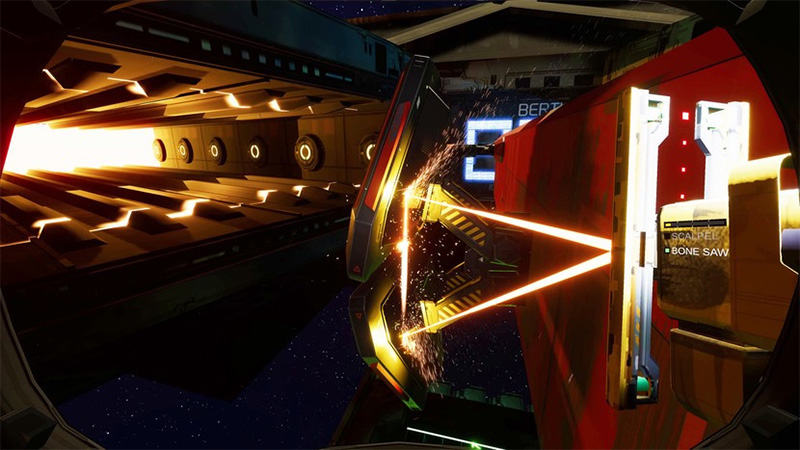
Hardspace: Shipbreaker is a new first-person simulation game being developed by Blackbird Interactive and published by Focus Home Interactive.
It’s about taking on contracts to cut apart and salvage massive spaceships, while upgrading your gear and paying off your debt.
You have a lot of debt, 999,999,999 credits worth of debt to be exact.
The game is expected to launch in early access on Steam sometime in Summer 2020.
Blackbird Interactive and Focus Home Interactive have announced a new game called Hardspace: Shipbreaker. It’s a first-person simulation title that has you working to pay off 999,999,999 credits of debt to a large corporation. In order to do that, you’ll need to salvage spaceships by cutting them up and taking anything valuable.
In addition to the many hazards of taking a ship apart, there’s also the troublesome decisions of choosing to upgrade your gear or try and reduce your debt with what you make. You can check out the reveal trailer for the game below.
Hardspace: Shipbreaker is expected to first release in early access on Steam sometime in Summer 2020. The early access launch will include the first act of the campaign, as well as the sandbox mode. More features and the rest of the campaign will come at a later date. For more information on Hardspace: Shipbreaker, you can check out the game’s Steam page here and add it to your wishlist.
There’s no doubt that Blizzard’s portfolio puts it among the pantheon of the industry’s greatest ever developers. Its four titan franchises –Starcraft, Warcraft, Overwatch, and Diablo– are some of the most popular of all time, at times transcending the gaming medium to disparate corners of pop culture. For years, the success of those titles has ensured that Blizzard as a brand has been synonymous with quality — a quality so impressive that consumers have been willing to forgive the company for a string of frustrating missteps. But that unshakeable faith has been tested in recent times, and it’s beginning to reach a tipping point.
Indeed, Blizzard has not had a very good time of it recently. The fiasco over Diablo Immortal’s reveal and thatoh-so patronizing comment, and then the cold corporate handling of the Blitzchung incident has seen the company’s reputation sink to an all-time low. And yet the jubilant reception to Diablo 4’s big reveal during Blizzcon 2019, there was feeling that disaster may just about have been averted.
Things were looking up, and the hotly anticipated remake of Warcraft 3, the beloved RTS to which so much of Blizzard’s success is owed, signaled a possible further turning of the tide. Warcraft 3: Reforged was to be a celebration of the company’s history and a deliverance of fan service at a time when it was most needed. At least that was the plan. The reality is, unfortunately, far from that triumph.
Before I go any further venting my frustration with Reforged, though, let me first make one thing clear: Playing Warcraft 3 once again has highlighted to me what an absolutely brilliant game it still is to this day, and I found myself actually flabbergasted at how well it holds up nearly 20 years after its original launch. My life has been well and truly on pause as I’ve busily plowed through its gripping single-player campaign, and I’ve spent more than a few evenings researching build orders and strategies in a desperate (and largely unsuccessful) attempt to become remotely competitive at its multiplayer offering.
But really very little of this is as a result of “Reforged” itself. Quite frankly, I could have enjoyed the same experience the week before playing the original version of the game. That’s because very little about Reforged actually makes any substantial improvements.
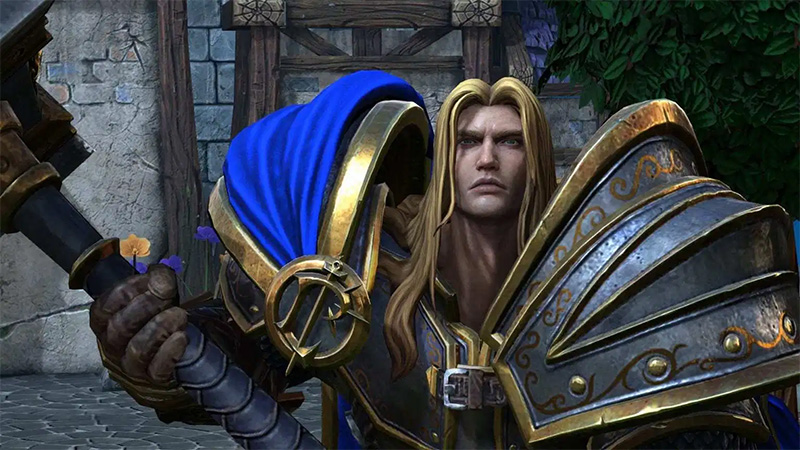
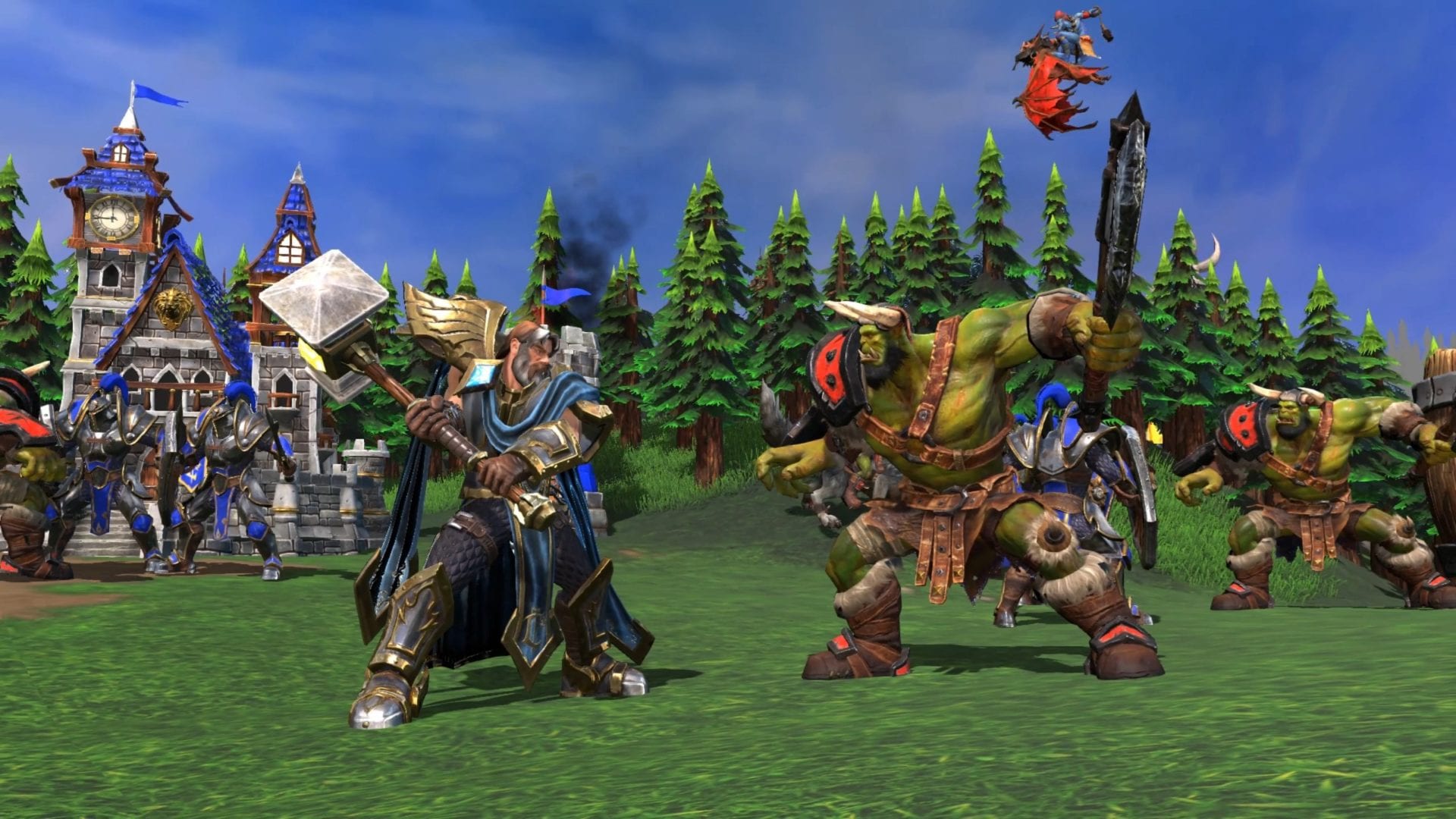
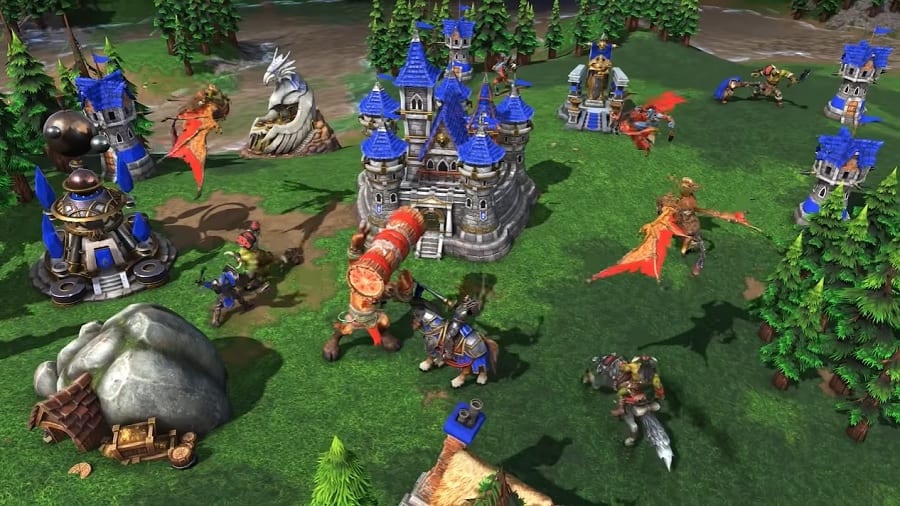
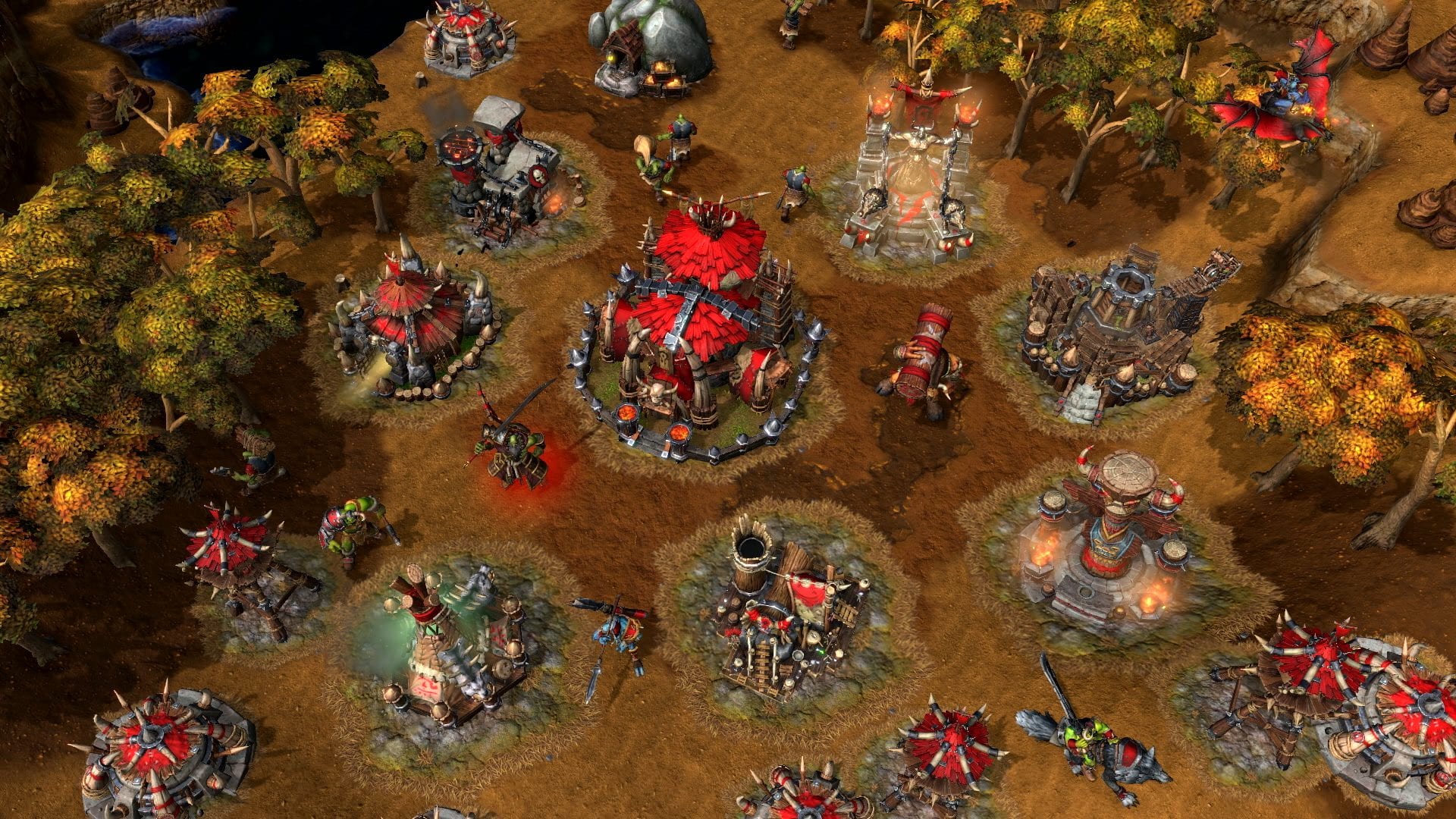
There are newer and more detailed character models, as is there sharper and more pleasing environmental 4K textures. But that’s about it. Blizzard’s original vision for Reforged, which involved completely revamping all the game’s cinematics, redesigning the UI, adding new story elements, and tweaking its gameplay mechanics hasn’t been realized. Reforged, then, is much more a remaster than it is a remake.
Apparently, this scaled-back vision for Reforged was outlined by Blizzard in a blog post some time ago, but I must have missed the memo? I’m quite certain that many, many others would have done so, too. Surely, more should have been done on the part of the developer to highlight this shift in development priority. Certainly, for anybody that wasn’t aware, the differences between the initial Blizzcon 2018 Reforged demo and its 2020 launch are quite shocking.
Despite the disappointingly conservative changes, however, Reforged definitely does look much better than the 2002 release, and it makes the game’s 60-mission strong single-player campaign even more of a treat. But it’s actually what hasn’t been changed that strikes me most: Warcraft 3 is a two-decade-old piece of gaming history that doesn’t feel at all antiquated to play.
Of course, technically its design is old fashioned, but Reforged reminds me that I’ve sorely missed that classic RTS loop of resource management, base building, and tactical combat ever since the genre fell by the wayside. It’s strange to think that there are so few games that incorporate those three pillars of gameplay which were once the basis of the entire strategy scene. Returning to it now amidst that dearth is incredibly refreshing in a way that can’t just be my nostalgia in play.
Simultaneously, Warcraft 3’s design also vividly highlights how instrumental it was in evolving the RTS genre into something different, something more zoomed in and focused on RPG mechanics and hero control. It was, at the time, the sort of transition that was necessary as the scene was bogged down by year of Age of Empires clones, but it sure feels great to be back now. Experienced in isolation, either for returning players such as myself who haven’t continued to play RTS games extensively, or complete genre newcomers, Warcraft 3 is very engaging gameplay experience.
Again, though, these are all takeaways that one could appreciate without ever having paid for Warcraft 3: Reforged. There’s precious little additional value being added by this “remake” beyond the new and improved character models and textures, which are honestly not all that noticeable during the moment to moment gameplay except when zooming right the way in. Obviously, that’s not a practical way to play. And while the visual tweaks do breathe new life into cutscenes, it’s nowhere near as polished as I’m sure many fans would have hoped. Lip-synching is almost non-existent, for example, and there’s been no attempt made to animate characters realistically.
That lack of polish extends to the game’s overall technical performance, too, and this is probably the biggest of Reforged’s blunders. Despite Blizzard’s reduced ambition, despite limiting the scope of this remake to what is essentially just the replacement of assets, Reforged runs very poorly.
An often laggy UI, micro-stuttering, strange drops in frame rate, and several crashes throughout my playthrough of the campaign make for an overall package that just does not feel ready for launch.
Worse still, the technical issues are exasperated when playing multiplayer, and because both Reforged and the original game are now intrinsically linked through Battlenet, even those that don’t own Reforged are impacted. Doubly so, in fact, because many of the custom maps –a celebrated feature of Warcraft 3 built by an enormous community of passionate modders over many, many years– are now unplayable as a result of not being compatible with Reforged.
You can understand why Reforged has caused such a stir amongst Warcraft 3’s community: failing to deliver on the potential of the remake is one thing, but spoiling the original game is sure to have proved a particularly bitter pill to swallow.
And to think, Reforged was supposed to mark a triumphant return for Warcraft 3 and a steadying of the ship for a developer whose reputation has been majorly wobbling of late. Instead, rather than giving back to fans, Reforged feels as though it’s taking something away.
Even when the inevitable future patches smooth over Reforged’s rough, unfinished edges and rectify many of these performance issues, the game is, unfortunately, going to do down as yet anther blot on Blizzard’s record.
Reforged will never be the celebration of one of gaming’s most beloved IPs that it should have been, which is all rather depressing. As is the fact that despite the fun that I’ve had playing Warcraft 3: Reforged and for how it has reminded me what an incredibly influential and brilliant game it is, there’s no way I could recommend anyone outside of the absolute hardcore Warcraft fanbase to purchase it.
Warcraft 3: Reforged
3
/ 5
Fair
Reviewer: Alex Gibson | Copy provided by Publisher.
Pros
Even though the visual changes are not as ambitious as they should have been, Reforged does look much better than the original game.
Cons
Missing features from the original Reforged vision are disappointing. Far too many technical issues, such as graphical glitches, micro-stuttering, and frops in frame rate. Linking Reforged with the original game has meant that the 2002 version has inherited its problems, which has also made many custom maps unplayable.
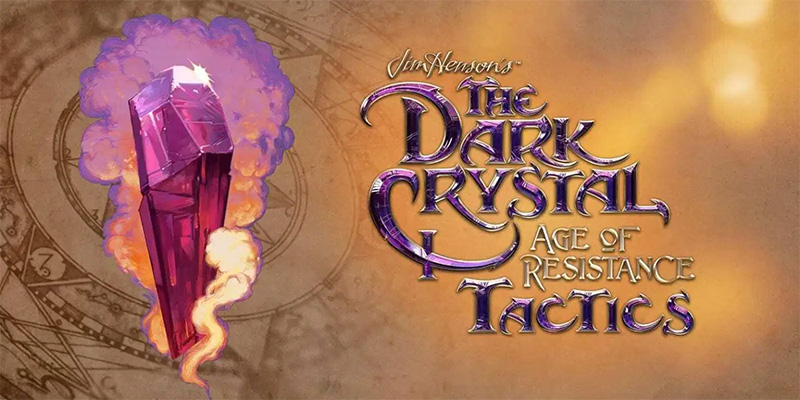
The Dark Crystal Age of Resistance Tactics Review on PS4
It’s not very often anymore that we get video games tied into movies or television. Licensed games are very much part of a bygone era, but it’s refreshing when one does pop up every now and then.
Age of Resistance Tactics is a tie-in with the recently released Dark Crystal Netflix series from last year. The game recounts the events of the television show but mixes in tactical gameplay.
The story follows a race known as the Gelflings as they try to stave off being enslaved by another race known as the Skeksis. As you travel across the land of Thra you’ll encounter different groups of Gelfling all simply trying to survive.
While being presented with an overworld map, the structure of the game is fairly linear. Often you will just be highlighting the next available mission and hopping into it.
The mission structures usually consist of killing all of the enemies on the map. Sometimes there will be a small variation like getting all your units across the map safely or collecting a handful of objects placed around the map.
Unfortunately the gameplay never really evolves much more than that, and rarely does it provide much of a challenge. Outside of some enemies with more health, Age of Resistance never asks much of the player in terms of Tactics.
The most interesting part of the game comes in the form of the job system. Players of tactics games or RPGs, in general, will be familiar with the concept of slotting your party members into specific roles.
The job system in Age of Resistance is simple, yet effective. Each character will begin in one of three jobs and branch out based on what their focus is.
The more missions you complete as one job the higher your level will become. In turn, once you reach level 10 with a job you’ll unlock the next connecting job and so on.
Each job has a large list of abilities you can equip to further refine the type of play style you’re looking for. These abilities can range anywhere from a simple healing spell to a passive armor buff for adjacent units.
Eventually, the game allows players to equip each unit with a secondary job, which will give units the ability to pull two abilities from a different job pool.
This is where you can get more creative with your builds and where the game really shines. The only problem with the job system is that the game doesn’t push back hard enough for it to feel worthwhile to experiment.
Ultimately every time I experimented with a new build I ended up reverting to the original one I had and the game never punished me for it. With the wide breadth of choice here it would have been nice for it to feel necessary during missions.
Each mission’s narrative is told in one of two ways, it’s either a small dialogue exchange between characters right before combat begins or it’s still images with text over it.
This was a large disappointment considering how beautiful and innovative the Netflix show was when it came to its visuals. Even a few clips from the show itself would have been a welcome addition as opposed to the non-voice-over images.
This goes from the rest of the in-game visuals as well. Attack animations, character designs, and the maps are lacking in flash and substance.
Most attack animations are just a simple sword swing or hand gesture to signify a spell. Even some of the more powerful abilities in the game look almost identical to the base attacks you start with.
By the time you get later in the game, it feels like you’ve already seen everything the game has to offer with little variety up until the end.
This would be serviceable if at least the areas you were going to were more visually stimulating, but its a lot of retreading deserts, swamps, and dark caverns.
When it comes down to the gameplay, I often found the game to follow the same pattern of move to the high ground, use my strongest attack, rinse and repeat.
Very rarely did I feel like I needed to change up the strategy I had been using since the very first battle, but when the game did require that it was the clear highlight.
Certain boss fights against the Skeksis had me winning by the skin of my teeth and I just wish the game did more of that. It felt like a lot of filler getting to those moments and then when they were done, it was just back to my tried and true formula.
All in all, Jim Henson’s The Dark Crystal Age of Resistance Tactics is better as a television series than a video game. However, if you’re looking to spend more time in this universe you’ll find enough to be satisfied.
Jim Henson’s The Dark Crystal Age of Resistance Tactics
3
/ 5
Fair
Reviewer: Jesse Vitelli | Copy provided by Publisher.
Pros
Fun and interesting job system. Interesting boss encounters.
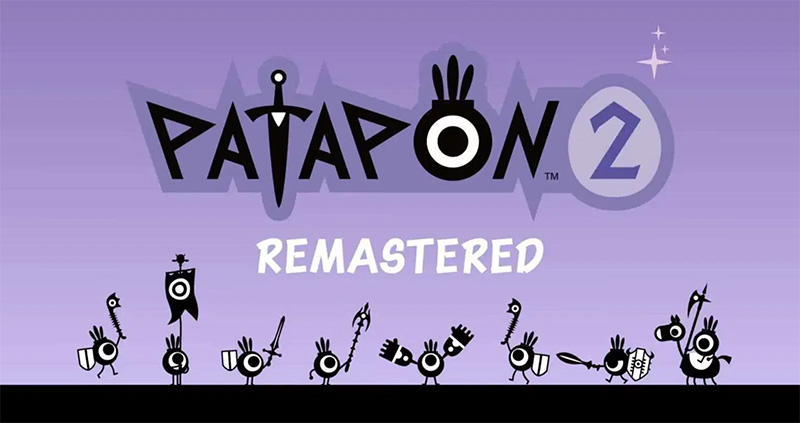
The Patapon series is known for its complex mix of rhythm and real-time strategy elements, which go together better than one might initially expect. With Patapon 2 Remastered, PS4 players can experience one of Sony’s more bizarre outings for the first time. It looks and runs better than ever before, but is still hampered by issues that were present in the original.
If you weren’t familiar, the Patapon trilogy was released on the PSP, and until this latest run of remasters, it has been relegated to now-defunct portable systems. The series was made available on the PS Vita, and it was there that I discovered these unique and challenging games.
You play as the almighty god of a boisterous tribe of Patapon warriors, leading them in their search to find Earthend, a sort of promised land where the Patapons will discover their true destiny.
Colorful, crazy and oftentimes quite difficult, the core gameplay conceit of the Patapon games is based around guiding your Patapon army through a variety of 2D maps full of the hostile Karmen tribe and the various flora, fauna, and fortifications placed in your way.
The way you command your troops in battle is the reason this game has such a dedicated cult following; using the magical War Drums of the Patapon tribe (which conveniently correspond to the four face buttons of the PlayStation controller) you lay down a beat that serves as a constant stream of orders for your troops. The four drums are pata (square), pon (circle), chaka (triangle), and don (cross).
Say you need your army to advance, to the rhythm of an onscreen metronome, you would input the march order: pata-pata-pata-pon. Once in an effective combat range, you could then input an attack or defense order as required; pon-pon-pata-pon or chaka-chaka-pata-pon respectively.
With just these three basic commands (there are six total, with increasing complexity), a pounding tempo is maintained, and there is a truly satisfying feeling that comes with controlling your forces in this manner.
The various Patapon under your command will dance and cheer in time as they attack any foes on-screen, and the rhythms of the various drums will have you tapping your foot to keep time.
When you are in the moment, banging out a beat and seeing your forces react appropriately, is where Patapon 2 truly sings. As you input consecutive commands, the Fever bar will fill and as it increases, it will have a variety of effects on your forces, from boosting their efficacy to allowing them to use special attacks.
As you complete stages, you will unlock new features such as crafting systems and various minigames back at your home base of Patapolis. In keeping with the theme, there is a great rhythm at play here too, with you as the player alternating between upgrading and equipping your forces and then leading them into combat, earning crafting materials and then returning to base once more.
Your army is made up of various different kinds of Patapon, and each can be customized and equipped to fill various roles on the battlefield. From the spear-wielding Yaripon to bow armed Yumipon, and the mounted Kibapon to the large and lumbering Dekapon, each has its own particular strengths and weaknesses.
Minmaxing your various Patapon soldiers is quite addictive, and I found quite a bit of satisfaction in fiddling with their equipment in-between missions, crafting new gear, and then getting to see it in action on the battlefield.
It would have been nice to have some additional content added, either in the form of new unit types or levels. There are around 40 missions as it stands, and the game will take players at least 20 hours to complete. This is the very definition of a remaster, in that nothing new has been added, but the visuals of the base game have gotten something of a glow up.
There is 4K resolution for PS4 Pro owners, and a general smoothing out of textures and effects. The whole thing runs beautifully and looks great in motion, and even during some of the more climactic encounters I never noticed a significant frame dip.
Patapon 2 is still a PSP game at heart, however, and it is evident in its outdated UI and save systems. You can manually save between missions, but if you are defeated part way through a stage, you have to start over from the beginning. As the game is fairly tough, this can mean a lot of frustrating repetition.
Your army’s standard-bearer, the banner carrying Hatapon, is the heart and soul of your forces and stays in the center of your formation. They must be protected at all costs as, if they fall, you immediately fail the current mission. While this makes sense thematically, it can also be pretty demoralizing, especially towards the end of a tough mission.
Missions can start to feel repetitive at times too, especially towards the back half of the game.
If you haven’t been keeping your weapons and gear up-to-date, you can really find yourself slamming your head against yet another castle, doing an insufficient amount of damage to break through before you start to take casualties. The solution is to replay earlier levels in order to grind enough materials to upgrade your gear.
During tough encounters, the screen becomes quite cluttered, and I found this visual mess would often put me off command timing, making it hard to regain the beat. With two armies facing off, launching projectiles at each other while large speech bubbles pop up in realtime to relay the game’s narrative, things can get really chaotic.
If you can look past these foibles, there is a solid gameplay experience at the core of Patapon 2. It shows its age, as these issues are emblematic of an earlier era in game design, but they don’t ruin the experience, and there is a lot of fun to be had here.
Patapon 2 Remastered brings a classic PlayStation title to modern platforms, and its the best possible version of the game. Its addictive beat-based combat is satisfying and truly unique, and while it shows its age in some of its systems, it is something that should be experienced by every self-respecting PlayStation fan.
5
3.5
/ 5
Fair
Reviewer: Khayl Adam | Copy provided by Publisher.
Pros
Satisfying rythym based combat system In-depth upgrade tree that lets you build varied armies Polished and clean visuals
Cons
Gets a little bit repetetive in the back half of the game Checkpointing feels dated and can have you replaying entire stages Screen can feel cluttered during tense encounters
Release Date Jan. 30, 2020
Developer Sony Interactive Entertainment JAPAN Studio
Azur Lane: Crosswave is a strange title from publisher Idea Factory and is based on a blockbuster hit mobile game in Japan. While you don’t need to know anything about the mobile game to play this release, the game doesn’t explain much outside of the bare minimum and expects you to shrug and go along with it.
While it doesn’t exactly fit the definition of a third-person shooter, the game still aligns that way, along with some aspects of shoot ’em up (shmup) games, but without going too far and becoming a bullet hell. The story is presented in the expected ‘visual novel with text boxes’ kinda way.
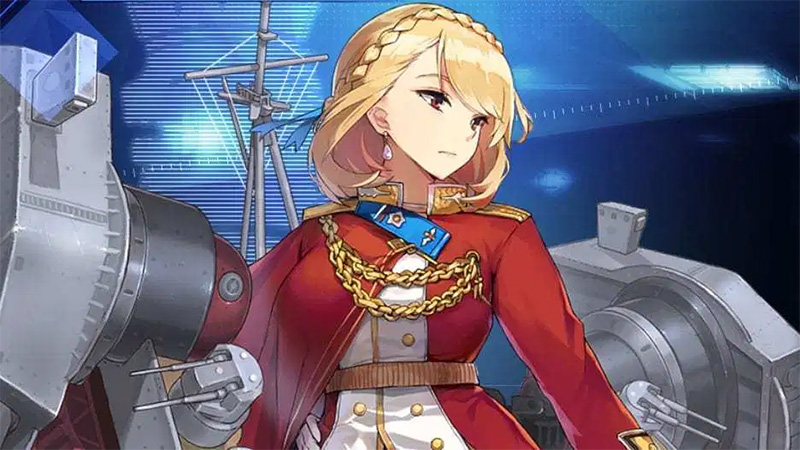
Azur Lane: Crosswave takes place in what seems to be an alternate World War 2 atmosphere. Four nations modeled after the biggest WW2 superpowers preside over the world, but there is never a real hint of conflict between them that out reaches the bounds of usual anime rivalry. Oh, and all entire roster of characters are all WW2 ships as girls.
That’s right. every girl is also a ship. An actual, real life (at least in the era of WW2) ship, part of a race called the Kansen. Their names are all taken from legitimate ship names and fit with the craft of their respective nations.
Character design is excellent, and on certain girls the ship parts are subtly woven into outfits or carried as weapons. Characters also follow the usual anime girl trend of some having exaggerated proportions or being scantily dressed.
As far as the four main nations go, there is the Eagle Union, a democratic federation that values freedom and harmony, entirely based on the USA. Following that is the Royal Navy, a constitutional monarchy that prides itself on history and nobility, standing in for Great Britain.
Iron Blood is a militaristic empire with a focus on advancing their own technology, a clear translation of Nazi Germany. Last there is the Sakura Empire, an island nation that abides by its own tradition and culture, easily identifiable as Japan. Alongside these there are a couple very minor characters from the Dragon Empry, which leaves no question that it’s meant to be China.
These four nations exist alongside the puzzling Sirens, which no nation interacts with or understands. The story mode sees the player taking control of Shimakaze, a destroyer from the Sakura Empire. In a very Top Gun-esque beginning, Shimakaze and reluctant partner Suruga happen upon mass-produced Siren ships (yes, in a world of ship girls there also exist non-girl ships) and fight them, sinking them all.
As some of these were transport ships, they lose their cargo in the sea, spilling forth very strange green cubes that defy physics entirely. The Sakura Empire doesn’t wish to share this find with the other nations on the off chance they happen upon the cubes and devise a plan to cover it up. The Sakura Empire invites the other nations to a Joint Military Exercise and treat it as a sort of competition, making gathering the cubes the way to achieve victory, ensuring the other nations unknowingly do all the work for them.
The map in Azur Lane: Crosswave is all in 2D with your character able to move over the water and in between islands. The maps are never large enough so you lose track of what you need to do next, and the compass in the top left corner always tells you the way to the closest event. There are also loot chests hidden on the map that spawn after certain events, but due to the maps never scrolling that far, they are easy to find. Silver chests usually have a couple items used for weapon strengthening whereas gold chests have new weapons and eventual advancement items.
Events come in only a few flavors. There are green events which usually don’t advance the story, but give you a brief scene of two or so characters interacting in ways that flesh out their personalities. Red events are the things that matter to the story and push things forward, Green battle events are usually similar to the normal events, side battles that only serve to help lead to the bigger fights. Red battle events are usually the big thing and signal that the end of the chapter is coming.
Combat is where Azur Lane: Crosswave both shines and thins out. Before any battle begins you are allowed to set up your six-girl party. Three slots are for attackers and you can take control of any of them during battle with left and right on the d-pad. Though for a period of time, you’ll be sitting at a party of two because it takes time to earn up enough to buy a third. The other three slots are for support characters that provide occasional buffs and heals.
In the middle of battle, it’s hard to figure out which support character is doing what so it’s easy to stagnate that side of the party and not switch them out when you know one at least of the three is a healer.
As there are several different classes of ship girl the game provides plenty of opportunities to work on loadouts. For example, torpedoes are a main weapon for most Kansen, but you have to make your sacrifice somewhere. Normal torpedoes hit hard but are a straight shot and can miss. However, there are torpedoes with a magnetic property that home in on a target once close, but you lose a good portion of the damage.
There are two shops in Azur Lane: Crosswave, one that trades just money and another that trades materials and occasionally also money. As there is a large roster it’s hard to know what is better without several rounds of back and forth checking so it’s always easier to buy and check directly. Money isn’t a problem and later there are items used for the sole purpose of raising funds and nothing more.
As you start with Shimakaze she’s very easy to work with and treads into being overpowered very early with the right additions. Her main cannon, set to R1 by default, is a cannon with infinite ammo as the reload is fast enough that it doesn’t take a break. She also has a torpedo launcher with a three segment gauge that requires a bit of time to fill up but can be fired one at a time whenever the indicated gauge fills. She can also be equipped with an anti-air cannon that fires at aircraft automatically and she, like every other girl, has two slots for items that give passive bonuses. All weapons and items can be upgraded with the right materials gained through either battle or loot chests.
Battles take place in large square arenas and as far as controls go, there is a lock-on function that can be toggled and is the game’s form of auto-aim. The game controls perfectly and the girls all possess great mobility, the ability to further upgrade their speed only adds to this. The problem with the arena is that the boundaries aren’t apparent until you are just about right on them, which can lead to getting backed into a corner or wall.
Combat in Azur Lane: Crosswave tends to follow the same formula. You spawn in and there are usually a couple battleships to fight and planes to take down and then you are directed to follow a green arrow a short way, before getting thrown into a fight with another Kansen. Then it’s mostly a job of circle strafing and avoiding their attacks while whittling down their sometimes frustratingly large HP bar.
Experimenting with different Kansen is when the combat builds back up. Shimakaze is great for straightforward damage, but isn’t always that fun to actually play. The many aircraft carriers provide a different way to battle against enemy ships and Kansen alike and the existence of multiple types of aircraft changes how you fight and position yourself.
As far as environments go, there aren’t many unique locations where battles take place, and they are mostly pretty empty, but the far off mountains or darkened sky with aurora borealis lights give a nice sense of atmosphere without being too overbearing. The water effects are a nice touch and portrays fighting on the high sea appropriately and gives it some welcomed flair. Fighting at night and seeing the bullets fly over the water almost turns the whole spectacle into a light show.
Unlocking new girls/Kansen is rather simple, as the roster page lists out the amount of “A points” needed. These points are gained through battle, but when story battles barely give out more than 200 per battle, even at the end game, it’s a small grind to buy them all. Buying certain Kansen unlocks special character episodes, small events accessed from the main menu (separate from the menu accessed from the in-game map) that don’t have any real importance on the story.
At the start of the first chapter of Azur Lane: Crosswave, you gain access to Extreme Battles which are standalone fights that can be undertaken to gain items, money, and XP at a time in the game when story battles are somewhat scarce. There is also a photo mode where you can make you own photo shoots and set scenes however you wish.
Azur Lane: Crosswave does a good enough job of offering plenty of waifus and at the beginning of the game only gives enough battles for you to crave more. However, once they start to be more common, their enjoyment level sinks and requires the player to start changing things up themselves to avoid boredom.
It isn’t a poorly made game at all. In the middle of combat when you can take a moment to watch the water move around your character and buckle when torpedoes blast through it you understand how nice these touches are. There is enough variance to make sure for a large majority of story battles you have a way of coming in with a fresh look, but the battles kind of always play out the same way, so it’s frustrating when the build you brought isn’t good enough and you struggle to get through what you were clearing before without any problems.
Azur Lane: Crosswave
3
/ 5
Fair
Reviewer: Cameron Waldrop | Copy provided by Publisher.
Pros
Combat can be approached from many angles. Great character designs. Great amount of available weaponry. Awesome water effects.
The Essential Picks sale has started up today on the PlayStation Store for the PS4, so if you’re on the lookout for some sweet deals, get your wallet ready!
You can check out the full list of titles on sale right here on the PS Blog but if you want to see what the best games on this are, just scroll down to get some highlighted choices from us.
The sale ends on March 3 at 8 am PT so get out there while you can.
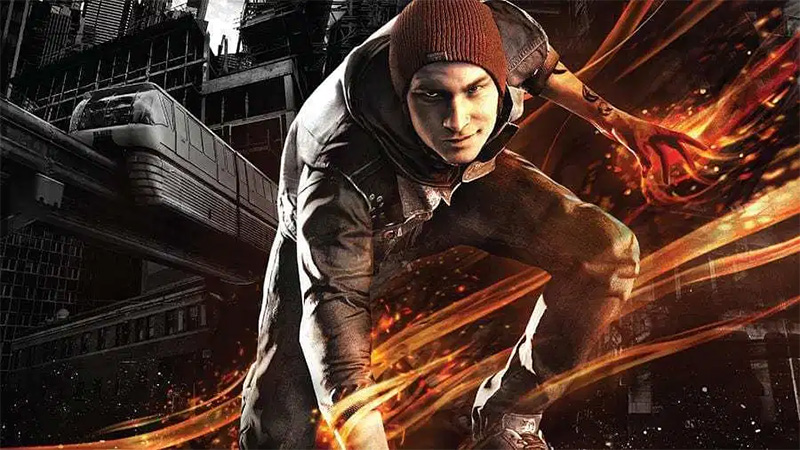
Before Sucker Punch got all serious with the upcoming ninja action, Ghost of Tsushima, the team spent years working on the Infamous franchise, which seemed to come to an end with the release of Infamous Second Son and its standalone DLC, First Light.
Both titles put you in the shoes of two characters that have really cool superhero powers and throws you into an open sandbox and lets you unleash your powers on enemies and traverse around the gorgeous city of Seattle.
If you somehow missed out on these action-packed titles when the PS4 first launched, then this is a good time to snag up both of them for a pretty low price during this Essential Picks sale on PSN.
Bloodborne is one of the best PS4 exclusives out there that was developed by the amazing team over at FromSoftware, the same team that created the Dark Souls series and the recent Sekiro: Shadows Die Twice.
These games have gone on to become massively successful properties, with Soulsborne becoming a common term to describe video games with painstakingly difficult enemies and bosses but also having a tight combat system.
Bloodborne takes players through a gothic world where you fight disgusting and grotesque monsters and other creatures while you find the best equipment to customize your own character how you see fit.
We’re not sure if Bloodborne would even need a sequel, but just in case it does get one anyway one day, you can prepare yourself by buying Bloodborne for only $15 right now during the Essential Picks sale on PS4.
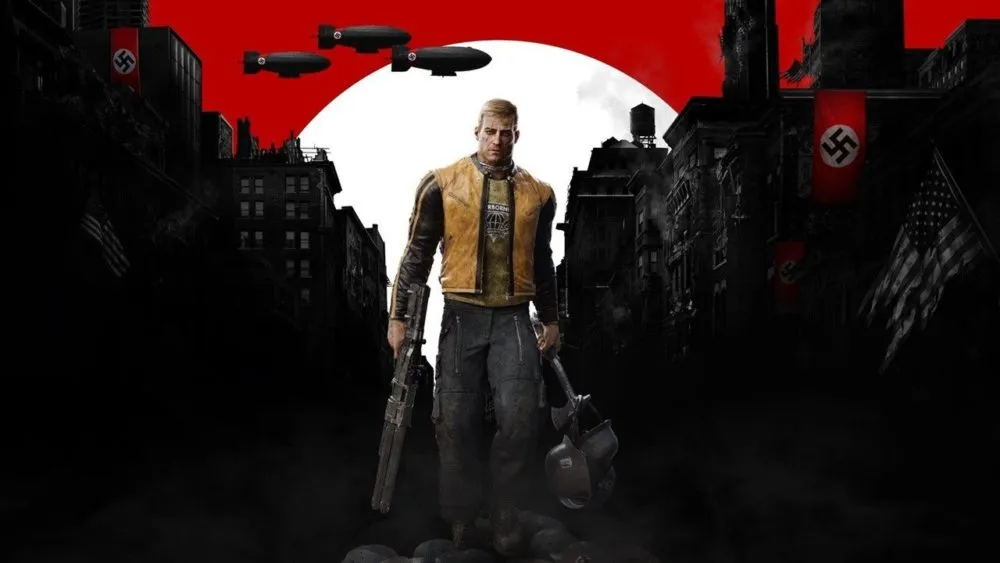
The highly anticipated sequel to Doom 2016, Doom Eternal, is coming out in about one month and the hype is real. If you’re still on the fence about picking it up when it launches, you can get a taste of Doom for a very low price to see what all of the fuss is about.
This bundle comes with the fantastic 2016 reboot of Doom and 2017’s Wolfenstein II, which is also an excellent first-person shooter where you play as B.J. Blazkowicz and shoot down some Nazis with some insane weaponry –the narrative and character-building is also solid as well.
These great shooters can be yours for the taking for only $35.
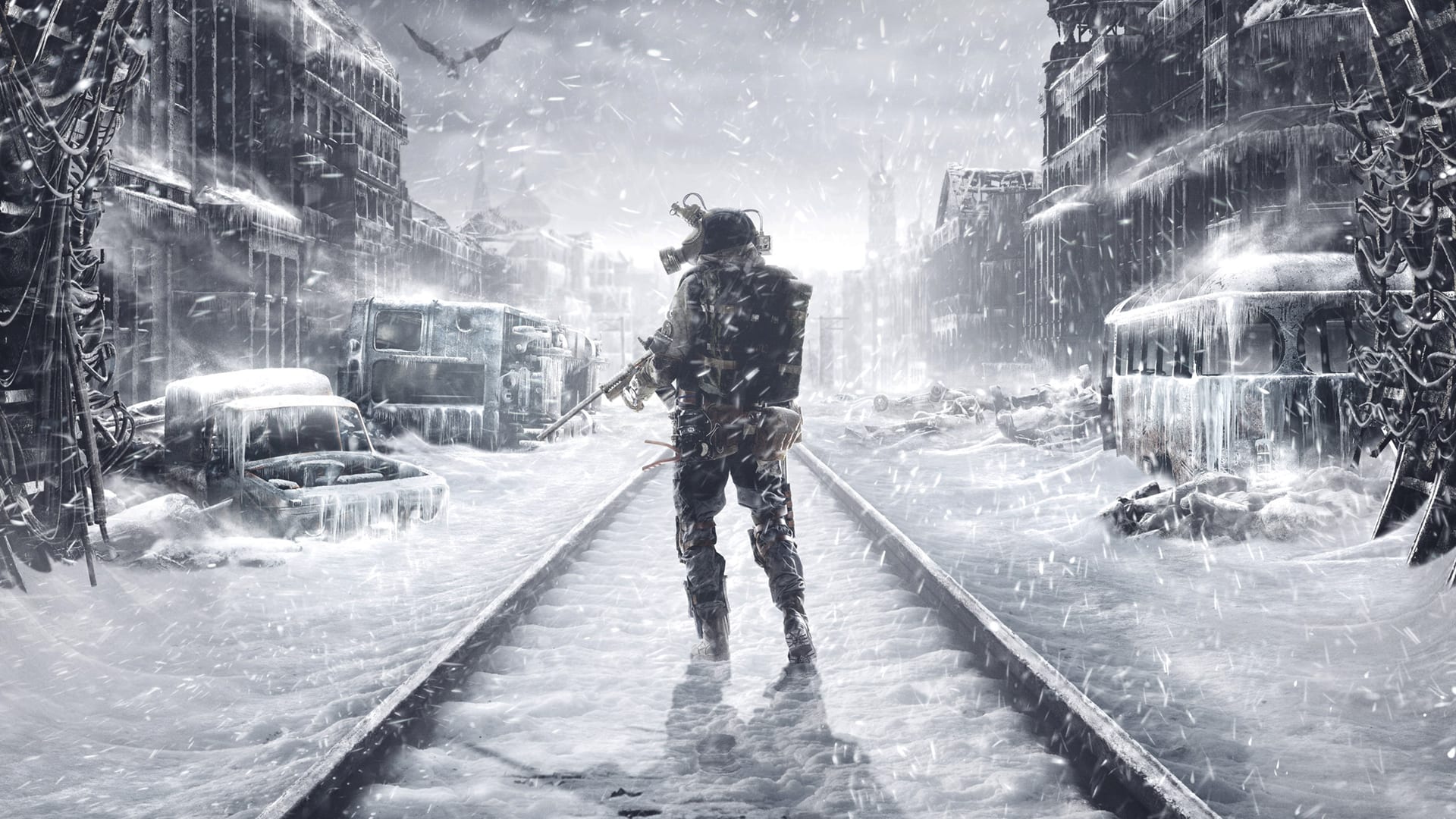
Metro Exodus came out in early 2019 to pretty positive reviews but due to the slew of other major releases around the same time, it really didn’t get the attention that it deserved.
Our reviewer, Tom Hopkins, thought that the first-person shooter from 4A Games was great, praising the openness and the variety of the levels:
“The open levels bring a huge amount of variety to Exodus, while also putting a focus on the well-integrated survival mechanics and allowing 4A Games to flex their muscles with the stunning locations.
The survival horror tropes, linear moments, and emphasis on atmosphere haven’t been lost, but Exodus proves that Metro can be much more than a journey through dark and decaying tunnels.”
This is a fantastic choice for those looking for a solid shooter to play during this gaming drought.
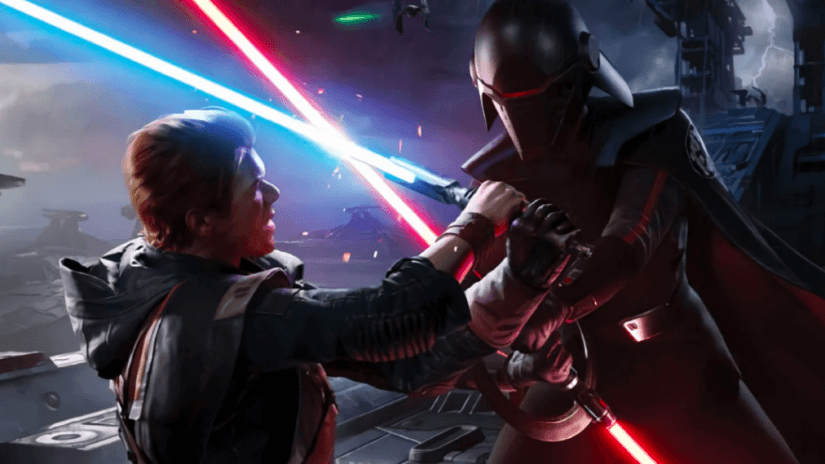
It’s been a long time since we’ve gotten a new single-player Star Wars game that wasn’t mediocre. Jedi: Fallen Order tells an original Star Wars story that’s canon to the universe and features a new cast of characters and throws you into lightsaber battles that feel so authentic.
This game proved that we can get a good story-driven Star Wars game in the modern era and if you are even a small fan of Star Wars, I highly recommend picking this up as it’s the best Star Wars video game that I’ve ever played, and that’s saying something.
Also, Fallen Order managed to sell extremely well, so you can safely bet that you’ll be seeing a sequel down the line eventually.
If any of you plan on picking up any games during this Essential Pick’s sale on the PSN store, make sure to drop a comment down below and let us know which ones you’re planning on buying.
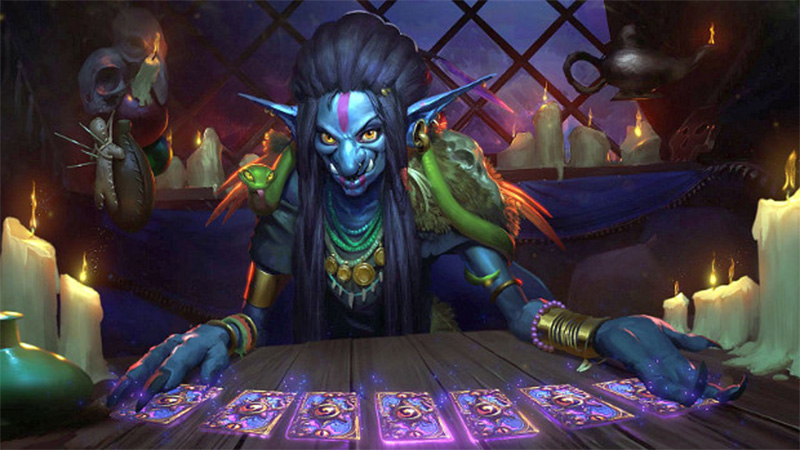
When I wrote about the top free-to-play gaming news stories of 2019, I put the Hearthstone Blitzchung controversy at #1. In doing so, however, I suspected that “I don’t think this will really have an effect, not on Blizzard or the rest of the gaming industry.” I did concede that it was possible that “Activision-Blizzard might have a slight downturn in revenue for Q4, thanks to various boycotts and whatever.”
Depending on how you analyze the numbers (found here), you could say I was right about that second part. But here’s the rare case where I’m more inclined not to take credit for one of my predictions.
The Blitzchung controversy happened just as Q4 was kicking off and some are pointing to that as the reason why Q4 2019’s revenues ($562 million) were much worse than Q4 2018’s ($647 million). But Activision-Blizzard(-King) was down across the board in 2019, with net revenues falling from $6.8 billion to $5.9 billion. If we focus just on the Blizzard part of things, those numbers are similar: $2.2 billion in 2018 versus $1.7 billion in 2019.
Breaking it down quarter by quarter also doesn’t seem to indicate that things went particularly poorly in Q4. 2019 saw less revenue than 2018 for Blizzard in every quarter: Q1 ($339m to $479m), Q2 ($381m to $485m), Q3 ($392m to $627m), and Q4 ($562m to $647m). So I don’t think you can say that the Blitzchung controversy had any significant impact on earnings. Maybe the launch of Overwatch on Switch in October helped soften things a bit, but I don’t think it helped that much.
(Speaking of launches, World of Warcraft Classic made its debut on Aug. 26, about two months into Q3, and that didn’t seem to move the needle in that quarter at all. Curious.)
Blizzard doesn’t break down its revenue by game, so we won’t know for sure exactly which of its titles brought in the bucks in Q4, but anyone expecting a huge “Blizzard boycott” to tank the company’s profits for Q4 2019 has to be disappointed. Maybe the Warcraft III: Reforged debacle will do that in Q1 2020, but if it does, it will only show that the quality of the game, and not the quality of the company, is still the deciding factor for whether most people will spend.
It’s hard to imagine a world without Mortal Kombat around as the series has nearly existed for three full decades, spanning across many successful (and not) titles in that time. Back then, Mortal Kombat was developed by Midway Games, until Warner Bros. Interactive bought the IP back in 2009.
But even then, it was that game that your parents didn’t want you to play as a child due to the sheer amount of violence. When it released, the series title quickly made headlines and surprisingly manage to be a hit. Yet, despite it’s success, Mortal Kombat founders never originally planned for a sequel and instead set their eyes on a bigger franchise back then.
John Tobias, a name Mortal Kombat fans probably haven’t heard much from since his departure from the studio in the late ’90s, recently took part in the latest episode of Mortal PodKast to discuss some of series history and how the team never expected a sequel to happen.
“I remember having a loose idea of where the story would go if there would be a sequel. We didn’t think that there would be a sequel. In fact, when we finished the first game Ed and I thought “Oh what do we want to do next?” And we really wanted to do a Star Wars game, we were pushing our management to let us do a Star Wars product. But of course, the game hit big and they wanted us to do a sequel”
A surprising turn of events it would have been if Mortal Kombat had never reached the success it had back then, though even then, the series co-founder seemed to have had Star Wars on his mind during the development of the first Mortal Kombat game.
One thing that I thought, specifically with Mortal Kombat. We spoke about Shang Tsung having an emperor in the first game. We mentioned these things without getting into any details and the strength of doing that is we insinuate plots. Players read that stuff and in their mind they start to formulate “wow there’s this other thing here that exist that we don’t know anything about”
I remember being conscious of this on the first and second game, was when I saw Star Wars when I was a kid, they alluded to an emperor and empire, all this stuff that they really didn’t get into the weeds with. It wasn’t until Empire Strike Back that you really learn that there really is an Emperor. As that stuff was revealed to me as a kid, it was mind blowing. So I remember being consious between the first and second Mortal Kombat of wanting players to have that sense of “oh there’s a bigger world” that has been alluded to and give them the sense that this is larger than we thought.
The rest of the podcast touched upon some background lore of the series that we highly recommend any Mortal Kombat fan to give a listen.
In other Mortal Kombat news, a new patch for Mortal Kombat 11 was released yesterday, which you can read about here.
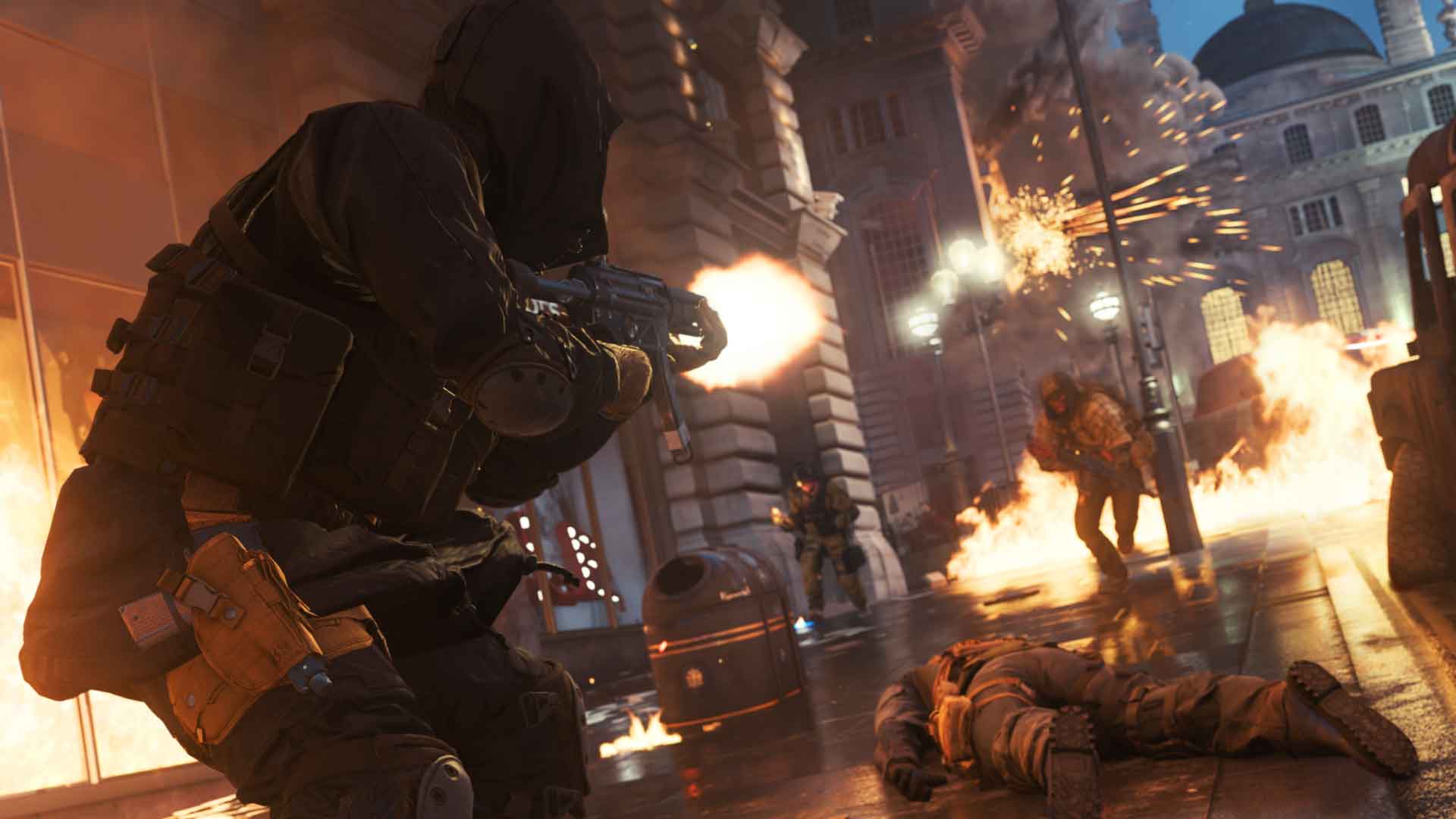
We’ve now received two free seasons of content for Call of Duty: Modern Warfare, and they definitely seem to be milking the nostalgia on this one. That’s honestly not too bad however, as I do have many fond memories of the original trilogy. At the same time, it would be nice if they branched out further creating brand new experiences within the game.
They are doing this, to a degree. I will definitely admit that this is all fresh on the brand new engine that’s providing gorgeous visuals and stunning moments across the multiplayer, as well as the campaign. Still, it’s definitely leaning heavily on what came before for inspiration across all aspects of the experience.
I totally get that Modern Warfare is the current time era for the game, but that doesn’t mean we can’t get fresh maps outside of what came before. I really liked what they did with the Atlas Superstore, it’s entirely new and weird which was a fun aspect of multiplayer maps in the series for so long when it came to DLC. They always tried some strange things, and now it’s somewhat more of what has come before.
I mean, this recent season brought back Ghost as a character, the map Rust and expanded another map titled Boneyard outwards. Rust is definitely a great map in here, and I appreciate it more now I suppose. The Zhokov Boneyard is also greatly expanded upon as basically an entirely new map, but still at the center is the layout we know probably quite well. Compare this to the first season which brought back Crash, Vacant and Shipment as a bundle. There’s a lot of what we know, it would be nice to see some more new maps or at least a better ratio of original levels to those brought back for another round. I know folks love seeing their favorites come back, but we also need to see new things and to get an idea of what the team can do in regards to be being creative with original maps to build the series forward. Everything feels new, but at the same time it feels held back by the well earned love of the previous titles.
I definitely want to be clear that I have no issues with older maps coming back, especially since there’s a lot of effort to get them recreated here. They feel brand new, still I want to see just what else can be done with this engine. They had some neat new maps that felt less like actual multiplayer levels and more like real locations carved out for war. That’s being somewhat forgotten as we dive into a sea of the past. Whatever the case, it’s free and helps expand what I feel is a stellar entry in the series so I won’t complain too much. I’m very much looking forward to what is coming in the future.
I’m guessing there will be a third season, but prior to that likely the whole rumored battle royale Warzone mode which is apparently a bigger drop of nostalgia with a pile of older maps thrown together. That should be interesting, and it’s best to remind ourselves at times that we do need to see new things. I know everyone is probably screaming for Terminal, Pipeline and a long list of other ones that I won’t go on listing as you get the picture from those two.
I of course have a list that I’d like to see return in this one, but that shouldn’t hold back the developers from possibly providing us with the next Crash map. That of course being something entirely new and different, in case that wasn’t clear. Read our review of the game below, or check out the franchise hub for additional coverage of the series.
The first all-female lineup to compete in the top division of League of Legends, Vaevictus, has been kicked from Russia’s LoL Continental League (LCL) after a series of poor results.
Riot Games Russia released a statement which says the roster had an “unacceptable level of competitiveness in a closed league” as Vaevictus failed to win a single game in both the Spring and Summer Splits last year. Last Summer, the team had an average of 27 deaths per game, 10 more than the next highest in the league, and had the shortest average game duration in the LCL of 22 minutes 11 seconds.
Vaevictis was subject to prejudice from other teams at the start of last season with RoX and Vega Squadron both receiving warnings for gender discrimination and a lack of sportsmanship. Teams would regularly play off-meta champions when facing the female squad.
The team will still have a chance to re-enter the league as the players can compete in the Open Cup which offers them an opportunity to return to the league next year.
Replacing Vaevictus will be Team CrowCrowd, an organisation that has been competing in semi-professional leagues since 2016 in hopes of eventually joining Russia’s major league.
Former professional player Kirill ‘Likkrit’ Malofeev is the owner and strategic director of the organisation. The pro is will be remembered fondly by LoL fans as he was part of the infamous Albus Lox Luna squad that in 2016 became the first-ever wildcard team to reach the knockout stages of the World Championships.
Likkrit, who has always been vocal, retired from professional play back in 2017 after Riot Games handed him a six-month ban from Riot events for insulting the game publisher and the LCL on his own stream. Now he has returned to the very same league but will not be competing on the stage.











 🥇 News Game Now