Azur Lane: Crosswave – How to Oath a Ship

Guide to Oath a Ship

Raising a Ship’s Affinity

Ships have affinity level that can be increased, starting from “Stranger”, then turning to “Friend”, “Crush”, “Love”, and finally, once you’ve given them a ring, “Oath”.

From what I’ve observed, simply using the same ship over and over again won’t raise the affinity to the max. Each stage of affinity can be achieved by doing specific actions. Those actions include:


  1. Using the ship in 10 battles.
  2. Setting the ship as secretary and use them in 10 battles.*
  3. Raising the ship’s level to 100, then do Cognitive Awakening.**

By doing these actions, the ship’s affinity will increase by one stage until “Love”.

* – I’m not sure if the ship must be brought in battle or it can be stacked with the first point. Need confirmation.

** – Cognitive Awakening can be done by raising your ship to level 100, collecting their M Isomer by fighting them in the story mode, and exchanging them for Cognitive Chips in Akashi’s store. Once you have, simply go to Dock and open the ship’s status screen. Press Triangle (PS4), Y (XBOX), or I (Keyboard) to proceed.

Buying the Promise Ring

Once you’ve raised a ship’s affinity to “Love”, it’s time to buy a Promise Ring for them. The rings are available for purchase once the ship’s affinity became “Love”.

To buy the ring, you need Heart Tokens. Heart Tokens are unique to each ship, meaning you can’t buy Shimakaze’s ring with Suruga’s Heart Tokens. Heart Tokens can be acquired through two methods:

  1. Watching an episode for the first time in Episodes mode. You can only get Heart Tokens once from each episode.
  2. Clearing Extreme Battles. You can get a ship’s Heart Tokens by fighting them. For example, clearing stage 1 will get you Shimakaze’s and Yukikaze’s Heart Tokens.

Once you’ve collected 25 of Heart Tokens, you can exchange them for Promise Rings from Akashi’s store.

Marriage

With the ring in your possession, simply go to the Dock and open the ship’s status screen. Press Triangle (PS4), Y (XBOX), or I (Keyboard) to start the marriage.

And you’re done! The affinity on your ship will now show “Oath”. I haven’t checked it, but one of the tutorial said by doing this, your ship’s status will be boosted by a certain amount. Enjoy!

Wolcen: Lords of Mayhem – Save File for Build Testing (Everything Unlocked)

A savefile with everything unlocked for tests.

Let’s Do It

  • You will need to download the savefile. Wolcen saves file have .json format.
  • Now, paste it on C:\Users\user\Saved Games\wolcen\savegames\characters, you can see there your other characters on offline mode.
  • Now, just play the offline mode with the new character everything unlocked!

Can I Be Banned with This?

No. You cant! This save only works for offline mode, in the same way that it does not affect other players or influence the achievements.

New Mythical Pokémon Teased For Sword And Shield ( February 27 2020 )


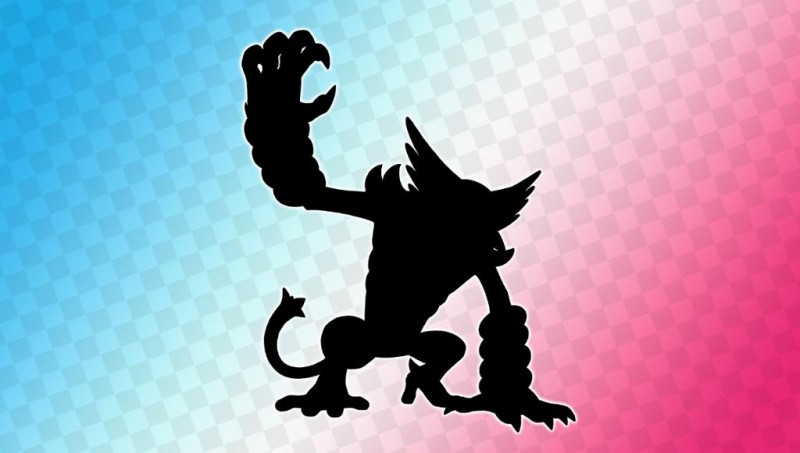
       Pokémon’s anniversary is February 27, a day that will likely be filled with news and events for most of the active Pokémon games. For Sword and Shield, Game Freak has stated that it will reveal a new mythical Pokémon that will likely appear in the game at the same time. The official Pokémon Twitteraccount shared what is believed to be the silhouette of this new critter.

Destiny 2 speedrunners are pissed about incoming changes to swords

The overhaul may eliminate ‘sword skating,’ which Destiny 2 players rely on to set records.


The latest This Week at Bungie update contained some upcoming and kind of out-of-nowhere changes to swords that the studio described as “a sort of tableflip when it comes to light attacks, heavy attacks, and guarding.” Bungie said that swordsmiths will still “rip and tear through opponents”, although they’ll have to learn new techniques for getting the job done. 
“Swords are getting a little more love this Season,” Bungie said. “While Swords have been a staple of Destiny ever since their introduction in The Taken King, we felt they were due for an update both to freshen them up, but also to allow us more room to work with them in later releases.” The sandbox team closed the post saying: “We do hope you’ll enjoy the changes.” Unfortunately, the reaction from the speedrunning community has been exactly the opposite.
Before we get to exactly why they’re hopping mad, let’s breakdown the incoming changes:
Sword Energy
  • Swords now have their own reserve of energy that recharges naturally on its own, and is not to be confused with ammo capacity. This energy will overtake your melee slot while you’re wielding a sword and is spent on various actions.
Guarding
  • Guarding now uses sword energy instead of consuming ammo. Different guards have different consumption rates, damage resistance and behaviors, so be sure to experiment and find a guard type you like. You’ll still need at least one ammo to begin guarding, though.
  • Back during Season of the Drifter, the Stronghold exotic for Titans was introduced, allowing them to guard with relative impunity and opening up a more interesting opportunities for swords to shine in a variety of content which caused us to take another look at the guard function itself. Although the guard function has always existed, it was never really considered worth the cost. With this change, we hope that players will use their guard intelligently to protect themselves instead of it being an almost unused button. Rest easy, Stronghold has also been modified to still allow Titans a unique guarding experience.
Light Attacks
  • Grounded light attacks for all Swords will now loop for an infinite combo, and all Swords can cleave.
  • While the basic three hit combo is quite a staple of melee weapons in many games – In a shooter this leaves the player extremely open to enemies. By letting the light attacks loop, we also push them and the heavy attacks apart further. Cleaving on light attacks was previously only on the Aggressive Swords, but we opted to add it to the rest of them for more hack ‘n slash.
Heavy Attacks
  • Heavy attacks now consume Sword energy. While you are always able to perform a heavy attack, the attack is stronger when you have full energy, and weaker when you don’t.
  • A lot of swordplay in many situations simply boiled down to endlessly mashing the heavy attack button instead of mixing up attacks which wasn’t quite the most interesting experience. Do note that aerial heavy attacks as a general rule do not consume Sword energy, but that can vary based on the Sword.
Shield Bypass
  • A portion of most Sword attacks can partially bypass elemental shields.
  • We added this to give Swords a little bit of a personality difference from shotguns who share a very similar role in combat as powerful CQC  weapons.
The changes sound potentially promising in terms of conventional Destiny 2 gameplay, but speedrunners are concerned that the change could either nerf or eliminate the practice of “sword skating.” You can get a detailed rundown of how it works on Reddit, but the short version is that it’s a bit like strafe-jumping in Quake: Destiny 2 players use the technique to move at far faster speeds than they’d normally be able to, which naturally makes it invaluable to speedrunners. 
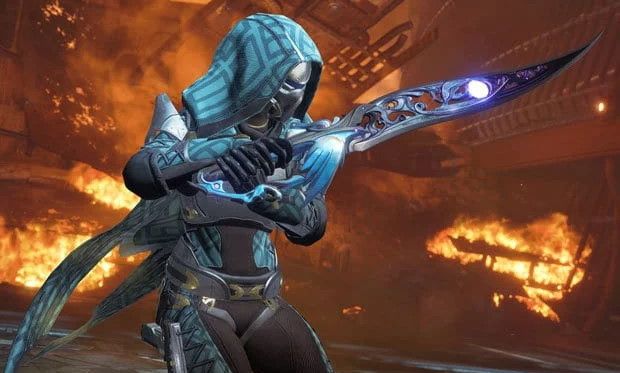
That speed is increased further when combined with a particular exotic sword called the Worldline Zero, which is used almost exclusively by players looking to max out their movement. The video below explains how and why.
Naturally, the changes detailed by Bungie also effect exotics, which has led players who love using Worldline to zip around to complain bitterly about the upcoming ‘buff’. 
Sword changes are a massive “FUN DETECTED” alert. I’ll play for WF races butm it’s unlikely you’ll see me play after that at all. In my eyes, there’s nothing worth going back to for a player like me now.

34 people are talking about this

The lack of specifics in the update make it impossible to know for certain what the impact on sword skating will be, but Bungie community manager dmg04 has all but confirmed that it will be significant.

If this is a lowkey nerf to Worldline Skating….. or sword skating on a warlock. I’m gonna be a little sad. If it doesn’t change any of that I’m all for this new sword energy stuff. Sounds interesting
View image on Twitter
As I understand it, the speedrun community will need to find new ways to break the sound barrier next season.

I understand this will come as a disappointment to some. Hopefully, this will bring new techniques and serve as a challenge to refresh previously established records.

350 people are talking about this

There’s also a feeling that the timing of the changes, while certainly coincidental, is nonetheless unfortunate: Destiny 2 appeared in the speedrunning extravaganza Awesome Games Done Quick for the first time this year.
The big sword changes will go live in the next season of Destiny 2, which according to leaks will be called Season of the Worthy and begin on March 9. We also expect that it will see the return of the Trials of Osiris competitive PvP mode.

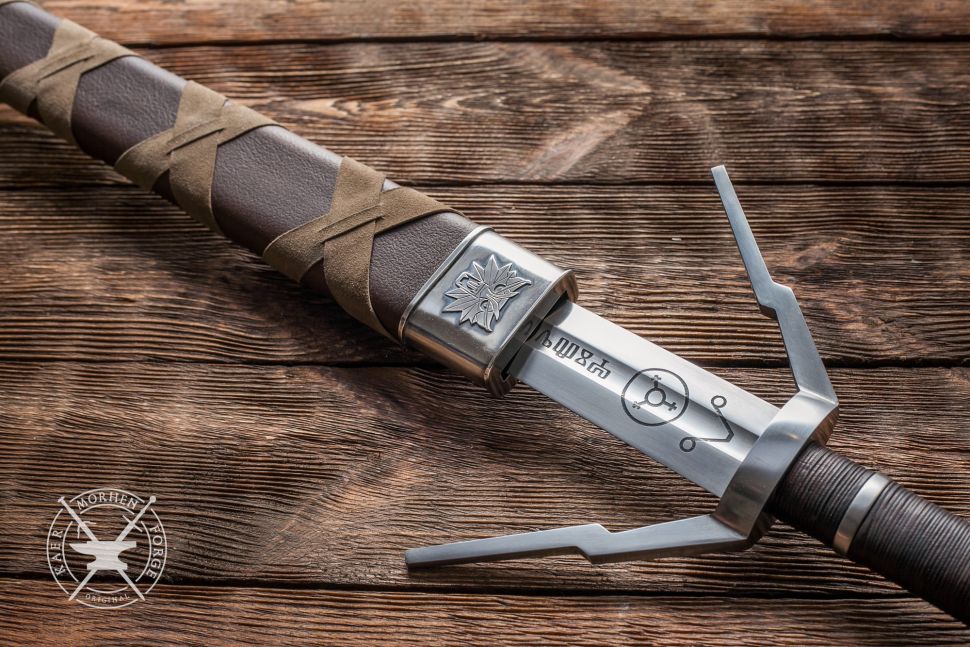
The only person licensed to forge Witcher 3 swords may be extra busy this year

Kaer Morhen Forge makes Witcher sword commissions, including silver swords, with CD Projekt’s blessing.


Swordsmith Artur Wysocki has too many emails: Over 300 in the past few days, he says. After The Witcher on Netflix spurred a renewed interest in the Witcher books and games, the only smith licensed by CD Projekt to forge and sell swords based on the designs of the games will likely have a few more requests than usual.
Kaer Morhen Forge is a hobby and side-business for Wysocki, and he doesn’t keep any in stock, but crafts the weapons for between €400 to €900 on commission (around $440 to $990 USD). Rune inscriptions and handmade scabbards cost extra. 
His “silver swords,” such as the Mastercrafted Wolven Silver Sword, are actually steel, but can be galvanized in silver. In January, he revealed a sword with a 1 millimeter silver coating, which a buyer unconcerned with cost might be able to request. It is very shiny:

(Image credit: Kaer Morhen Forge/Michał Sygut)
As the swords are made to order, they can be forged to different hardness, sharpness, and balance specifications, ranging from potentially deadly to still-a-bad-idea-to-swing-around-if-you-don’t-know-what-you’re-doing.
Wysocki is based in Katowice, Poland, but can ship internationally. Like the swords themselves, that won’t be cheap, and is subject to whatever local restrictions on monster-slaying weapons exist.

Saving Siege: Ubisoft’s Hard Fought Victory

Operation: Against All Odds

  Rainbow Six Siege is one of Ubisoft’s most successful games ever. The 5v5 tactical shooter is a mainstay on Steam’s top played list, has a huge console community, and is one of the most important games on the professional esports circuit. But Siege wasn’t an instant success story. Far from it.

When it first launched in 2015, Siege suffered from a variety of technical and structural issues that could have doomed it to a heartbreaking defeat. But despite lukewarm critical and player reviews, the development team at Ubisoft Montreal refused to let Siege fade away into obscurity. Over the course of four years, Ubisoft turned a struggling start into a journey to something brilliant.

Rainbow Six Siege is now considered one of the best multiplayer shooters ever created, and this is how it achieved that.

Redesigning a legacy

Siege is the eighth core entry in Ubisoft’s long-running Rainbow Six series. Inspired by Tom Clancy’s best-selling novel, the games have historically centred on tactical single-player campaigns where players take on the role of a military specialist, and command a squad of AI soldiers. That legacy was due to continue in Rainbow 6 Patriots, which would have seen players taking on an anti-Wall Street terrorist cell operating in New York City, but development was plagued by technical issues. With the new PlayStation 4 and Xbox One consoles on the horizon, the decision was made to cancel Patriots and start afresh on a next-gen game.

Assessing its next move, Ubisoft realised that it was tired of scripted single-player missions. The developer wanted to create the same intensity of a cinematic campaign, but in a multiplayer setting where those moments would be created by players. And so a small team set to work on reinventing the series. Originally called Rainbow Six Unbreakable – a name chosen to reinvigorate the team after Patriots’ demise – the project would eventually become Rainbow Six Siege.

“Personally, I was super happy that we were focusing on the PvP,” says Jean-Baptiste Hallé, lead game designer for Rainbow Six Siege. “I was absolutely convinced this was the future of gaming in general, and of this brand in particular.”

While Rainbow Six games had featured multiplayer modes in the past, they were always accompaniments to the core campaign. But, for Siege, PvP would be centre stage, with just a few single-player training missions as a side-dish.

“We made a very clear choice,” says Hallé. “And I’m pretty convinced to this day that if we had tried to have a big campaign and a bit of multiplayer on the side, we wouldn’t be where we are right now.”

The E3 debut

The world was introduced to Ubisoft’s new PvP ambitions at the company’s E3 conference in 2014. Siege’s first public demonstration featured dramatic footage of a what would become the Hostage game mode, in which a squad of attacking soldiers must rescue a civilian from a team of defending terrorists.

“If I remember correctly, the biggest priorities were really to show that this was a multiplayer game,” says Hallé of the demo. “It was very different from what had been done before with the brand.”

The match took place in the most unsuspecting of environments: a suburban family home, now better known as the House map. It featured moody atmospheric lighting, with light beams highlighting dust in the air, and astonishing destruction technology that saw drywalls perforate and splinter with every bullet fired. The footaged wowed many, but not everyone was convinced.

“I watched the trailer and I said ‘That looks shit’,” says Michael Stockley, better known as KiXStAr. He would go on to become one of the most recognisable faces in the world of Rainbow Six Siege esports – first as a player, and later as an official commentator – but in 2014 he was just an skeptical onlooker.

“I looked at it and I thought to myself that there’s no way that could be optimized,” he says. “It didn’t look at all like gameplay, so I ignored it for a long time.”

“It wasn’t fake, the whole thing was made in-engine. It was real.”


Like Stockley, many people online refused to believe that the demo was actual gameplay. Since the days of the pre-rendered Killzone 2 E3 demo a decade prior, people had learned to be cautious of overly-impressive footage. But the demo wasn’t faked; while the match had been choreographed in order to tell a gameplay ‘narrative’, it was all created in-engine.

“I remember us playing this build and preparing the video,” recalls Hallé. “It wasn’t fake, because the whole thing was made in-engine. It was real, just not something that you could easily give to someone, because something would probably have been broken somewhere.”

Following the mixed reaction to the E3 demo, the team at Ubisoft Montreal set to work on refining their idea for a highly competitive Rainbow Six. As development went on, it became clear that the atmospheric lighting and destruction of the E3 demo was fantastic for a cinematic single-player experience, but detrimental to a multiplayer environment. As such, the lighting was adjusted to allow for clearer vision, and the destruction changed to create larger holes and better sightlines.

Creating the Operators

The biggest evolution, though, came in the form of who players control in Siege. The original plan was to utilise a class-based character structure akin to games like Battlefield, but other inspirations soon crept in: “Our creative director, Xavier Marquis, was a very big fan of Dota.” reveals Hallé.

Dota is a 5v5 game in which players take on the role of fantastical warriors and creatures, each with unique skills that compliment and contrast with other heroes. This setup had Marquis thinking: rather than players taking on the role of a generic soldier as you did in previous Rainbow Six multiplayer modes, why not choose from a selection of unique characters that each offer a bespoke tool for the team to make use of?

This idea evolved into Siege’s most recognisable element: the Operators. This collection of soldiers would allow for varied gameplay approaches. Thermite, for instance, would be able to blow up walls to gain entry into new areas, while Fuze could fire grenades through a wall into the adjacent room. These characters would transform Siege into the latest FPS sub-genre: the hero shooter.

Unlike class-based games, the Operators wouldn’t just be blank faces. They’d be men and women from around the globe, with backstories and personalities. Thatcher hates bureaucracy and lives on a boat called the Iron Maggie, while IQ is an introvert with hobbies ranging from rock climbing to writing science-fiction.

“We would never ever want to have people build their own terrorists.”


“Even for the most gameplay driven person who’s really into shooting and competition, I think we all need stories,” says Hallé. “If you really want to get into a universe like this one, I really feel like getting a sense of who these characters are, how they interact with each other, and what makes them human is super important.”

While designing the operators, Ubisoft quickly came to a realisation. Traditionally, Rainbow Six had focused on the battle between special forces and terrorist cells. Continuing that lineage would mean creating terrorist operators, and the team was uncomfortable with that.

“We would never, ever want to have people build their own terrorists,” says Hallé. “This whole thing felt super wrong right off the bat. I think we were still inheriting from a tradition coming from Counter-Strike and other tactical shooters that have the typical opposition between the counter-terrorists and terrorists. But the more time has passed, the more we’re trying to move out of this and trying to just get rid of terrorists as much as we can.”

The terrorists from the original E3 demo were removed from the PvP modes, relegated to being the antagonists of Siege’s lesser-played PvE Terrorist Hunt mode. And with that, Siege became a game of Rainbow vs Rainbow. This setup later provided a point of mild confusion for some players; why would Rainbow be fighting its own soldiers? Ubisoft would eventually fold this idea into Siege’s fiction in 2020 with the Tournament of Champions; a training exercise pitting the world’s most elite soldiers against each other, focusing on attack and defence tactics.

Increasing issues

With the initial operators designed and the hero shooter template locked in, it was time for Ubisoft to see what real players thought of the game. The team felt good about what they had designed, but the first round of feedback didn’t paint quite the picture that they had hoped. Fans playing the alpha began to report issues to Ubisoft. And it wasn’t just one or two problems.

“There were so, so many,” recalls Hallé of the reported bugs. “We had tons of issues. The one that was drowning us at that time was definitely matchmaking. It was so bad that it would likely kill the game at release. So that was taking most of our bandwidth.”

Players were finding that it took a lengthy amount of time for matchmaking to connect them with other players and start a game, and sometimes the connection would drop all together. Those who were able to play often found that bullets that hit an Operator’s equipment, like bags and pouches, could cause damage, leading to unfair kills.

But beyond the technical issues, players were finding problems with the fundamentals of Siege; the Operators and the pace of the game. “When we started playing Rainbow ourselves, we had this whole idea of something that was relatively slow, where you would plan a lot of things in advance,” says Hallé. “But we realised pretty quickly [into alpha testing] that we were not a slow shooter at all. We were actually faster than Counter-Strike. We had to adapt to that.”

“We had tons of issues. Matchmaking was so bad that it would likely kill the game at release.”


One of the issues caused by the newfound speed was that certain Operators had to be utilized entirely differently to how they had been envisaged. “Doc was designed to be a healer, but we would end up discovering that healing in a game like Rainbow is very different from a game that has a lower lethality,” explains Hallé. “It’s not Overwatch, it’s not Team Fortress. The whole notion of supporting and healing in Rainbow is difficult and different, so he wasn’t used at all like a healer and probably still isn’t.”

Before the beta, the designer of Tachanka – an Operator with a deployable machine gun turret – was convinced he would be overpowered and in desperate need of a nerf. Anyone who’s played Siege though will know that Tachanka is considered the worst character in the game. These issues, notes Hallé, are due to the original 21 Operators being designed and produced in barely half a year. These days, a team will spend an entire year on just two Operators to ensure they’re as near to perfect as they can be.

The alpha and subsequent beta continued to surface technical and balance problems, and the team battled to fix these in the run up to Siege’s December 2015 launch. But when release day came, the game still suffered from dozens of issues. Matchmaking was still a mess, hit detection remained inaccurate, and the slow servers powering the entire thing made the experience feel unresponsive. The risk that Ubisoft had taken – to turn Rainbow Six into a competitive online hero shooter – was setting up to be a disaster.

Rainbow Six Siege – Operation Shifting Tides screenshots
9 IMAGES

Yet despite all these problems, it seemed that all hope was not lost. “When I looked at the [player] retention during the first Christmas holidays, I was very, very happy with the curves that I was looking at,” recounts Hallé. “Those were not Ubisoft games kind of curves.”

“But at the same time, the sentiments that were being expressed on Reddit were very contrasted,” he adds. “We saw that the core of the game was very strong, but we had so many so many parallel issues that were hindering the core experience. For a while, it felt like maybe we would just not be able to fix things in time.”

Hallé knew that convincing the higher-ups at Ubisoft to continue to finance the game would require player numbers to stay steady. Thankfully – and against all odds – players were still logging on as 2016 progressed. “At the end of year one, we were starting to feel much better because the data was starting to look good,” explains Hallé. “We’d plateaued, and we were even seeing [player numbers] increase again.”

“I don’t know exactly how much money we were making at that time,” he continues. “But at least we had won some breathing time. We knew that we would have more time to try and fix the game.”

That extra time had to be used wisely. Player goodwill would only get Siege so far, and it was obvious that the issues plaguing the game had to be fixed quickly. So in 2017, the team decided to take a bold but necessary step: they put all DLC plans on hold, and dedicated all their resources to fixing the long-standing problems. They called this Operation Health.

Operation Health

This major mission to fix Siege would take three months to complete, from May to July 2017. By replacing an entire season, it created a DLC drought between the release of Operation Velvet Shell in February, and the launch of Ying, Lesion, and Ela in August. There were no new operators and no new maps for nearly six months. Despite the plan’s honorable intentions, this was a big risk.

“Doing Operation Health requires confidence because you’re asking HQ to have a full season during which revenues are probably going to be lower,” says Hallé. “You’re asking players to trust you, because you’re telling them ‘Hey, this content that I was promising you, it’s better for the game, and even for you, if I don’t give it to you right now.’ That is a very hard message to send.”

But the sacrifices made were worth it. Operation Health brought major and vital improvements. Matchmaking was streamlined, allowing players to join games without issue. Operator hit boxes were redrawn to help ensure shots landed when they should do. Faster servers resulted in better tick rates, making for a more responsive experience. A new contingency system was implemented that meant if there were big problems, the game could be quickly rolled back to a stable version. Yet despite these huge, game changing improvements, some Siege players were upset with Ubisoft’s actions.

“Operation Health, for many casual players, I would say was the worst operation Siege ever had,” states Stockley. “I think in the grand scheme, it was the very best operation that Siege ever had, but I think it was received negatively by many of the community because people thought it would fix everything. But I don’t think that was the intention. The intention to me seemed to be that they were trying to set up the architecture to fix everything. And if you even look right after Operation Health, that’s where things started to get much better.”

“If it weren’t for Operation Health, I think we might not be where we are right now, and that is continuously growing,” he summarises.

Operation Health had saved Rainbow Six Siege, at least for the moment. But in the background, something that would prove to be one of the game’s most vital saving graces had been gearing up and slowing growing. Professional Siege esports was taking hold.

Autoplay setting: On

3:27

Esports evolution

With its 5v5 foundations being similar to Counter-Strike, it seems like esports was always part of Siege’s destiny. The Pro League, an official Rainbow Six esports tournament, was announced just weeks after the game launched and began in 2016. But the road to professional play started years before the Pro League held its first match.

“I can remember a PowerPoint presentation [brand director Alexander Remy] made at the very beginning of 2013,” recalls Hallé. “It was there: you had the big stadiums, the crowd, the [esports] fantasy was there for sure.”

With Siege, the team wanted something more than what Rainbow Six had been in the past. Esports was the key to that. And Ubisoft succeeded in its ambitions; Siege did become more than just another Rainbow Six game. People were drawn into its esports scene and loved it, despite fierce competition from long-established titans like Counter-Strike.

Stockley believes that the game’s notable differences from other shooters have helped it along. “I think it’s distinctly unique,” he says. “A lot of people say this or that game is going to be the Siege killer, whether it be in esports or just in general. But I think Rainbow Six has a very unique formula that’s going to be really hard to shush up long term.”

“But what it adds to esports I’d say is a dedicated fan base,” he adds. “Like a truly, really dedicated fan base that can appreciate its little nuances.”

Future changes

By 2018, Rainbow Six Siege was a phenomenon. It was one of the ten most-played games on Steam, and had huge followings on PlayStation and Xbox. The Pro League saw bigger crowds, filled ever-larger stadiums, and awarded even more prize money. That success continued into 2019, with new operators and maps released, and the game’s Ranked matchmaking mode improved. Further refinements were also made to the Pro League, making Siege a better sport for both players and spectators.

All of this success has only encouraged Ubisoft to make Siege even better. In 2020 – the game’s fifth year – the team has plans for a variety of improvements and changes. Thankfully, the hills to be climbed now are nowhere near as daunting as the mountains from those early days.

“I can go into the nuances of Siege balance and what I think needs to be changed, but it’s all so small when you compare it to what needed to be changed,” says Stockley. “The sweeping improvements that we’ve had to Siege are just… you wouldn’t have expected it to happen!”

But what are the little things that Ubisoft needs to change? Hallé is coy about what’s coming, but promises change. “We’re working on many things,” he says. “I know lots of them will work, some of them might not. I can’t really say what the game will look like in five years. But I’m quite confident that it will still be very big and healthy, probably even bigger than what it is right now.”

Today, things look better than ever for Siege. The game has been a monumental success, and the risk of changing the very fundamentals of Rainbow Six has paid off. Its popularity has even led to the development of Rainbow Six Quarantine, a co-operative spin-off featuring the now-iconic Operators. But as Siege continues to grow, evolve, and reach new players, does that place increased pressure on the people who made this FPS phenomenon a reality?

“It hasn’t changed that much,” says Hallé with a smile. “I think the pressure what we put on ourselves, because we have so many people playing the game that when we do something wrong we’re going to know about it pretty fast.”

Ubisoft risked a crushing defeat with Rainbow Six Siege. Abandoning the series’ traditional campaign foundations for the lure of PvP led to technical problems that proved near disastrous. But the passion of Rainbow Six’s newfound community provided the development team with the time and the drive required to turnaround the game’s fate. It was a hard fought victory, but saving Siege was a mission worth seeing through.


Rainbow Six Siege Operation Void Edge Introduces New Operators Iana and Oryx

Sci-fi and low-fi.

Ubisoft has announced Operation Void Edge, the first season of Rainbow Six Siege
 Year 5. As is tradition, the season adds DLC in the form of two new Operators – Iana and Oryx – a map rework, and a few tweaks to keep the game balanced.

Unlike Siege’s previous operation, which introduced new Operators designed to be fresh alternatives to pre-existing roles, Operation Void Edge’s characters bring wholly new gameplay elements to Rainbow Six. In short: controllable decoy scout holograms and the ability to leap through walls and hatches.

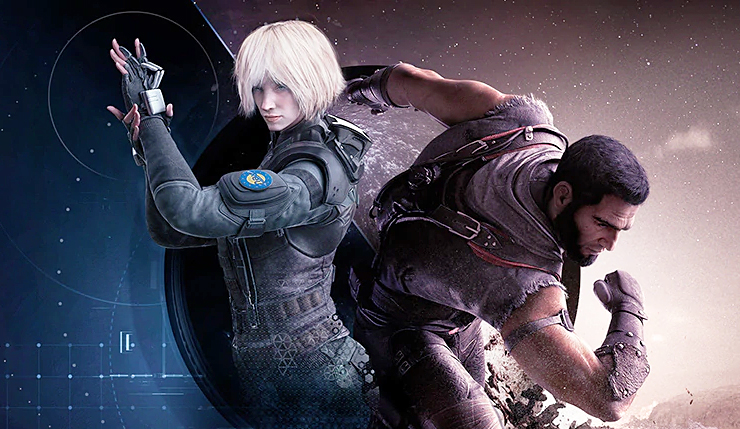
First up is Iana, who is perhaps Siege’s most sci-fi attacker yet. A Dutch operator who previously worked as part of the European space project, her gadget, the Gemini Replicator, creates a controllable holographic copy of herself. Essentially a walking version of Alibi’s Prisma, when activated you effectively (for lack of a better term) leap out of Iana’s body and into the hologram.

Controlling the Gemini Replicator is identical to using a regular Operator, although the hologram cannot shoot, melee, deploy secondary gadgets, climb ladders, or use rappel ropes. It does produce footsteps and noise, though, and so can be used to convince an enemy that an attacker is moving towards their position. Essentially, the Gemini Replicator is a drone that looks like a human, which puts an interesting spin on intelligence gathering.

Unlike an Alibi Prisma hologram, the Gemini Replicator can only be used for a short period of time, and there is a cooldown between uses, which is longer if an enemy destroys the device. Shooting the hologram anywhere in its ‘body mass’ will destroy it, and Mute’s Signal Disruptor will also prevent it from working.

With a 2 speed and 2 armor rating, Iana is a medium-balanced operator. She’s equipped with the popular G36C, previously only used by Ash, and the ARX200 that was first introduced as part of Nomad’s loadout. In her secondary slots is a 9mm MK1, and the option of either smoke or frag grenades.

On defense is Oryx, a Jordanian defender who, like Caviera, has no gadget. Instead he has an ability, Remah Dash, that allows him to charge over short distances and even – at the cost of 10 health points – run through breakable walls. Yup, he’s basically the Kool-Aid Man. The dash can also be used to knock down opponents, which seems especially useful against shield operators like Montagne and Blitz.

As you can imagine, he’s a relatively speedy defender (2 speed, 2 armor), and that athleticism also allows him a second unique passive ability: he can jump up through broken hatches. This is invaluable for quick rotation between split level bomb sites, and makes him perhaps Siege’s most effective roamer.

Oryx’s loadout consists of the MP5LI and the SPAS-12 shotgun, and the Bailiff 410 and USPc40 pistols, plus a choice of barbed wire or bulletproof camera. By having shotgun options on both his primary and secondary, it means Oryx can always have a way to blow through hatches and make a quick rotation. Meanwhile, Remah Dash means he’s effectively a human Impact Grenade when it comes to removing walls between sites.

Autoplay setting: On

2:09

As with all Siege operations, Void Edge comes with a map component. It’s another rework, this time to Oregon. The cultist base location has been a firm favourite in the Siege community since launch, and has essentially been untouched due to how well designed it is. But Void Edge makes a few small but important alterations, with the biggest of them being the removal of the Tower bomb site. It has been relocated to Meeting Hall and Kitchen, which will hopefully make it a more viable site for both attackers and defenders.


Other changes have made many areas more open, as well as creating better rotation routes. A new freezer room has been added to the basement with a set of stairs up to the first floor, meaning attackers now have a third entry point into a site that has typically been kinder to defenders. The map now features a few more breakable walls than previously, which certainly feels at least partly done in order to introduce Oryx in an environment perfectly designed for his toolset.

Tweaks and balance changes are an important part of every Siege season, and Void Edge makes some major changes to both Twitch and Lesion. Twitch’s drones now have 3 barbs in a magazine, down from 5, although they will recharge over time, akin to Echo’s Yokai drone. The barbs now only do one point of damage instead of 10, focusing their use on gadget destruction rather than damaging players.

Lesion’s Gu Mines now do not deal damage when triggered, but each ‘sting’ they inflict while a needle is stuck in an enemy player will do two extra damage. Downed operators who crawl over Gu Mines will not trigger them, meaning that Lesion should cause less cheap kills. The icons that indicate Gu Mines on the HUD have been entirely removed unless Lesion is in direct line of sight of them, meaning it’s now harder to tell which mines have been triggered. Overall, the focus seems on making Lesion more of Operator designed to slow attackers, rather than gather accurate situational intelligence based on which mines are triggered.

Year 4 struggled to offer many Operator options that felt truly viable; Nokk and Warden seemed to have become obscure within weeks of launch, while Amaru and Goyo still don’t quite seem to have hit their stride. Year 5 seems to be kicking off with a much better start, though.

Iana’s hologram is a simple, effective gadget that combines the best of the traditional drone with some fun decoy tactics. However, it’s Oryx that’s certainly the star of Void Edge. His destructive dash is the lure, but it’s his hatch-leaping ability that will hopefully see him become a firm favourite for roamers. It may be similar to Amaru’s grapple in many ways, but it’s an ability that will simply be more valuable to mobile defenders.

Ranking All 4 Darksiders Games From Worst to Best

Ranking All 4 Darksiders Games From Worst to Best

Much like the four horsemen of the apocalypse, there are four Darksiders game for gamers to sink their teeth into. War, Death, Fury and Strife each now have their own adventure that range from incredible, to poor recreations of other games.
It’s no point hiding the fact that the series is known for embracing such games as Zelda and Dark Souls, using what made them so great and molding them into new experiences of their own.
With Darksiders Genesis swinging its way onto consoles like Death’s trusty scythes, it’s time now to look back at the past 10 years to find which horseman comes out on top with the most definitive journey.

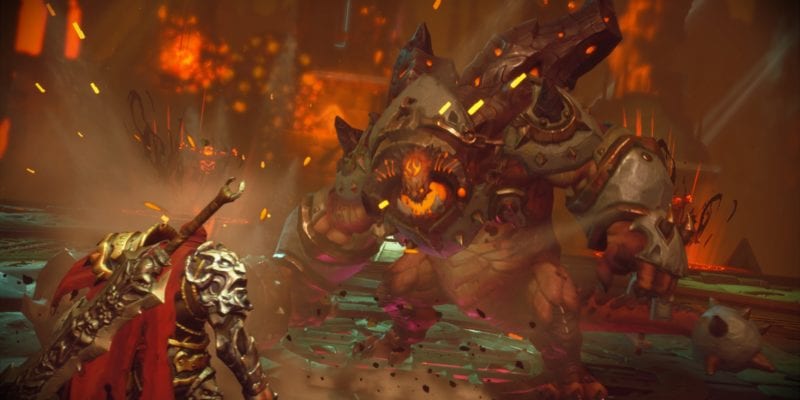
4. Darksiders III

darksiders 3
Perhaps the most mixed upon critics and gamers alike is Darksiders III – a Dark Souls inspired game which lost some of the magic that made the first two entries such cult hits.
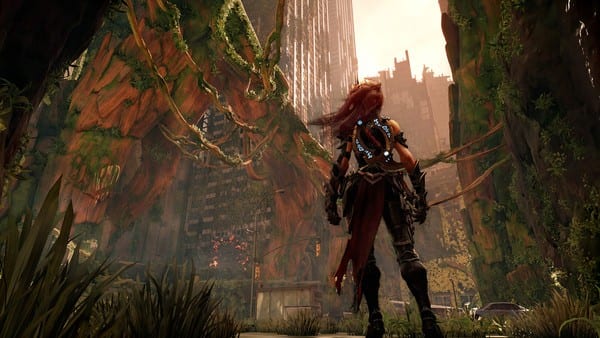
You play as Fury and are tasked with tracking down the seven deadly sins that now reside in the remnants of a post-apocalyptic Earth. It’s a premise that should be exciting, exhilarating and constantly pushing the player forward on a wild hunt to to find each of the deadly sins.
What is left, however, is a pale imitation of the Dark Souls series. The idea is there, with each of the deadly sins serving as climactic boss battles, serving as gauntlets for you to push past. But instead it lacked the spark which ignited millions of players to fall in love with the genre in the first place.
The environments were bland and uninspired; the lack of puzzles and exploration was lost from the previous entries; and the combat lacked the finesse of not only the games it was imitating, but past Darksiders iterations as well. 
Darksiders III was also riddled with a variety of technical issues such as graphical texture pop-in, freezes and crashes. While most of these have been patched, it still lacks the same vibrant world that the previous entries managed. It was also later patched to bring back the combat style from the previous games, losing the Souls inspired one on display here. If that’s not a sign this was a step in the wrong direction, I don’t know what is.
Darksiders III wasn’t a bad game per se, far from it in fact. It simply lacked the charm the series was known for in favor of experimenting with a new gameplay system. This would be fine for a spin-off entry, but for a mainline entry with a solid fan base, it was always going to be a recipe for disaster. 

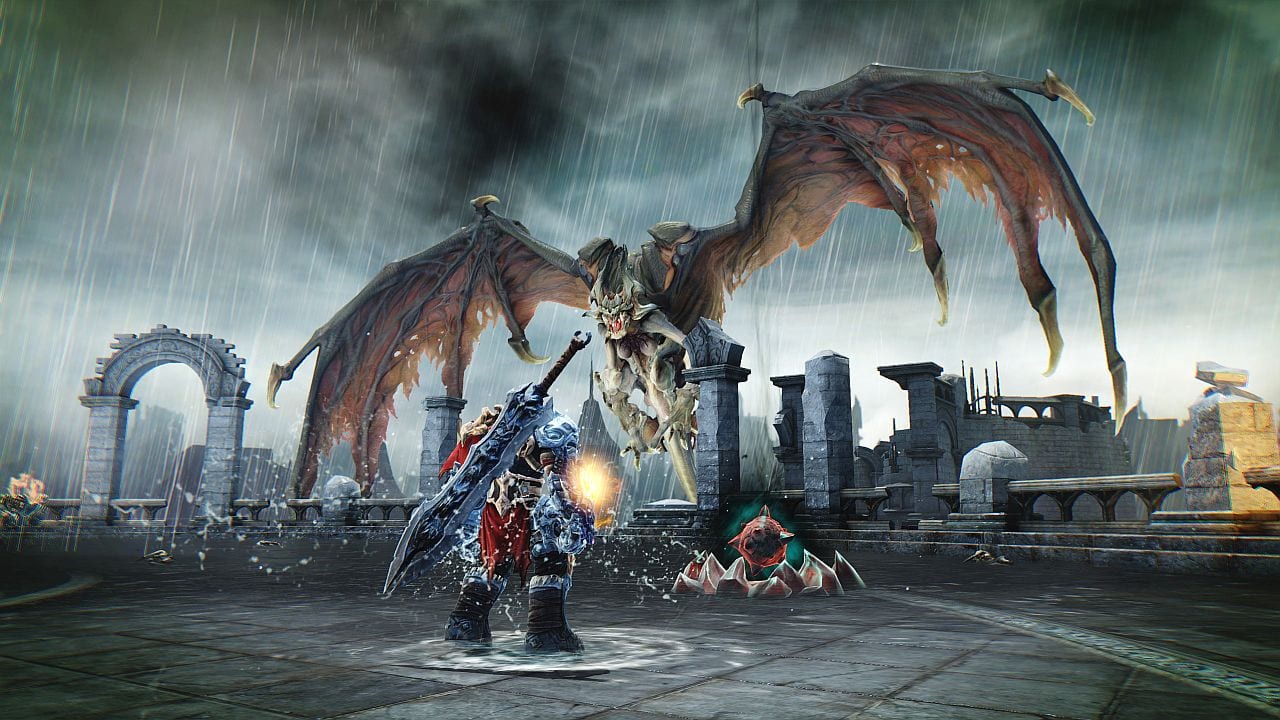
3. Darksiders Genesis

darksiders genesis
The latest installment embraces a Diablo-esque style, complete with an isometric camera view and frantic co-operative action. Darksiders Genesis puts you in the shoes of both War and Strife, who is a first time playable character in the series.
With a more linear level design and Diablo style approach, it could easily be mistaken that Darksiders Genesis is another misstep much like Darksiders III. On the contrary, it’s the complete opposite and embraces its roots while experimenting with its gameplay styles. This time around both War and Strife are sent to track down Lucifer and discover his plans to turn other demons to his dastardly cause. Taking place before the original trilogy, this is also a perfect entry point for newcomers.
It’s easy to dismiss Darksiders Genesis as another rip-off of a popular franchise, but this entry packs a lot of personality in a tighter and more concise package. Instead of an open world to explore, it’s been stripped back to a simple level system. But each level packs the style of the first two games complete with solid puzzles, cathartic combat and a lush and extravagant world to explore.
Having that perfect balance of old with the new paves a smoother way for fans rather than the complete switch Darksiders III made. It’s also lighter in tone than previous entries, with Strife providing much needed comic relief in a series that has been plagued with an unnecessary need to be overly serious.
The addition of co-op is also fantastic, with each player having a varied skill set as both War and Strife, War being the more muscular delivers hard hitting and satisfying blows the the hordes of demons that plague the world. Strife, however, is a lot more agile with fast speed to quickly maneuver the battlefield and turn the tide of combat.
Darksiders Genesis comes at a time when the future of the series was left uncertain by the poorly received and sold Darksiders III. It comes to show that the franchise still has enough horsepower to combat the apocalypse.

2. Darksiders

Starting back at the beginning is the original Darksiders, which was released all the way back in 2010. With little hype or fanfare, it became something of a cult hit, with enough word of mouth generating more sales and eventually a sequel.
Immediately off the bat, Darksiders introduced you to its world with a heavy amount of God of War inspire combat. It’s punchy, flashy and most importantly – gory. The opening hours of this game ease you into the onslaught of blood and guts you’ll be spilling over the course of your adventure.
Eventually it opens up to reveal that its more than a simple God of War clone, but a hybrid of said series with the DNA of Zelda rushing through its veins. It’s a world complete with dungeons, constant upgrades and visceral combat that beautifully marries the two games into one lovely blend.
Darksiders sees you in a conflict between heaven and hell with Earth caught in the crossfire. The adventure takes the Earth as we know it and twists it into something unrecognizable with fantastical beasts and mass destruction that’s completely wiped the land. Despite its dark nature, the world is a joy to explore and more upgrades allow you to advance to new areas or previously discovered ones now accessible with the given tools.
The dungeons themselves also hold their own and are strong enough to rival a large amount of the ones found in Zelda. Mixing in the puzzle elements that Zelda is known for with fast-paced combat is a perfect concoction for success. Though, the world does take the open-ended nature found in some of the games it’s based on and funnels you through a fairly linear experience. Still, it manages to make the world feel larger than it indeed is which is commendable.
Darksiders came at a time where very few games were rivaling the likes of God of War and Zelda, but managed to use those properties to blend itself an identity of its own. It remains a consistently fun ride, with fantastic dungeons, excellent combat and a wonderful sense of world building. It also paved the way for a superior sequel…

1. Darksiders II

Ranking All 4 Darksiders Games From Worst to Best

Much like the four horsemen of the apocalypse, there are four Darksiders game for gamers to sink their teeth into. War, Death, Fury and Strife each now have their own adventure that range from incredible, to poor recreations of other games.
It’s no point hiding the fact that the series is known for embracing such games as Zelda and Dark Souls, using what made them so great and molding them into new experiences of their own.
With Darksiders Genesis swinging its way onto consoles like Death’s trusty scythes, it’s time now to look back at the past 10 years to find which horseman comes out on top with the most definitive journey.

4. Darksiders III

darksiders 3
Perhaps the most mixed upon critics and gamers alike is Darksiders III – a Dark Souls inspired game which lost some of the magic that made the first two entries such cult hits.
You play as Fury and are tasked with tracking down the seven deadly sins that now reside in the remnants of a post-apocalyptic Earth. It’s a premise that should be exciting, exhilarating and constantly pushing the player forward on a wild hunt to to find each of the deadly sins.
What is left, however, is a pale imitation of the Dark Souls series. The idea is there, with each of the deadly sins serving as climactic boss battles, serving as gauntlets for you to push past. But instead it lacked the spark which ignited millions of players to fall in love with the genre in the first place.
The environments were bland and uninspired; the lack of puzzles and exploration was lost from the previous entries; and the combat lacked the finesse of not only the games it was imitating, but past Darksiders iterations as well. 
Darksiders III was also riddled with a variety of technical issues such as graphical texture pop-in, freezes and crashes. While most of these have been patched, it still lacks the same vibrant world that the previous entries managed. It was also later patched to bring back the combat style from the previous games, losing the Souls inspired one on display here. If that’s not a sign this was a step in the wrong direction, I don’t know what is.
Darksiders III wasn’t a bad game per se, far from it in fact. It simply lacked the charm the series was known for in favor of experimenting with a new gameplay system. This would be fine for a spin-off entry, but for a mainline entry with a solid fan base, it was always going to be a recipe for disaster. 

3. Darksiders Genesis

darksiders genesis
The latest installment embraces a Diablo-esque style, complete with an isometric camera view and frantic co-operative action. Darksiders Genesis puts you in the shoes of both War and Strife, who is a first time playable character in the series.
With a more linear level design and Diablo style approach, it could easily be mistaken that Darksiders Genesis is another misstep much like Darksiders III. On the contrary, it’s the complete opposite and embraces its roots while experimenting with its gameplay styles. This time around both War and Strife are sent to track down Lucifer and discover his plans to turn other demons to his dastardly cause. Taking place before the original trilogy, this is also a perfect entry point for newcomers.
It’s easy to dismiss Darksiders Genesis as another rip-off of a popular franchise, but this entry packs a lot of personality in a tighter and more concise package. Instead of an open world to explore, it’s been stripped back to a simple level system. But each level packs the style of the first two games complete with solid puzzles, cathartic combat and a lush and extravagant world to explore.
Having that perfect balance of old with the new paves a smoother way for fans rather than the complete switch Darksiders III made. It’s also lighter in tone than previous entries, with Strife providing much needed comic relief in a series that has been plagued with an unnecessary need to be overly serious.
The addition of co-op is also fantastic, with each player having a varied skill set as both War and Strife, War being the more muscular delivers hard hitting and satisfying blows the the hordes of demons that plague the world. Strife, however, is a lot more agile with fast speed to quickly maneuver the battlefield and turn the tide of combat.
Darksiders Genesis comes at a time when the future of the series was left uncertain by the poorly received and sold Darksiders III. It comes to show that the franchise still has enough horsepower to combat the apocalypse.

2. Darksiders

Starting back at the beginning is the original Darksiders, which was released all the way back in 2010. With little hype or fanfare, it became something of a cult hit, with enough word of mouth generating more sales and eventually a sequel.
Immediately off the bat, Darksiders introduced you to its world with a heavy amount of God of War inspire combat. It’s punchy, flashy and most importantly – gory. The opening hours of this game ease you into the onslaught of blood and guts you’ll be spilling over the course of your adventure.
Eventually it opens up to reveal that its more than a simple God of War clone, but a hybrid of said series with the DNA of Zelda rushing through its veins. It’s a world complete with dungeons, constant upgrades and visceral combat that beautifully marries the two games into one lovely blend.
Darksiders sees you in a conflict between heaven and hell with Earth caught in the crossfire. The adventure takes the Earth as we know it and twists it into something unrecognizable with fantastical beasts and mass destruction that’s completely wiped the land. Despite its dark nature, the world is a joy to explore and more upgrades allow you to advance to new areas or previously discovered ones now accessible with the given tools.
The dungeons themselves also hold their own and are strong enough to rival a large amount of the ones found in Zelda. Mixing in the puzzle elements that Zelda is known for with fast-paced combat is a perfect concoction for success. Though, the world does take the open-ended nature found in some of the games it’s based on and funnels you through a fairly linear experience. Still, it manages to make the world feel larger than it indeed is which is commendable.
Darksiders came at a time where very few games were rivaling the likes of God of War and Zelda, but managed to use those properties to blend itself an identity of its own. It remains a consistently fun ride, with fantastic dungeons, excellent combat and a wonderful sense of world building. It also paved the way for a superior sequel…

1. Darksiders II

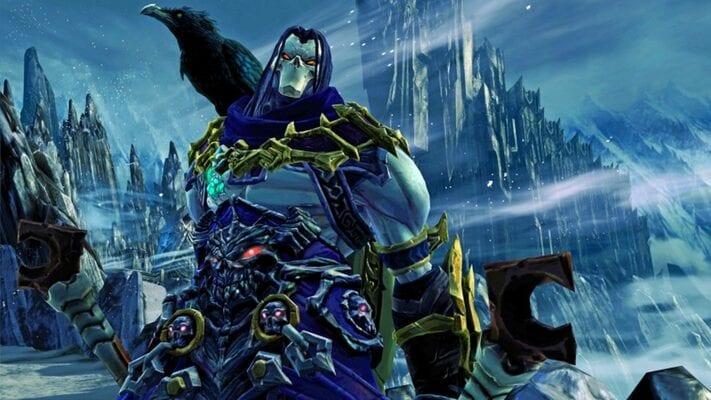
Using the very framework that Darksiders built, Darksiders II used those foundations to create something truly special. While Darksiders was a marriage of many other properties, it was Darksiders II that really used that winning formula to create not only the best in the franchise, but possibly one of the best action-adventure games of the last decade.
Set parallel to the events of the original Darksiders, here you play as Death who aims to clear the name of his brother from the events taking place on Earth. Here, Darksiders II provides further insight into its lore and makes the world that these characters originate from the centre piece of exploration.
It truly is a lush and vibrant world with such varied biomes and incredible world design. If one complaint from Darksiders was how similar the world remained beginning to end, then Darksiders II takes that complaint and crushes it with Death’s mighty grip. There’s more open-ended exploration, a grander scope and a truly impressive visual art style that still holds up a whole console generation later.
Loot was also a major drawing point for Darksiders, using the idea of Diablo’s loot system to constantly reward the player for exploiting each environment. Chests would provide new armor and weapons to upgrade your character and side quests would reward handsomely to give you the chance to purchase new abilities.
The dungeons were also the strongest they’ve ever been in the series, with lengthy ventures into Gothic ruins ending with spectacular boss battles that utilized all of Death’s devastating abilities. New items are also distilled to the player at a faster rate so that the pacing starts off strong and never lets go.
Darksiders II takes every component the series is loved for, puts it in a cooker and cranks the dial up to eleven. What you’re left with is the tastiest treat ever to come out of the franchise and a perfect serving of everything that makes Darksiders loved. It starts with one of the best boss battles in the series and fires off like a rocket from there. In a world where Breath of the Wild has pushed past Zelda’s conventions, Darksiders II embraces the past and uses that beloved gameplay loop to create something truly special.
What’s your favorite Darksiders entry? Will you be picking up Darksiders Genesis? Let us know in the comments below!

Why Are Sony And Nintendo So Silent? What Are They Waiting For?

Their silence may be frustrating, but there is a method to their madness.


Sony and Nintendo fans are currently riled up. This is actually immediately apparent if you have had any exposure to the video gaming community in the last few weeks. Any time Sony or Nintendo tweet, or post a video to their YouTube channel, or do anything, fans are there in droves, demanding information. Message boards across the internet are filled with thousands of posts of Sony and Nintendo fans engaging in vociferous speculation, which gets increasingly desperate and outlandish with each passing day.
There’s actually a good reason for the restlessness of Sony and Nintendo fans, though. In what can only be described as a cruel game of chicken, both companies have decided to just… not communicate with their fans much. At least, not the information that their fans want.
For Sony fans, that information is more details about the PlayStation 5. The PS5 is due to launch later this year, which ordinarily necessitates more information shared about it. And yet, Sony has been almost frustratingly quiet: they have shared some details on the technology they will use in their next generation console, and they have shared the logo (which, by the way, is absurdly boring), but that’s really it. We don’t officially know what the console looks like, what the controller is like, what the specs are, when it is launching, what its launch lineup might be, or what it might cost.
In and of itself, this isn’t too unusual of a situation. We are months away from the anticipated launch of the PS5, after all, so Sony doesn’t have to really show their hand just yet. But for fans, the situation is exacerbated by a series of circumstances that add to the sense of uncertainty around the next gen PlayStation console, and the company as a whole: conflicting reports on the console’s specs (and how they may compare to the Series X); Sony’s admission that it hasn’t finalized a price yet, and is waiting on Microsoft to go first; the very real possibility that the global outbreak of the Coronavirus may cause a delay in the launch of the next gen consoles; and Sony themselves announcing they will skip E3 yet again this year, and not announcing any concrete alternate plans with regards to how they plan to communicate with fans, leading to a sense of anxious uncertainty not just about what the PS5 is, but when we might learn more about it. At least in the past, we had E3 or TGS to mark as definite, concrete markers to look to for more information – right now Sony fans do not even have those.
PS5 Logo
Nintendo fans find themselves similarly flummoxed at Nintendo’s obstinate silence. We are currently in the longest gap between two Nintendo Direct broadcasts ever, and this is actually a pretty big problem. It’s a problem because Nintendo typically goes for shorter announcement to release cycles. Which would be fine, but this is directly supplemented by a fairly predictable schedule of information drops (typified by the Direct videos): Nintendo will share information four times a year, with a Direct early in the year, and one in the Fall, plus E3, and some information towards the end of the year (usually at The Game Awards).
As long as Nintendo sticks to that schedule, things are fine, because you always know what’s lined up and in the docket. As soon as the current release schedule begins to run thin, there’s more stuff announced in a new Direct.
This time, that hasn’t happened. The last Direct was in September last year. Nintendo did not share any information at The Game Awards. And there has been no Direct at the beginning of this year – while, of course, there is a chance they still might have one in the coming weeks, that would be later than any previous similar Direct so far, which have typically been in January or early February.
The situation is made worse because we literally don’t know what to expect for the Switch this year. Animal Crossing and Pokemon Mystery Dungeon are coming this March, but what beyond that? Is the Breath of the Wild sequel coming this year? Is Bayonetta 3? Metroid Prime 4? Shin Megami Tensei V? When is Xenoblade Definitive Edition launching? How about Bravely Default 2?
 The problem is made worse because Nintendo IS communicating… just not about the things people want them to. They announced a Direct in January… for Pokemon Sword and Shield, which had launched less than two months prior. The final fighter pack for Super Smash Bros. Ultimate was just detailed in a random video. So was the final Fire Emblem DLC pack. And all this while, there are rumors about upcoming games swirling, and reports about production delays thanks to the Coronavirus (yes, again), and general uncertainty about exactly what Nintendo has lined up for the year when two next generation consoles are releasing, and of course, the persistent and not entirely irrational fear that we might be headed towards a drought of major releases, which have been so endemic to Nintendo platforms in the past, but which Switch has managed to avoid so far.
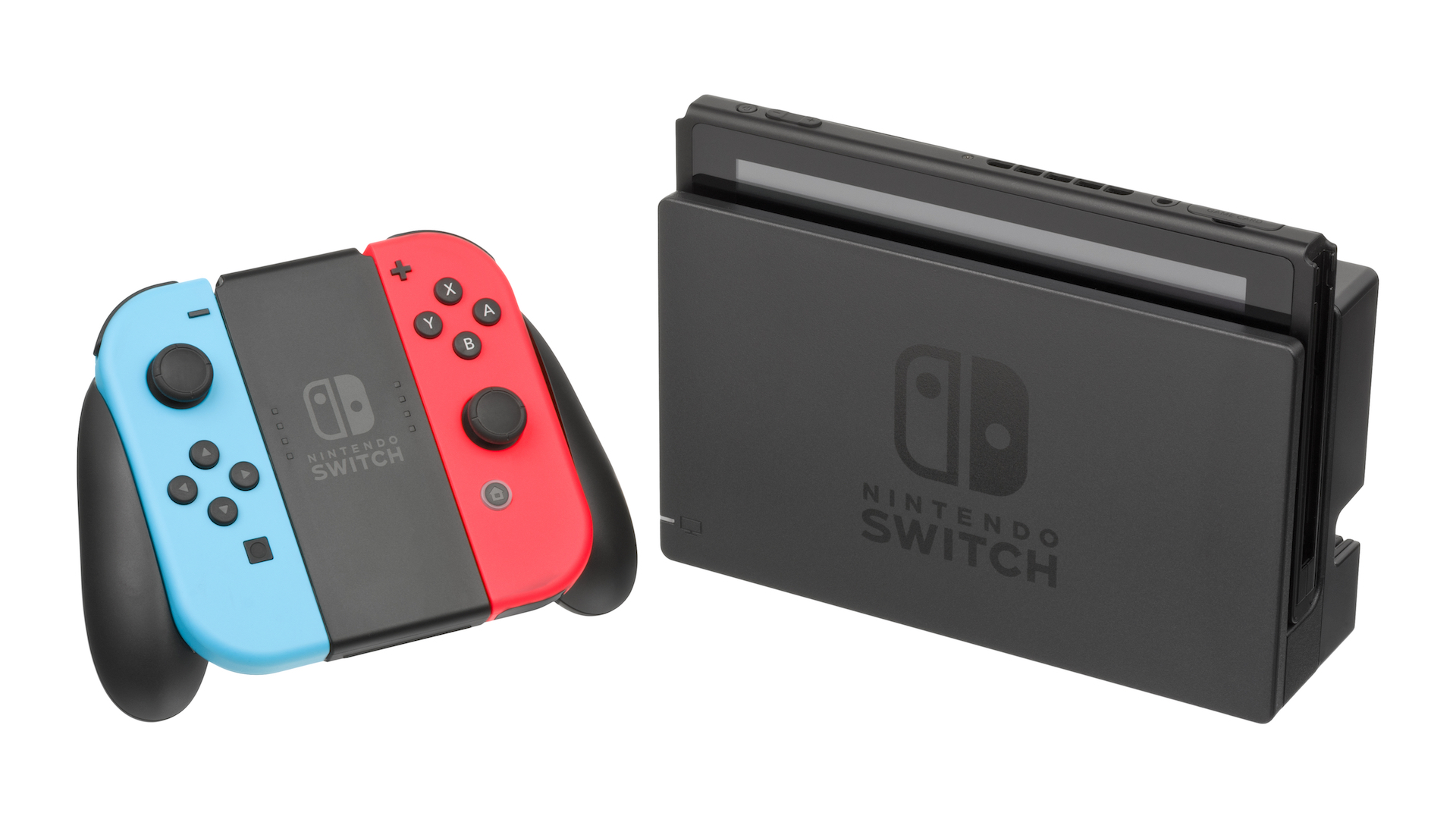
nintendo switch
In both these cases, I do get the frustration, and I even empathize with the desire for more information. But in the end, Sony and Nintendo have both managed to craft successful game consoles and ecosystems with the PS4 and Nintendo Switch, and they have done that because they know what they’re doing. And it’s not like there has been a shortage of games to play on either system in this period, either. The PS4 just got Dreams, which might become one of the highest rated games of this generation, if early reviews are any indication, and heavy hitters such as Nioh 2, Persona 5 Royal, and Final Fantasy 7 remake are just a few weeks away. Switch fans just got Thronebreaker and Tokyo Mirage Sessions, and Pokemon Mystery Dungeon and Animal Crossing: New Horizons are just a few weeks away. Both systems are also benefiting from a steady stream of third party releases and announcements. It’s not like there hasn’t been anything.
The thing is, ultimately Sony and Nintendo can afford to stay silent and take their time to line things up just right and reveal them on their own terms – because they have earned that benefit of the doubt. They have consistently delivered great games to players for years now, and shown themselves to be privy to the pulse of the industry.
Sony and Nintendo’s silence, ultimately, is a testament to their success, and the confidence they have in what they have achieved so far. They don’t have anything to prove anymore, so they don’t need to constantly make noise to endear themselves to anyone. Eventually, we’re going to get the PS5 announcement and the next Direct, and no one will care that either of those happened a few weeks later than what they had hoped for. Because, if the last few years are any indication, both Sony and Nintendo will end up delivering the goods – and in the end, that’s what matters.

VenusBlood Frontier International – Extra Medallion Guide

Rarity 0 (Extra Skills which require no medals)

These skills you can add freely to your units before creating without the need of any medallions. Simply click on extra skill tabs to cycle between them.

Left side effects:

-(Astonishing) +Attack, +Speed, +Morale
-(Hesitant) +Defense Only, -Morale
-(Dim) -Morale
-(Slowpoke) -Speed
-(Round) -Attack, +Defense, +Morale
-(Anxious) -Attack, -Morale
-(Aberrant) +Sap Speed 4, -Speed, -Morale
-(Loser) -Atk, -Defense, -Speed, -Morale

Right side effects:

-(Astonishing) +Attack, +Speed, +Morale
-(Hesitant) +Defense Only, -Morale
-(Dim) -Morale
-(Slowpoke) -Speed
-(Round) -Attack, +Defense, +Morale
-(Anxious) -Attack, -Morale
-(Aberrant) +Sap Speed 4, -Speed, -Morale
-(Loser) -Atk, -Defense, -Speed, -Morale
-(Awkward) +Slacker, +Attack, -Speed

Rarity 1 (Cost: 250 Resource +1 Medallion Material)

Hellbeast Medallion:

Left side effects:

-(Wind) +Evade 10, +Speed, Changes element to Wind
-(Earth) +Parry 10, +Defense, Changes element to Earth
-(Water) +Water Blast 3, +Morale, Changes element to Water
-(Beast Tamer) +Boost Beast 6, +Speed
-(Violent) +Morale Debuff 3, +Attack
-(Destructive) +Defense Debuff 5, +Attack, -Speed
-(Wild Beast) +Critical Boost 10, -Defense

Right side effects:

-(Violent) +Morale Debuff 3, +Attack
-(Destructive) +Defense Debuff 5, +Attack, -Speed
-(Wild Beast) +Critical Boost 10, -Defense
-(Rowdy) +Critical Boost 10, +Attack

Demon Medallion:

Left side effects:

-(Fire) +Fire Blast 3, +Attack, Changes element to Fire
-(Ice) +Ice Blast 3, +Speed, +Morale, Changes element to Ice
-(Lightning) +Lightning Blast 3, +Attack, +Defense, Changes element to Lightning
-(Dark) +Poison Blast 3, +Attack, +Speed, Changes element to Dark
-(Demon) +Dark Field 1, +extra damage against Human Type
-(Blazing) +Fire Field 1, +extra damage against Ice type
-(Bolt) +Lightning Field 1, +extra damage against Water type
-(Sorcerer) +Dark Blast 3, +Attack, +Defense,

Right side effects:

-(Sorcerer) +Dark Blast 3, +Attack, +Defense,
-(Silversmith) +Bounty Hunter 3, ++Morale
-(Counter) +Counter Amp 1, +Attack, +Defense

Abnormal Medallion:

Left side effects:

-(Rubber) +Wall Builder 20, +extra damage against Electric
-(Antidote) +Poison Cure, +Defense
-(Sick) +Sap Squad 3, -Attack, -Defense, -Speed, -Morale
-(Underhanded) +Poison Attack 5, +Attack, +Speed
-(Chaos) +Stun Attack 1, +Attack, +Morale
-(Bulky) +Defense, -Speed
-(Muscular) +Critical Boost 5, +Attack, +Defense, +extra damage against Legendary type

Right side effects:

-(Chaos) +Stun Attack 1, +Attack, +Morale
-(Bulky) +Defense, -Speed
-(Muscular) +Critical Boost 5, +Attack, +Defense, +extra damage against Legendary type
-(Slow Multihit) +Added Attack 1, -Speed, –Morale

Power Medallion:

Left side effects:

-(Steel) +Wall Breaker 10, +extra damage against Mechanical type
-(Meathead) +Helmet Split 5, ++Attack, -Defense, -Speed, –Morale,
-(Strong) +Debuff Cure, +Attack, +Defense, +Speed, +Morale
-(Determined) +Lethal Critical 10, +Attack, +Morale
-(Violent) +Morale Debuff, +Attack
-(Broken) +Speed Debuff 5, +Attack, -Defense, -Morale

Right side effects:

-(Meathead) +Helmet Split 5, ++Attack, -Defense, -Speed, –Morale,
-(Strong) +Debuff Cure, +Attack, +Defense, +Speed, +Morale
-(Determined) +Lethal Critical 10, +Attack, +Morale
-(Violent) +Morale Debuff, +Attack
-(Broken) +Speed Debuff 5, +Attack, -Defense, -Morale
-(Rowdy) +Critical Boost 10, +Attack

Skill Medallion:

Left side effects:

-(Lieutenant) +Boost Squad 2, +Attack, +Morale
-(Collector) +Treasure Hunt 2, +Attack, +Morale, +extra damage against Mechanical type
-(Scavenger) +Treasure Hunt 4, +Defense, +Speed, +extra damage against Nature type
-(Courageous) +Morale Tactics 1, +Attack, +Morale
-(Weightless) +Evade 5, -Defense, +Speed

Right side effects:

-(Courageous) +Morale Tactics 1, +Attack, +Morale
-(Weightless) +Evade 5, -Defense, +Speed
-(Lazy Genius) +Elite, -Attack, -Defense, -Speed, -Morale
-(Rock-Throwing) +Ranged Attack, -Attack, –Defense
-(Beautiful) +Evade 15, +Speed, +Morale
-(Feint) +Sap Attack 4, +Speed
-(Failure) +Sap Speed 12, -Attack, –Defense, -Speed, -Morale

Guard Medallion:

Left side effects:

-(Antidote) +Poison Cure, +Defense

-(Hardy) +Hardy Physique 5, +Defense, +Morale
-(Imposing) +9 Attack, ++Defense
-(Enduring) +Attack Debuff 5, +Defense

Right side effects:

-(Hardy) +Hardy Physique 5, +Defense, +Morale
-(Imposing) +9 Attack, ++Defense
-(Enduring) +Attack Debuff 5, +Defense
-(Defender) +Forward Guard, +Defense
-(Recovery) +Group Heal 3, +Defense
-(Survivor) +Self Heal 4, +Defense
-(Kind) +Defense Only, +Defense

Sword Medallion:

Left side effects:

-(Collector) +Treasure Hunt 2, +Attack, +Morale, +extra damage against Mechanical type
-(Destructive) +Defense Debuff 5, +Attack, -Speed
-(Dignified) +Spell Wall 10, +Speed, +Morale
-(Fast) +Speed Tactics 2, ++Speed

Right side effects:

-(Destructive) +Defense Debuff 5, +Attack, -Speed
-(Dignified) +Spell Wall 10, +Speed, +Morale
-(Fast) +Speed Tactics 2, ++Speed
-(Striker) +Attack tactics 3, +Attack
-(CO) +Morale Tactics 3, +Morale
-(Sharp-Eyed) +Parry 10, +Defense
-(Lucky) +Bounty Hunter 1, +Morale
-(Blacksmith) +Bounty Hunter 2, +Morale
-(Weak Multihit) +Added Attack 1, -Attack, -Morale

Spear Medallion:

Left side effects:

-(Dragonstrike) +Helmet Split 5, +Attack, +extra damage against Dragont type
-(Beast Hunter) +Flank Attack 5, +Attack, +extra damage against Beast type
-(Horse Stabber) +Critical Boost 5, +Speed, +extra damage against Knight type
-(Strong) +Debuff Cure, +Attack, +Defense, +Speed, +Morale
-(Ambush) +Ambush Tactics 1, +Attack, +Speed
-(Alert) +Ambush Alert 4, +Defense

Right side effects:

-(Strong) +Debuff Cure, +Attack, +Defense, +Speed, +Morale
-(Ambush) +Ambush Tactics 1, +Attack, +Speed
-(Alert) +Ambush Alert 4, +Defense
-(Striker) +Attack Tactics 3, +Attack
-(Guerrilla) +Speed Tactics 4, +Speed
-(Wild) +Critical Boost 20, +Attack
-(Counter) +Counter Amp 1, +Attack, +Defense

Rarity 2 (Cost: 500 Resource +1 Medallion Material)

Sea Medallion:

Left side effects:

-(Deep Sea) +Water Blast 5, +Morale, Changes element to Water
-(Snow Field) +Ice Field 1, +extra damage against Fire type
-(Motherly) +Strat Support 25, +Morale
-(Pirate) +Treasure Hunt 6, +Attack, +Morale, +extra damage against Aqua type

-(Sea Spirit) +Boost Aqua, +Defense
-(Good) +Stun Cure, +5 Attack, +Defense, +Speed
-(Dense) +Hardy Physique 15, +Defense, -Speed

Right side effects:

-(Good) +Stun Cure, +Attack, +Defense, +Speed
-(Dense) +Hardy Physique 15, +Defense, -Speed

Magic Medallion:

Left side effects:

-(Fire) +Fire Blast 3, +Attack, Changes element to Fire
-(Ice) +Ice Blast 3, +Speed, +Morale, Changes element to Ice
-(Wind) +Evade 10, +Speed, Changes element to Wind
-(Earth) +Parry 10, +Defense, Changes element to Earth
-(Lightning) +Lightning Blast 3, +Attack, +Defense, Changes element to Lightning
-(Water) +Water Blast 3, +Morale, Changes element to Water
-(Dark Noble) +Boost Demon 6, +Attack
-(Knowledgeable) +Strat Support 15, -Speed, +Morale
-(Great Sorcerer) +Dark Blast 5, +Attack, +Defense

Right side effects:

-(Knowledgeable) +Strat Support 15, -Speed, +Morale
-(Great Sorcerer) +Dark Blast 5, +Attack, +Defense
-(Rich) +Bounty Hunter 4, +Morale

Poison Medallion:

Left side effects:

-(Devilish) +Poison Blast 5, +Attack, +Speed, Changes element to Dark
-(Moldy) +Boost Poison 6, +Attack
-(Poison Needle) +Poison Attack 9, +Attack, ++Speed

Right side effects:

-(Virus) +Sap Squad 4, -Attack, -Defense, -Speed, -Morale
-(Mystery Meal) +Equitable Heal 2, +Morale
-(Counter) +Counter Amp 1, +Attack, +Defense
-(Drug Offender) +Speed Tactics 8, -Attack, –Defense, ++Speed

Giant Medallion:

Left side effects:

-(Earthquake) +Parry 15, +Defense, Changes element to Earth
-(War Hammer) +Wall Breaker 30, +Defense, +extra damage against Mechanical type
-(Dragonstrike) +Helmet Split 5, ++Attack, +extra damage against Dragont type
-(Beast Hunter) +Flank Attack 5, +Attack, +extra damage against Beast type
-(Cryptid Killer) +Flank Attack 10, ++Attack, +extra damage against Beast type
-(Iron-Cutting) +Helmet Split 20, -Speed, +extra damage against Human type
-(Powerful) +Forward Guard, +Attack, +Defense
-(Heavy) +Speed Debuff 8, +Defense, -Speed
-(Massive) +Hardy Physique 20, +Defense, -Speed

Right side effects:

-(Heavy) +Speed Debuff 8, +Defense, -Speed
-(Massive) +Hardy Physique 20, +Defense, -Speed
-(Assailant) +Action Boost 1, +Attack, +Defense

Undead Medallion:

Left side effects:


-(Evil Spirit) +Boost Undead 6, +Speed

Right side effects:

-(Evil Doctor) +Demon Medic 3, +Morale
-(Dark Doctor) +Demon Medic 4, +Morale
-(Indomitable) +Self Heal 8, +Defense
-(Regeneration) +Self Heal 12, +Defense
-(Indestructible) +Self Heal 16, +Defense
-(Deceased) +Recovery 10, +Attack
-(Ghost) +Recovery 20, +Defense
-(Night Creature) +Nocturnal 25

Scout Medallion:

Left side effects:

-(Anti-Air) +Ranged Attack, +extra damage against Flying type
-(Beast Hunter) +Flank Attack 5, +Attack, +extra damage against Beast type
-(Cryptid Killer) +Flank Attack 10, +Attack, +extra damage against Beast type
-(Scavenger) +Treasure Hunt 4, +Defense, +Speed, +extra damage against Nature type
-(Ambush) +Ambush Tactics 1, +Attack, +Speed
-(Unreachable) +Ambush Tactics 10, -Attack, -Defense, -Speed, -Morale
-(Watchman) +Ambush Alert 6, +Attack

Right side effects:

-(Ambush) +Ambush Tactics 1, +Attack, +Speed
-(Unreachable) +Ambush Tactics 10, -Attack, -Defense, -Speed, -Morale
-(Watchman) +Ambush Alert 6, +Attack
-(Sniper) +Ranged Attack, +Speed

Knight Medallion:

Left side effects:

-(Cavalry Slayer) +Critical Boost 10, +Speed, +extra damage against Knight type
-(General) +Boost Squad 3, +Attack, +Morale
-(Knight Lord) +Boost Knight 6, +Defense
-(Honorable) +Spell Wall 15, ++Morale

Right side effects:

-(Honorable) +Spell Wall 15, ++Morale
-(Strike Captain) +Attack Tactics 6, +Attack
-(Guerrilla Captain) +Speed Tactics 8, +Speed
-(CO) +Morale Tactics 3, +Morale
-(Commander) +Morale Tactics 6, +Morale
-(Knight) +Action Boost 1, +Speed
-(Talented) +Elite, +Attack, + Defense, +Speed, +Morale
-(Kind) +Defence Only, +Defense

Holy Medallion:

Left side effects:

-(Light) +Light Blast 3, +Def, + Morale, Changes element to Light
-(Sacred) +Light Field 1, +extra damage against Demon type
-(Exorcist) +Cursed Attack, +extra damaage against Undead type
-(Leader) +Boost Human 6, +Morale
-(Follower) +Boost God 6, +Morale

Right side effects:

-(Healing) +Group Heal 4, +Defense
-(Survivor) +Self Heal 4, +Defense
-(Indomitable) +Self Heal 8, +Defense
*-(Kind) +Defence Only, +Defense

Sprite Medallion:

Left side effects:

-(Gale) +Evade 20, +Speed, Changes element to Wind
-(Earthquake) +Parry 15, +Defense, Changes element to Earth
-(Lightning Rod) +Wall Builder 40, +Defense, +extra damage against Lightning type
-(Fortunate) +Treasure Hunt 8, +Defense, +Speed, +extra damage against Night type
-(Tree Spirit) +Boost Nature 6, +Defense
-(Weightless) +Evade 5, -Defense, +Speed
-(Owl) +Night-Attuned, +Attack
-(Unpredictable) +Ambush Tactics 3, +Attack, +Speed

Right side effects:

-(Weightless) +Evade 5, -Defense, +Speed
-(Owl) +Night-Attuned, +Attack
-(Unpredictable) +Ambush Tactics 3, +Attack, +Speed
-(Silversmith) +Bounty Hunter 3, +Morale
-(Rich) +Bounty Hunter 4, +Morale

Yamato Medallion:

Left side effects:

-(Iron-Cutting) +Helmet Split 20, -Speed, +extra damage against Human type
-(Dynamite Belt) +Self-Destruct 15, +Attack, -Defense, +Morale

Right side effects:

-(Dynamite Belt) +Self-Destruct 15, +Attack, -Defense, +Morale
-(of Exposing) +Lethal Critical 20, +Attack
-(Mind’s eye) +Parry 15, +Speed
-(Wild) +Critical Boost 20, +Attack
-(Accurate) +Critical Boost 30, +Attack
-(Gangster) Strat Support 25, +Attack, +Defense

Rarity 3 (Cost: 2000 Resource +1 Medallion Material)

Fauxmon Medallion:

Left side effects:

-(Thunder) +Lightning Blast 5, +Attack, +Defense, Changes element to Lightning
-(Laser) +Ranged Attack, +Attack, +extra damage against Flying type
-(Lightning Deity) +Lightning Field 3, +Attack, +extra damage against Aqua type
-(Lightning Spirit) +Boost Lightning 6, +Attack
-(Mechanical) +Boost Mechanical 6, +Morale
-(Suicidal) +Self-Destruct 25, +Attack, -Defense, +Morale
-(Red Stone) +Day-Attuned, +Attack
-(All-Seeing) +Ambush Alert 8. +Speed

Right side effects:

-(Suicidal) +Self-Destruct 25, +Attack, -Defense, +Morale
-(Red Stone) +Day-Attuned, +Attack
-(All-Seeing) +Ambush Alert 8. +Speed
-(Rich) +Bounty Hunter 4, +Morale
-(Alchemist) +Bounty Hunter 5, +Morale

Dragon Medallion:

Left side effects:

-(Red Hot) +Fire Blast 5, +Attack, Changes element to Fire
-(Blizzard) +Ice Blast 5, +Speed, +Morale, Changes element to Ice
-(Hellfire) +Fire Field 3, +Attack, +extra damage against Ice type
-(Frozen Earth) +Ice Field 3, +Defense, +extra damage against Fire type


-(Fire Spirit) +Boost Fire 6, +Attack
-(Ice Spirit) +Boost Ice 6, +Defense
-(Dragon Tamer) +Boost Dragon 6, +Speed
-(Dragon-Blooded) +Dragon Scales 20, +Attack

Right side effects:

-(Dragon Life) +Dragon Scales 20, +Defense
-(Angry) +Critical Boost 25, +Attack

Blood Medallion:

Left side effects:

-(Dark General) +Dark Field 3, +Attack, +extra damage against Human type
-(Love) +Resist Ailments, +Defense
-(Anti-Evil) +Spell Barrier 10

Right side effects:

-(Killer Deal) +Lethal Critical 30, +Attack, -Defense
-(Dark Doctor) +Demon Medic 4, +Morale
-(Demon Doctor) +Demon Medic 5, +Morale
-(Raging) +Counter Amp 2, +Attack, +Defense
-(Vengeful) +Counter Ailment, +Attack, +Defense

Hero Medallion:

Left side effects:

-(Dragonstrike) +Helmet Split 5 ++Attack, +extra damage against Dragon type
-(Cryptid Killer) +Flank Attack 10, +Attack, +extra damage against Beast type
-(Tactician) +Boost Squad 4, +Attack, +Morale
-(Legendary) +Curse Cure, +Attack, +Defense, +Speed, +Morale

Right side effects:

-(of Exposing) +Lethal Critical 20, +Attack
-(Indomitable) +Self Heal 8, +Defense
-(Regenerating) +Self Heal 12, +Defense
-(Dual-Wielding) +Added Attack 1, +Attack, -Defense
-(Captain) +Attack Tactics 8, ++Attack, -Defense, +Morale

Rarity 4 (Cost: 6000 Resource +1 Medallion Material)

Soul Medallion:

Left side effects:

-(Red Hot) +Fire Blast 5, +Attack, Changes element to Fire
-(Blizzard) +Ice Blast 5, +Speed, +Morale, Changes element to Ice
-(Gale) +Evade 20, +Speed, Changes element to Wind
-(Earthquake) +Parry 15, +Defense, Changes element to Earth
-(Thunder) +Lightning Blast 5, +Attack, +Defense, Changes element to Lightning
-(Invincible) +Resist Ailments, ++Defense

Right side effects:

-(Chef) +Equitable Heal 4, +Morale
-(Afterlife) +Recovery 30, +Attack
-(Alchemist) +Bounty Hunter 5, +Morale
-(Ancient) +Slayer Defense, +Defense

Champion Medallion:

Left side effects:


-(Dragon Slayer) +Ranged Attack, ++Attack, +extra damage against Dragon type
-(Cryptid Killer) +Flank Attack 10, +Attack, +extra damage against Beast type
-(Marshal) +Boost Squad 5, +Attack, +Morale
-(Heaven’s Favored) +Treasure Hunt 10, +Attack, +Morale, +extra damage against Undead
-(Legendary) +Curse Cure

Right side effects:

-(Legendary) +Curse Cure
-(Defense Captain) +Defense Tactics 6, +Defense
-(Sharp-Eyed) +Parry 10
-(Savior) +Group Heal 5, +Defense
-(Doublehit) +Added Attack 1, -Attack, -Defense, -Speed, -Morale

Rarity 5 (Cost: 12000 Resource +1 Medallion Material)

King Medallion:

Left side effects:

-(Cleaving) +Helmet Split 30, +Attack, -Defense, +extra damage against Human type
-(Barrier Master) +Spell Barrier 20
-(Emperor) +Poisoin Cure, +Attack, +Defense, + Speed, +Moral
-(Super Sorcerer) +Dark Blast 8, +Attack, +Defense
-(Towering) +Hardy Physique 25, +Attack, -Speed

Right side effects:

-(Emperor) +Poisoin Cure, +Attack, +Defense, + Speed, +Moral
-(Super Sorcerer) +Dark Blast 8, +Attack, +Defense
-(Towering) +Hardy Physique 25, +Attack, -Speed
-(Dragon Soul) +Dragon Scales 30, +Defense
-(Berserker) +Counter Amp 3, +Attack, +Defense
-(Triplestrike) +Added Attack 2, -Attack, -Speed
-(Lashing Godhammer) +Wide Attack, -Speed

Apostle Medallion:

Left side effects:

-(Holy Light) +Light Blast 5, +Defense, +Morale,
-(Blessed) +Light Field 3, +Defense, +Morale, +extra damage against demons,
-(Spirit Medium) +Cursed Attack, +Attack, extra damage against undead,

Right Side effects:

-(Messiah) Group +Heal 6, +Defense,
-(Regenerating) +Self Heal 12, +Defense,
-(Indestructible) +Self Heal 16, +Defense
-(Mithrilsmith) +Bounty Hunter 6, ++Morale,
-(Solar) +Sun Worship 25,
-(Mach) +Added Attack 1, +Speed
-(Piercing Godspear) Piercing Attack, -Speed

Rarity 6 (?)

Rarity 7 (?)

Evasion Medals

Hellbeast Medallion:


Left:+10
Right:+0

Skill Medallion:

Left: +5
Right: +5, +15

Magic Medallion:

Left: +10
Right: +0

Sprite Medallion:

Left: +5, +20
Right: +5

Soul Medallion:

Left: +20
Right: +0

Parry Medals:

Hellbeast Medallion:

Left: +10
Right: +0

Sword Medallion:

Left: +0
Right: +10

Magic Medallion:

Left: +10
Right: +0

Giant Medallion:

Left: +15
Right: +0

Sprite Medallion:

Left: +15
Right: +0

Yamato Medallion:

Left: +0
Right: +15

Soul Medallion:

Left: +15
Right: +0

Champion Medallion:

Left: +0
Right: +10

Critical Boost Medals

Hellbeast Medallion:


Left: +10
Right: +10

Abnormal Medallion:

Left: +5
Right: +5

Power Medallion:

Left: +0
Right: +10

Spear Medallion:

Left: +5
Right: +20

Knight Medallion:

Left: +10
Right: +0

Yamato Medallion:

Left: +0
Right: +20, +30

Dragon Medallion:

Left: +0
Right: +25

Lethal Critical Medals

Power Medallion:

Left: +10
Right: +10

Yamato Medallion:

Left: +0
Right: +20

Blood Medallion:

Left: +0
Right: +30

Hero Medallion:

Left: +0
Right: +20

Hardy Physique Medals

Guard Medallion:

Left: +5
Right: +5

Sea Medalliion:

Left: +15
Right: +15

Giant Medallion:

Left: +20
Right: +20

King Medallion:

Left: +25
Right: +25
Design a site like this with WordPress.com
Get started