This is a leveling guide to help get you through the game. This was done in offline mode, so it is made for single player.
Guide to Leveling
Introduction
I started as a duel wielding rogue dashing in and out, striving to progress and finally got stuck at the beggining act 3 boss. The DPS wasn’t there, and the dps is only there if you go 2h (and maybe use a shield or do some ailment thing). Duel wielding wasn’t the answer, and after spending everything I had I made up the perfect spin to win method that doubled my leveling speed after it was discovered.
Gear
Who cares. Get a 2h and go bruiser gear. Adjust what you need, but this is a leveling and not endgame build.
Skills
Warpath
This skill is for movement and all sub points do not matter much.
Flight of Gaavanir
This skill is for big damage if you cannot touch your target and are not shouting.
Wings of Ishmar
This skill is for movement, but also rage generation. It is the best mobility spell you have.
For sub points, get flight speed and rage generation. Everything else is unimportant.
Sovereign Shout
Very important to use whenever possible or whenever you are not spinning.
The 2 primary skills are health globes and buff duration/effectiveness. You should also get resistances, crit hit, and rage gen if possible.
Bladestorm
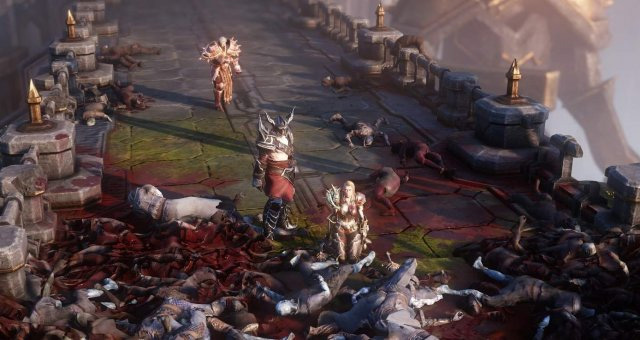
This is your main ability and should be your right mouse button. It is spin to win, and is amazing. Move in a circle around whoever you are fighting and due to the wind ups and telegraphing you should never be hit. If you have all the sub points put in properly and keep getting an influx of enemies to fight, you will never run out of rage or have to stop spinning. The movement while dealing damage is part of what makes this ability so good. That and always getting health globes really helps.
Rage generation, reduce rage cost, hold to prolong, enemies spawn health globes, and crit damage.
Stat Distribution
1st. Ferocity. 5 points per level.
2nd Toughness. 3 points per level.
3rd agility. 2 points per level. You can ignore agi and give 1 more point to ferocity/toughness if you desire though.
Gates of Fate
Go for soldier the wild Card. You will need the crit chance very soon.
Go for Assassin Merciless Lethality for damage.
Go for Sentinel Backline Raider. This will make your attacks to generate rage not take forever and a viable option for when you need rage.
Get Warmonger God Among us for more damage.
Get Warmonger Feast for the Crows to help your sustain along with tearer of flesh. It also sets up the next part.
Alastor Static Transferal. This skill is weird at first, but if you attack once with auto attack the next skill deals double damage. Just do 1 hit and then go into bladestorm for double damage.
Alastor Intravenous Neural Card. This skill just gives you the option to build rage quickly and lets you get 1-2 hits off (which is half your rage) when you need to.
The last passive to get is Soldier Second Wind. It keeps you alive and is awesome.
Beyond this, I honestly have no idea. This will get you to 45, but I am having trouble finding what else to get that is worth it. I would love your input past this point.
Gameplay
When you start an area shout, jump, and do a basic charge with maybe a second attack. If you attack twice you will have max rage. From there spin to win and repeat the process. The fact that a basic attack gives you 1/4-1/5 of your rage is ridiculous. Couple this with the ability to shout and jump to generate rage and you should have no problem generating rage. In addition to this, the spin will never stop if there are enough enemies. You generate rage with how much you are hit and how many enemies you hit. So if there are enough, you will never stop spinning.
For survivability, keep moving. Your shout/spin will generate enough health orbs to keep you going. Don’t be stupid and get caught in an ability. You should still survive most abilities, but you are able to constantly move. You should never be hit by a boss, and most minions won’t matter due to life leach and health orbs.
Bosses
For bosses you will spin around and try to bring in some minions when possible. You want there to be minions so that you will never stop your spinning. If you do stop, re-adjust, hit the boss 1-2x, shout if you can, jump in to generate more rage, and start the 10 seconds of spinning. Rinse and repeat.
That is really all. Bladestorm is amazing and when you get a 2h weapon it is the most damaging skill that any melee damage build can get. This build maximizes the potential of bladestorm and is great for clearing when you hit stormfall or facing any boss.
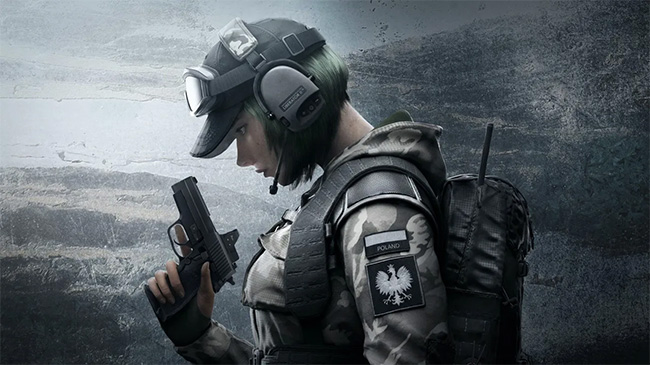
Ubisoft has confirmed that Rainbow Six Siege will be available on next-gen consoles.
Roy Del Valle, the game’s product manager, made the announcement yesterday, on the final day of the Six Invitational 2020 playoffs in Quebec, Canada.
He was invited onto a panel to talk about the major changes that will be introduced to Siege over Year 5 and Year 6 – across 2020 and 2021, essentially. In particular, he addressed why Ubisoft will only be releasing one new operator per season instead of the usual two from Year 5 Season 3 and beyond.
“When we look at the amount of stuff that the team can work on today there’s no doubt that this is the right choice to go into the future with full confidence for Rainbow Six Siege,” Del Valle said.
“This is allowing us to do a lot of things. It’s allowing us to have a core gameplay focused philosophy, to dive deeper into those aspects. It’s allowing us to polish a little bit more our operators, the operators that we’re going to be bringing into the roster of 50+ operators that we have today.”
“And this is a bit of a soft announcement,” he continued, “but it’s allowing us to work for next-gen, so we are on next-gen in the coming years.”
No date as to when Rainbow Six Siege will launch on PlayStation 5 and Xbox Series X has been given yet but Ubisoft is aiming for the launch of those consoles. The developer also wants to avoid fragmenting the community and told Windows Central that the next-gen versions of the game will have cross-generation multiplayer with the PS4 and Xbox One.
Rainbow Six Siege Tachanka Rework
6 IMAGES
Both the PS5 and Xbox Series X are due out in holiday 2020 so, obviously, the next-gen versions of Rainbow Six Siege won’t be available before that.
There’s also the question of what the differences will be, if any, in the next-gen versions of Siege, especially as both the PS5 and Xbox Series X are backwards compatible anyway.
Regardless, Ubisoft will be looking to do what’s best for all of its Siege players, especially after the hard fight it has had to grow the game over the past five years. Ubisoft stated during the same panel that it’s committed to work on Siege for the next five, 10, or 15 years if it has to – however long people continue to play it. It was also revealed that Tachanka is getting a rework this year.
Video games are a magical place where designers’ dreams can become a reality. Thankfully for the rest of us, that means we’ve got to try out some of the coolest blades, busters, gadgets, and gizmos that have popped out of their brains and into the hands of our favorite heroes.
Join us as we celebrate those which have been burned into our brains as some of the most iconic video game weapons of all time.
You can watch the video above, click through the gallery below, or scroll down for the full list!
The Most Iconic Video Game Weapons Ever
10. Gravity Gun – Half-Life
Sure the early version of the Gravity gun is good for throwing saw blades and explosive containers at people, but later its power is improved tenfold. At the end of the game, you can rip video consoles off of walls, and grab Dark Energy orbs that instantly disintegrate anyone they touch. It’s power aside it’s easily one of the in-game moments that stick out in your mind and a weapon we’ll never forget.
9. Energy Sword – Halo
You may not have been able to wield the Energy Sword in the first game, but seeing the Elites activate them would make you step back and take notice. Finally getting to wield the sword in Halo 2 made you feel all-powerful as it would send you hurtling across the screen toward other players resulting in an instant kill, and of course, we all felt that surge of power when the blade snapped on. It’s look is clearly halo and stands out to this day as one of the most memorable Halo weapons ever.
8. Hidden Blade – Assassin’s Creed
The hidden, sliding blades assassins tuck along their wrists are carefully hidden for good reason. The better the blade is concealed, the easier it is for it to pop out and end a Templar’s life. Efficiency and effectiveness resulting in a quick, clean kill. The entire idea of the Assassin’s Creed series is conveyed easily by the visually striking hidden blade wielded in an assassin’s cloak. And a target will never see it coming.
Assassin’s Creed Odyssey was the first AC game not to feature the Hidden Blade (at least not until it appeared in an expansion pack), but it did introduce the excellent Spartan Kick.
7. Scorpion’s Spear – Mortal Kombat
“Get over here!” It’s a haunting cry and accompanies something rather violent: Scorpion’s signature move, the spear attack. Seemingly from nowhere, a razor-sharp kunai attached to the end of a rope or a chain appears from Scorpion’s hand, flies across the screen, and viciously embeds itself into the chest of his opponent. Representing the stinger at the end of a scorpion’s tail, it’s emblematic of the Mortal Kombat series in so many ways: bloody, grisly, and uncompromising. It’s crude and cruel in equal measure, yet it’s also one of the first moves mastered in the game.
6. BFG-9000 – Doom
Mr. Dwane Johnson’s reaction to the BFG in the Doom movie will be recognized by anyone who has used this weapon – awe and deep respect.
Here’s a gun that turns everything in its path into goop. The BFG established exactly what we should expect when it comes to powerful in-game weaponry and it has yet to disappoint in any Doom game of the series.
5. Keyblade – Kingdom Hearts
The Keyblade may come in many forms, but Sora is most known for wielding the Kingdom Key. It was also the first to ever appear in the series. There are other, more powerful keys that you can collect, but the Keyblade is the iconic entry from the series that Sora wields with finesse.
4. The Mega-Buster – Mega Man
The Mega Buster has been attached to Mega Man’s left hand since the first game and has varied greatly in power since it made its premiere.
Originally it could only shoot tiny pellets, but by Mega Man 5 it had been upgraded to the Super Mega Buster which could hold a charge and be deployed at any enemy who dared peek out from cover.
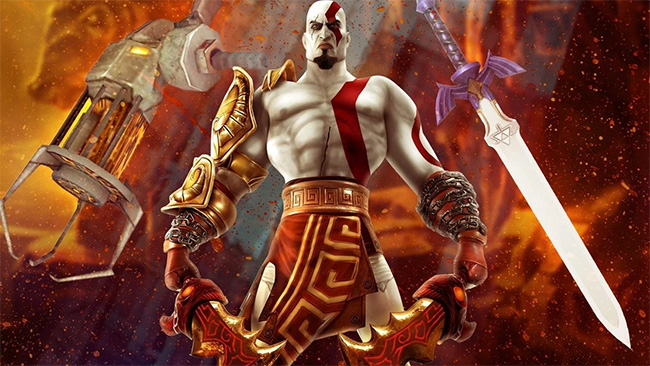
3. Blades of Chaos – God of War
The Blades of Chaos will forever be known as Kratos’ unique weapon of choice. They were obtained during a moment of weakness when Kratos begged the God of War, Aries to spare his life. To answer his prayers the god seared these blades into his flesh and helped him defeat an army. The Leviathan Axe is more modern and incredibly cool, but the Blades of Chaos or any other blades Kratos holds are an unforgettable symbol of the series.
2. Buster Sword – Final Fantasy VII
Nearly six feet long and a foot across, the Buster Sword is more than just a giant, single-edged blade. It’s an iconic Final Fantasy weapon that immediately conjures images of Final Fantasy VII’s spiky-haired hero Cloud Strife. For Cloud, it symbolizes friendship and a promise to be Zack’s living legacy. In short, the Buster Sword is not just a huge chunk of metal that can cut down foes; it’s a memento passed on from hero to hero in the fight against evil.
1. Master Sword
This beautiful sword is an icon to gamers everywhere, as well as an instantly recognizable item of central importance in the Zelda franchise. Sure, there have been plenty of great weapons and items in The Legend of Zelda series, but only the Master Sword has endured since the days of A Link to the Past. Each story since the Super Nintendo entry has been crafted around Link’s quest to obtain this legendary blade.
In Ocarina of Time, the sword allows Link to travel through time, an integral mechanic that eventually helps leads to the defeat of Gannon. In Wind Waker, it is so powerful that when plunged into the Evil King’s forehead it causes him to turn into stone. And in Skyward Sword, the armament is used to seal away the power of evil forever, with the help if its sentient spirit, Fi. With such extensive lore, a wide array of abilities, and a personality all of its own, the Master Sword is our logical choice for the top spot on the list of most iconic gaming weapons.
Hands-on with People Can Fly’s next-gen debut, Outriders
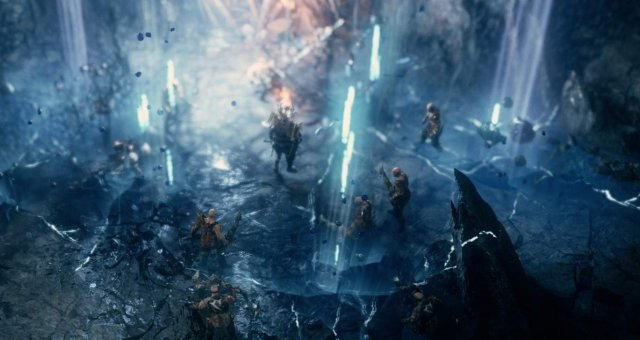
InIn the not-so-distant future, a dying Earth has caused its inhabitants to look for a new planet to call home. After decades of space travel that leave its passengers suspended in time, the bold group given this monumental task sets foot on a new world. At first glance, this faraway planet is idyllic, lush, and peaceful — a place where humans can feel right at home. But not everything is as it seems, and this new world soon turns out to be teeming with hostile creatures and mysterious forces beyond human control.
Oh, have you heard that one before? OK, I’ll admit it — Outriders, the forthcoming co-op shooter from developer People Can Fly (Bulletstorm,Gears of War: Judgment ) and publisher Square Enix, definitely gives off some familiar vibes. Due out this holiday season and making its debut on Sony and Microsoft’s next-gen platforms (along with PlayStation 4, Windows PC, and Xbox One), Outriders follows the titular group that’s traveled to the planet Enoch ahead of everyone else in hopes of setting up a habitable place for the survivors of the human race. What they find is a mysterious signal and a world marred by devastating storms called “anomalies” that infect and destroy the crew. Before long, there’s a mutiny as the infected are shunned, and in the ensuing scuffle our daring hero is mortally wounded, leading to another stint in suspended animation. When they wake up, decades have passed, and Enoch has become a war zone.
Described as a “very ambitious RPG shooter” by People Can Fly CEO Sebastian Wojciechowski, Outriders has been in development for about four years — or since right around the time of the studio’s split with former parent company Epic Games. After working with Epic on the Gears of Warseries and Fortnite’s Save the World mode, PCF wanted to get back to making its own games. Enter Outriders, a sci-fi universe built from scratch that grafts RPG elements onto its third-person shooter backbone.
Image: People Can Fly/Square Enix
After keeping it within the Poland-based studio for the last few years, Wojciechowski and his team at People Can Fly showed Outriders to the media for the first time earlier this month. Its visual identity was described as “sci-fi meets savagery,” with a structure that gives players “a lot of freedom,” game director Bartek Kmita told Polygon. From the opening character creator to skill trees, difficulty options, co-op capabilities (you can play alone or with up to two pals), and different classes, Outriders does a lot to make you feel like you’re in control of how you play — even if many of its ideas have been seen before.
For starters, you’ll create a character from scratch to serve as your protagonist for the game. I was a bit disappointed by the character creator in its current form, as the choices were a little shallow: Beyond a simple male-or-female gender alignment, you can choose from a handful of hairstyles, skin colors, some barely-there makeup, and scars or piercings to give your Outrider that battle-worn look.
Personally, I could spend hours creating a custom character, but I wanted more depth from Outriders — for example, there were only five hair colors and few options for darker skin tones. While Kmita couldn’t say how many options the completed game would have, he did reassure me that character customization was still “under development.”
Image: People Can Fly/Square Enix
Let’s get the obvious comparisons out of the way: Outriders feels a lot like Destinymeets Anthemwith some Gears of Warthrown in. It has Destiny’s sci-fi DNA, Anthem’s otherworldly action, and Gears’ third-person perspective and convenient chest-high cover scattered throughout Enoch. It’s also got some ideas of its own, but during my two-hour playthrough, I couldn’t help but make juxtapositions to those other games in my head.
While Outriders feels like a shooter first and foremost, it’s definitely heavy on role-playing elements. There’s a leveling system and a skill tree; there are side quests to chase and dialogue choices to make. After the single-player prologue, you’ll choose one of four classes, which will determine your character’s powers for the rest of the game.
Only three classes were available at this play session, with the fourth still under wraps. There’s the Pyromancer class, which is exactly what it sounds like: They wield fire and use it to burn enemies to a crisp. The Trickster is more of a close-range class, with time-manipulation abilities that allow hit-and-run attacks. Then there’s the Devastator, which is essentially a tank. I went with the Pyromancer because its mid-range attacks most closely aligned with my own play style (but also because playing with fire is cool).
GRID VIEW
1 of 3
Devastator skill tree Image: People Can Fly/Square Enix
Getting back to Outriders’ story, the post-prologue portion of the game takes place after your Outrider wakes up from 31 years in cryo — quite a long nap after taking 80 years to get to the planet in the first place. If Enoch seemed like a disaster on day one, things have only gotten worse in the years since. The Outriders have become pariahs, blamed for Enoch’s often-fatal conditions and humanity’s sorry fate. Few of the protagonist’s colleagues have survived, and those who did have spent the ensuing decades holed up in a makeshift home base called Rift Town.
But there’s something different about the Outrider upon waking; they find themselves in possession of strange supernatural powers. That’s how the classes tie into the story: Somehow, the anomaly has granted the Outrider with otherworldly abilities. From then on, combat uses a mix of more traditional weaponry and these special powers, though taking cover is also a huge part of battle strategy.
This is also the point where the game opens up to cooperative play, and I found myself teamed up with another player at my event. It took a little time and some communication, but we eventually found a similar wavelength and figured out how to work together. It’s hard to say if Outriders is better alone or with a group, as it largely depends on your personal preference.
Co-op was built into Outriders from the beginning, according to Kmita, who called it a “core pillar.” Its difficulty scales to the number of players, but co-op isn’t the only factor that affects difficulty level. In addition to more traditional player levels, Outriders introduces World Tiers, which progressively make the game more difficult — but only if the player wants to. Outriders starts out easy and gradually works its way up; by the end of the demo I’d unlocked the fourth world tier, which was already getting noticeably hard, but there were many more to go. Players can change the World Tier at any time, switching difficulties on the fly (though in a group, only the leader can pick a tier).
Image: People Can Fly/Square Enix
It’s not that we haven’t seen difficulty levels before, but Outriders makes it part of its DNA, rewarding players as they unlock new options without forcing them into a challenge they’re uncomfortable with. Kmita told us that World Tiers were part of an overall development strategy of encouraging players to try different strategies. Those who want to focus on the story can breeze through on a lower World Tier, while players looking for a real challenge can crank it up as they go.
It’s when Outriders presents the player with new ideas like this that it gets really interesting, and I wish I’d seen more of that in my demo. For example, during a presentation, PCF promised a “twisted and beautiful” aesthetic to its customizable weapons, mixing the organic with the mechanical. On the other hand, the weapons available in the first couple hours are pretty standard varieties of shotguns and assault rifles. I got the feeling that there was something more lurking beneath the surface, but I didn’t have enough time to get there.
The more I think about Outriders, the more I want to find out the rest of the story. We’ve been to outer space before, sure, but Outriders shows that there’s still room to explore out there. What’s behind Enoch’s anomalies? Why does it tear some people down to the molecular level and bless others with superhuman abilities? What’s the mysterious signal broadcasting from the planet? I don’t know, but I want to.
But here’s the important thing: it’s a lot of fun. The action is fluid and satisfying, even if it feels familiar. Kmita told me that the developers looked to the games they were playing to determine what sort of genres and features they liked; they wanted to make a game they’d want to play.
Image: People Can Fly/Square Enix
“On the one hand, it’s scarier,” Kmita said of working on the studio’s first new IP in a number of years. “We’ll have to figure out … how to create the gameplay from scratch.” But at the same time, “It’s super exciting, to be honest.”
Lead writer Joshua Rubin, who previously worked on franchises like The Walking Dead, Assassin’s Creed, and — yes — Destiny, echoed Kmita’s sentiment. “It’s such a different experience because working in a known IP, it’s like writing historical fiction … Whereas creating a new IP with a group of people as a group of creatives, it’s more like… building this fantasy castle in the air that you’re all describing different sides of to each other and then you get to go play in it.”
You’re probably hoping to know more about People Can Fly’s experience working with the PlayStation 5 and Xbox Series X, but Kmita and Rubin remained tight-lipped when it came to any details about the next-gen consoles. For the most part, the next generation of PlayStation and Xbox remain a mystery, but at least we know one game we’ll be playing when they launch later in 2020. Hopefully with a few new hairstyles.
Sometimes taking it slow is the best way to immerse players.
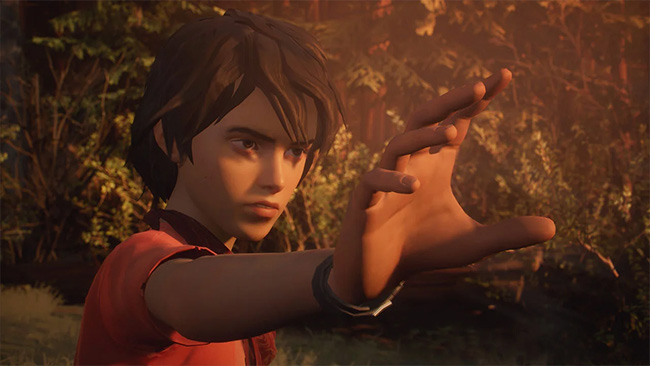
Life is Strange 2 is about two brothers escaping a strange situation. It is also about family, brotherhood, survival, racism, individualism and social conformity in Trump’s America. It is an experience in which the gameplay interactions and narrative are purposefully dissonant. The plot moves forward in the form of in-engine scenes, whereas the verbs the player performs are tightly restricted and functionally mundane.
What makes Life is Strange 2 compelling is that the rewards on offer aren’t the usual upgrade trees or random loot drops, but instead deepening character histories and interactions. When the player does take control, gameplay options are deliberately narrow and often non-essential. You truly do need to behave like a big brother. What you do is equally important as what you say.
(Spoiler warning: this article discusses story beats and mechanics from Episodes 1-5 of Life is Strange 2)
So what do you do in Life is Strange 2? Well, you move Sean, the elder of two brothers, through narrowly-defined spaces, like the interior of a house or the linear path of an empty road. You look at things – objects, paraphernalia, pictures and the like. Sean will have a dry comment for each thing, his perfunctory elaboration attaching new details and backstory to objects. For example, you might find some of Sean’s mother Karen’s poetry, but given the fact she left the family shortly after Daniel’s birth, the object is soured from his perspective. For the player, this makes you curious about Karen’s motivations and the events of the past. These eventually get explored in the form of flashbacks and a meetup with Karen.
Who’s a Good Boy?
Occasionally, you have the option to pick up objects. These are added to your inventory for purposes that may or may not ever present themselves, depending on both where the story goes and if you choose the right actions to bring about related closure. In fact, beyond Episode 1, your inventory becomes vestigial in nature, to the point where the only motivation the player has to delve into Sean’s backpack is to snoop through collected artefacts. This is not a problem. The way Life is Strange 2 dwells on the mundane draws you into the everyday lives of its characters and highlights the value of living in the moment. There is no need for any other reward or keepsake.
Whether you choose to pack beer or soft drink from the fridge for a party Sean is planning to attend, for instance, doesn’t ultimately matter, but you might want Sean to be a good boy and so choose to refrain from alcohol and cigarettes. One decision that does have an impact early on is being either honest or dishonest with Sean’s father when asking for money for the party. Replying honestly will net you more cash, which becomes important when you are on the run with Daniel and needing to buy (or steal) supplies and equipment to survive.
Brothers on the run. Don’t worry, the blood is fake.
The game quickly makes you aware that your actions will be of a mundane nature. Interactive options are often limited to “Look” or “Take”. Gameplay mirrors those developer commentary runs that are offered as extra features in some titles, moving from point to point, activating them and listening to a spiel. Using this structure, Life is Strange 2 lulls you nicely along its branching pathways, where the journey taken will feel different for each player. You may opt to ignore most of the side stuff and forge through the main path, in which case you might miss some of the game’s serene, beautiful moments.
Sean taking time to sit and sketch different scenes presents wonderful snapshots of the boys’ journey. If you decide to sketch, you must look at the scene through Sean’s eyes, holding a button to focus on the broad details, before looking down at the sketchbook and wriggling the left thumb-stick to sketch shapes across the page. You can leave it there or you can look up and focus again, bringing in extra detail and sketching a more coherent version of the scene. These sketches can be looked at again by entering the inventory screen. You might also completely miss the prompts for Sean to sit or rest and consider his surroundings while he delivers a monologue about how things are going with Daniel. They provide perfect ruminations of a harrowing journey peppered with beauty.
A sketch-worthy view.
Educating Daniel
Crunch-time decisions come during action scenes, with most of these offering binary choices. The most common decision-making crux asks the player, as Sean, to decide whether or not to encourage Daniel to use his nascent powers. These pathways add to Daniel’s AI learning, a background process that nurtures the kind of Daniel you prefer through morality and brotherhood. For instance, you might admonish him for cussing, or you might allow him to swear, in which case he’ll swear a lot more. Daniel’s learning even extends to observing the player’s actions, so that it might be worth following your own advice to him to avoid contradictions.
There’s also a brotherly bond component to Daniel’s developing persona, which can bring him back from the brink of selfish decisions if he trusts Sean enough. The way that Daniel reacts at certain key moments is tied directly to this web of decision making moments. This makes it important to deeply consider both your actions and dialogue choices with Daniel, especially If you are the type of player that feels connected to game characters, carrying their legacies with you long past completion.
Making friends can be dangerous.
In today’s world of massive, sprawling RPGs and dialogue trees with more branches than Yggdrasil, the suppression of player choices may feel restrictive. In the context of this intimate game, though, it feels perfectly natural that Sean would see the world in such a way, and that he would feel that his choices are constrained given the Diaz brothers’ circumstances. Then there’s the fact that while your decisions may feel two-sided, the systems in place behind the scenes are complex and result in unpredictable consequences. You often have to sacrifice some of your bond with Daniel in order to be a morally sound big brother, or lose moral ground in order to deepen brotherly trust.
Action itself is further limited by the fact that you are a surrogate to Daniel, who is the catalyst for change throughout the story. While most games would position you as the one with power, the focus is instead shifted to managing that power. This creates a degree of separation between the player and the action taking place, including the violence. Life is Strange 2 does have quite a lot of violence in it, but it is almost always directed at Sean rather than coming from him. This passiveness is a deliberate play against videogame stereotypes and thus offers a refreshing change to the impact of violence. You feel much more like a bystander or third-party, as opposed to, say, the Doom marine literally tearing things to pieces.
Watch What You Say
Another way Life is Strange 2 encourages a casual, controller-down approach to play is the way in which dialogue choices are handled. You are offered a few reactions during conversations and sometimes one of these is to say nothing. Just as importantly, saying nothing during the game’s rare timed conversation choices, by not reacting in time or withholding input, results in a valid choice. The scene will keep playing out even if you don’t touch the controller and it never feels like you are missing out on much for keeping your clap shut. If anything, it’s in character for Sean to be cautious, because his physical degradation due to injury over the course of the narrative is inversely proportional to Daniel’s growing powers.
It’s up to you to direct how Daniel will use his powers.
In Episode 3, you are camping with other people who are self-proclaimed rejects of society. One of the gameplay gates here is that Sean needs to pull his weight in the camp by completing chores. It takes a few real-time minutes to haul water from a collection tank to the makeshift kitchen and shower. What is interesting about this section is that you can also offer to help Daniel with his kitchen duty, or not. There’s no motivation to extend this slow, tedious moment other than your own ethics and the possibility of incidental dialogue. You’ll also gain brotherhood and morality points with Daniel if you do help him, but this system is hidden in the game and difficult to predict. For example, if you’ve been a crappy brother, Daniel will actually refuse your help in this moment, leading to deeper damage to the brotherhood.
Whatever your moral compass, prolonging gameplay becomes about engaging with seemingly inconsequential moments in the created world. One could argue that these vignettes are in fact the whole point of the game. They ground you in the reality of the situation. By offering such ordinary gameplay tasks, the extraordinary is heightened when it happens.
Full of Character
Between episodes, weeks or months can pass and the brothers will be in a completely different situation than when you left them at the end of the previous episode. Rather than laborious backstory catch-up, new characters enter the player’s field fully-formed, with back stories and motivations that must be absorbed via their appearance, dialogue and any objects relating to them that the camera chooses to dwell on. For instance, when you meet a friendly trucker in Episode 4, the camera immediately focuses on his living compartment, its netted shelves filled with toilet paper, books and personal mementos. Then he shares with Sean a sandwich that his wife made him. The player soon sees him as a family man out on the lonely road willing to take a chance on a young man in need of a lift.
The power of objects is such that they paint the picture of a character more effectively than dialogue. This reliance on visual storytelling reflects the film-like influences on Life is Strange 2’s overall aesthetic. Another example is the fish tank in the home of the boys’ grandparents, Claire and Stephen Reynolds. As you explore the house for the first time in Episode 2, Sean remarks on the empty fish tank, later asking Daniel if he has ever seen fish in it. The implication is that the house is sterile and lifeless. One of the possible endings shows the Reynolds household years later, with Daniel having grown up there, enjoying a new life with his grandparents. Now the tank has fish in it, the house if full of light and life. The camera’s cut to this object is far from an accident. It’s a deliberate artistic choice.
Slow it Down
At every opportunity, Life is Strange 2 applies the brakes. It slows the gameplay down and offers calm, considered spaces in which the player can feel safe and satisfied. It allows you to sift through the game at your own pace. This adds up to some beautiful and subtle moments outside of violence and tragedy, even if by most definitions the gameplay itself is limited or boring. The player comes away with a set of memories tied to these contemplative moments, such as a sunset over a canyon, the way the light shines through Sean’s still bedroom, the sketch-filled interior of the boys’ tent or the mischievous yet unhurried exploration of the Reynolds’ home by the brothers while their grandparents are at church.
Life is Strange 2 succeeds in being unique because of its adherence to the slower aspects of living and surviving. It brings out beauty through calmness and contemplation. Despite its serious subject matter and lack of subtlety when it comes to its racist, xenophobic and religiously fanatic antagonists, Life is Strange 2 is an uplifting experience about family, loyalty, love and belonging. So if you prefer to put the controller down during story scenes, or you find yourself sifting through Sean’s completed sketches multiple times, that’s okay. You are meant to enjoy the quiet moments, the butter between the bread. And when you get to the end, well, let’s just say we hope you have been a good brother to Daniel. He will remember everything.
Metro Exodus’s last DLC – Sam’s Story completed earning the Captain’s full trust (A Man of Principle) and without dying in Batwing encounters (Untouchable).
A Man of Principle and Untouchable Achievements Guide
A Man of Principle
Every time you make a choice which counts towards earning the Captain’s trust, you the screen will flash in white. Follow all the steps below and you will earn the Captain’s full trust and unlock A Man of Principle achievement. I will list the Batwing encounters too just for chronological reference. If you need more tips, check the second section of this guide.
Put your gun down as the Captain demands (2:00)
Press and hold H at the start of the cutscene and hold it until Sam puts his weapon down.
First Batwing encounter (3:30)
Help the Captain move the obstacle (14:50)
When you meet the Captain for the second time, he will ask you to help him move an obstacle. Go near it and hold E.
Sneak through the sniper’s building and spare him; the Captain will note that you did the job quietly (18:50)
This may not be required, as there is no white flash on the screen but the Captain does note how you approach this encounter with the bandits and sounds happy saying that you did it quietly, so I will include it anyway.
It’s easy – sneak quietly and don’t alert any of the enemies as I do in the video.
When you meet the sniper, make sure to spare his life.
Give food when helping the Captain with his knee (24:30)
When you reach the Captain’s hideout, you will speak to Tom and after that the power will go off. The Captain will try to get up but will hurt his knee. Before helping him, you will be given a choice to share food with him or not. Choose to share.
Load 5 traps in the Captain’s hideout (27:00)
This will unlock the Trapper achievement as well.
You need 5x Molotov for this.
There is 1 by the Captain before you leave the rooftop.
On the floor below is a workbench where you can craft 3 more.
You will find the last one in a safe by the bed in the Night Hunters’ stash (29:00), so save your materials.
Second Batwing encounter (34:20)
Find the 3 missing members of the Captain’s crew (50:50)
Turn your flashlight on and make sure you go by each body you find.
Play and listen to the tapes.
You need to find 3 bodies from the Captain’s crew – two near each of the tapes and the final one at the top where a cutscene will play. If you have not found all three bodies, you may need to backtrack.
Make sure the Captain acknowledges that your task is complete and instructs you to return to the main task. The screen must flash white.
Third and final Batwing encounter (1:13:50)
Choose to blow up the submarine in the end (2:03:25)
Hard to miss. Select the option to blow up the submarine instead of the American flag.
Untouchable
To unlock Untouchable achievement, you need to make it through all three Batwing encounters on Normal or higher difficulty without dying. If you die and reload a save, you will not unlock the achievement in the end. If you reload a save before your health runs out, then you can retry.
Use the video above for reference.
First encounter (3:30)
This is the easiest one. The Batwing will show up on either side of the train car. Just shoot it as soon as it is up in the air until it falls down and repeat. Listen to the sound to know which side it is on – it shakes the tree branches.
If you miss, make sure to hide behind the train car as the bat swarm attacks.
Second encounter (34:20)
Make sure you stock up on ammo, medkits and weapons at the workbench just before the car park (33:00). Similar to the previous encounter, you need to shoot the Batwing as soon as it appears in the air.
It will occasionally send bat swarms towards you – look for a car to hide behind nearby, or jump left or right. You can lure the swarm to a certain position as it forms and then quickly run to the opposite end as they try to attack, so they miss.
The Batwing will try to push cars towards you (3 times total). Look around and run to the opposite end of where it is. If you are hurt, getting hit by the cars will kill you instantly. If you are not, it will only damage you so you must heal immediately or reload.
After the third wave of cars sent in your way, the Batwing will attack a few more times and so will the bat swarms. You have a very limited area to run in, so make sure you shoot the Batwing and run away from the swarms as best as you can, then quickly heal if you are hit.
Third and final encounter (1:13:50)
This is easier than the second one, but make sure you stock up on ammo, medkits and weapons at the workbench in the ruined house just before the encounter (1:13:30). Watch out for the mines around it. I was already stocked up so I skipped this bit.
Listen and look for the tree branches shaking. Keep constant aim at where the source of the disturbance is and be ready to shoot as soon as the Batwing runs out to surprise you.
Occasionally you will be attacked by bat swarms again, but in this area you have plenty of space to jump sideways or run around. If hurt, always heal.
This guide contains everything you need to know about the Western Saloon.
Western Saloon Overview
Introduction
It’s been a while (four years to be exact), but Paint The Town Red has finally had its fifth level released shortly after the release of the beneath mode, which is the Western Saloon. This level incorporates some new assets/weapons, but is overall not too complicated or special. It has 75 enemies in the level.
The Main Parts
As mentioned before, this level (so far) is not too unique, but these are the things that stick out:
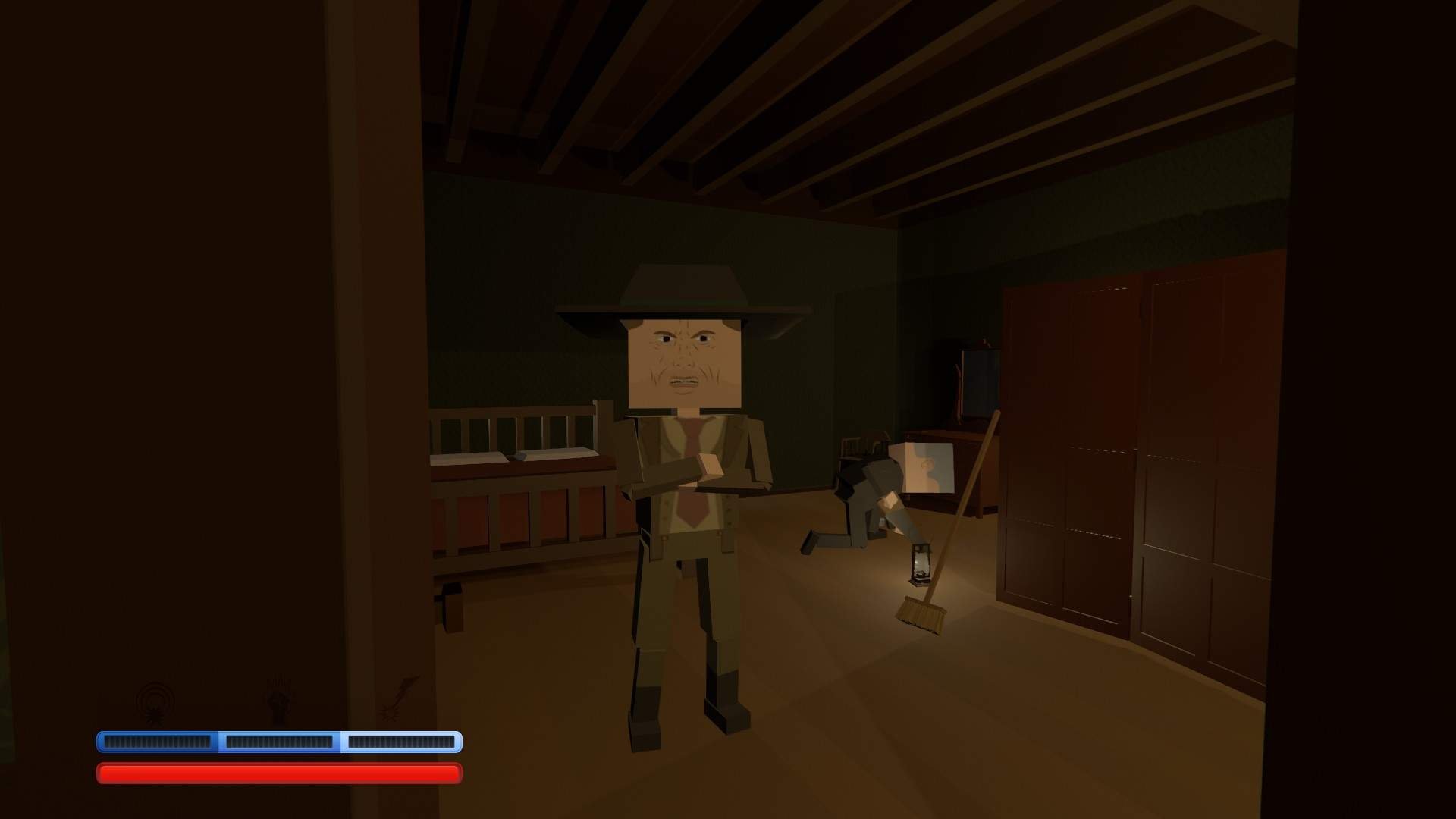
The Robbery The room above the cashiers/vault is home to two characters seen trying to saw their way into the gambling earnings. This area is special mainly because it has the characteristic of starting the riot when you walk inside the room. Along with that, the two enemies will only attack if provoked or the total enemy count is low enough.
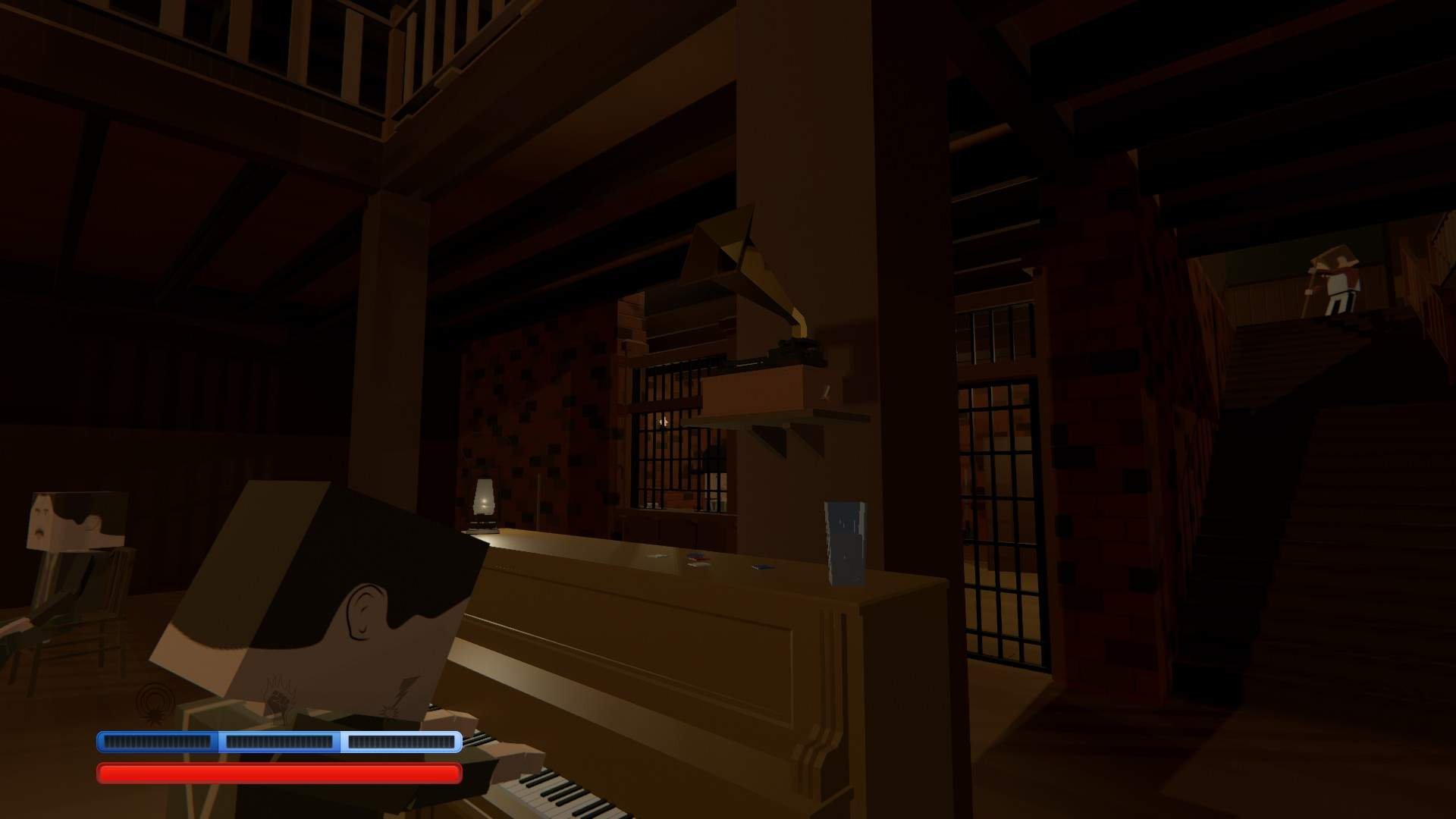
Something else I also thought was pretty amusing is that the piano player will play his music during the riot with the same aforementioned properties, but if he is provoked, the piano will play from a recorder, and will also sound different.
The Goon
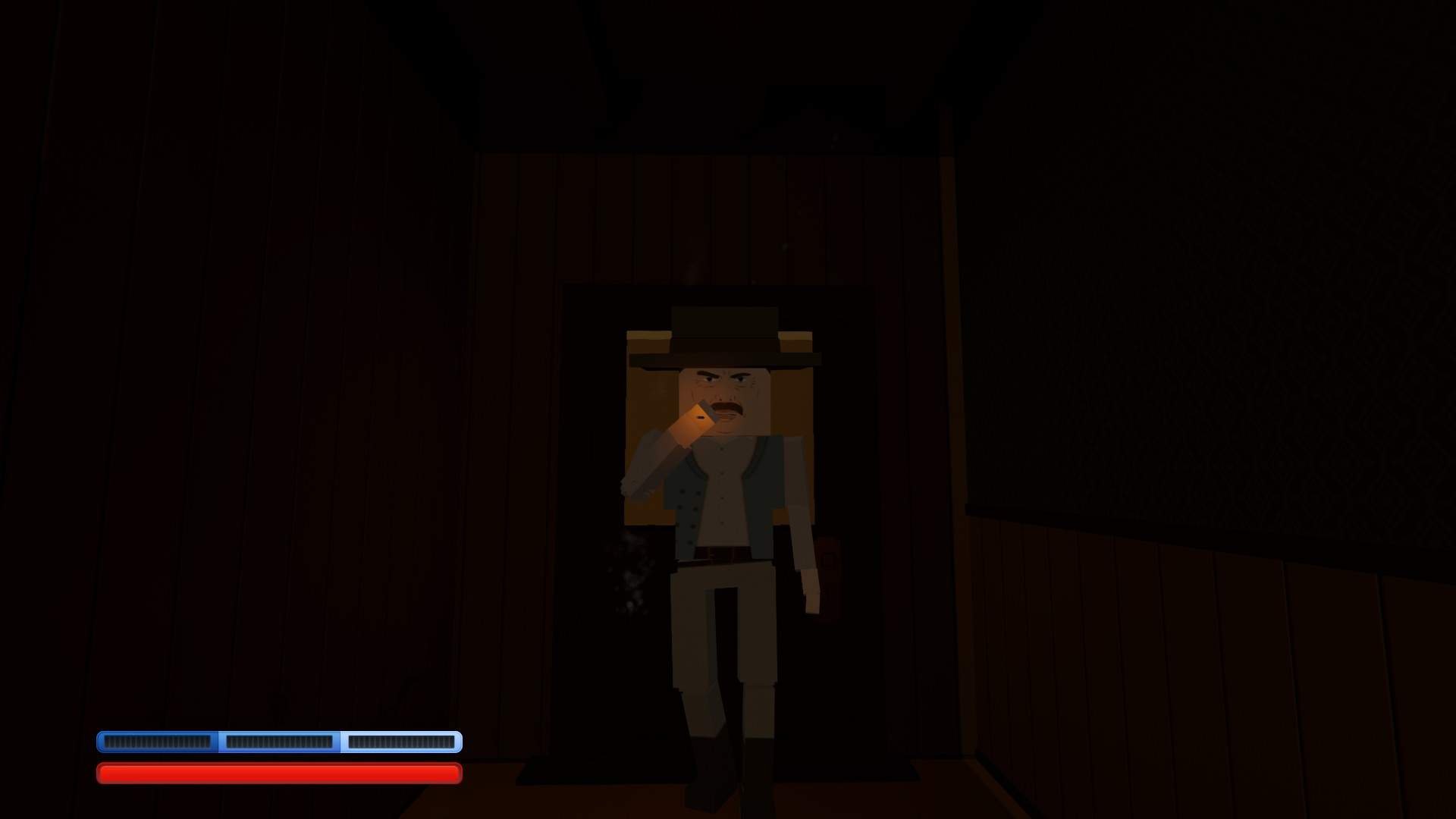
Directly at the back left side of the saloon is an enemy that resembles the giant inmate from the prisoner riot level, with what I believe is pretty much equivalent stats. Just like the robbers, this character won’t attack unless provoked, or there are few enemies remaining. There is no penalty for walking near him.
The Safe
In the back of the cashier room is a revolver in a safe with a revolver inside. A new weapon featured in a release like the last two (shotgun, and flintlock).
The revolver has no special characteristics really. From what I tested, it seems rather incapable of penetrating through several enemies, but nonetheless is a fun weapon. To get into the back room requires hitting one of the cashiers through the bars, in which they will open the door to attack you. You can wait until the enemy count is low enough, but that kind of defeats the purpose of acquiring the gun in my opinion.
The Secret / Not So Secret Weapons
This level has a few deadlier weapons laying around, mostly scattered around the map with few being on enemies, such as:
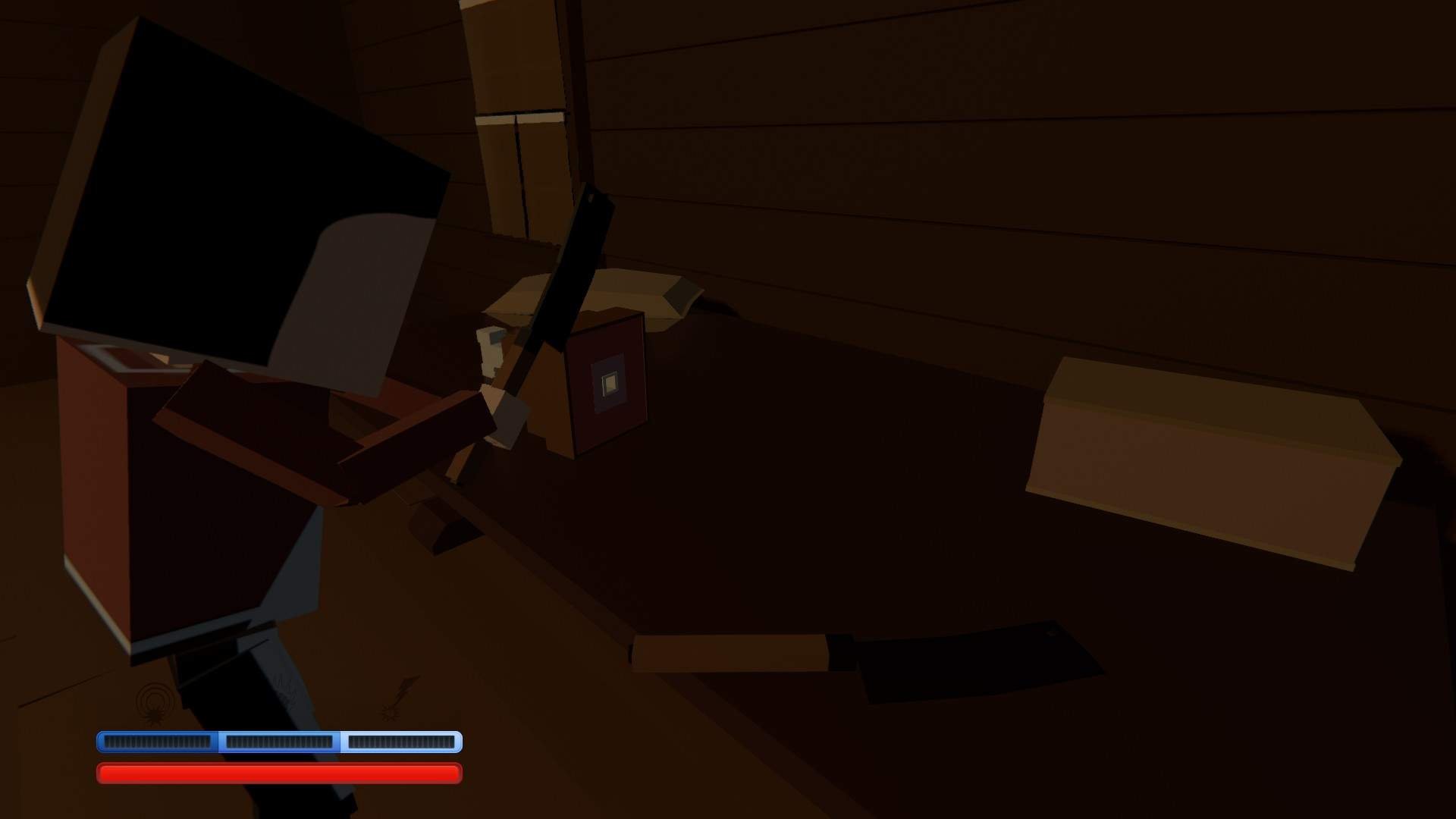
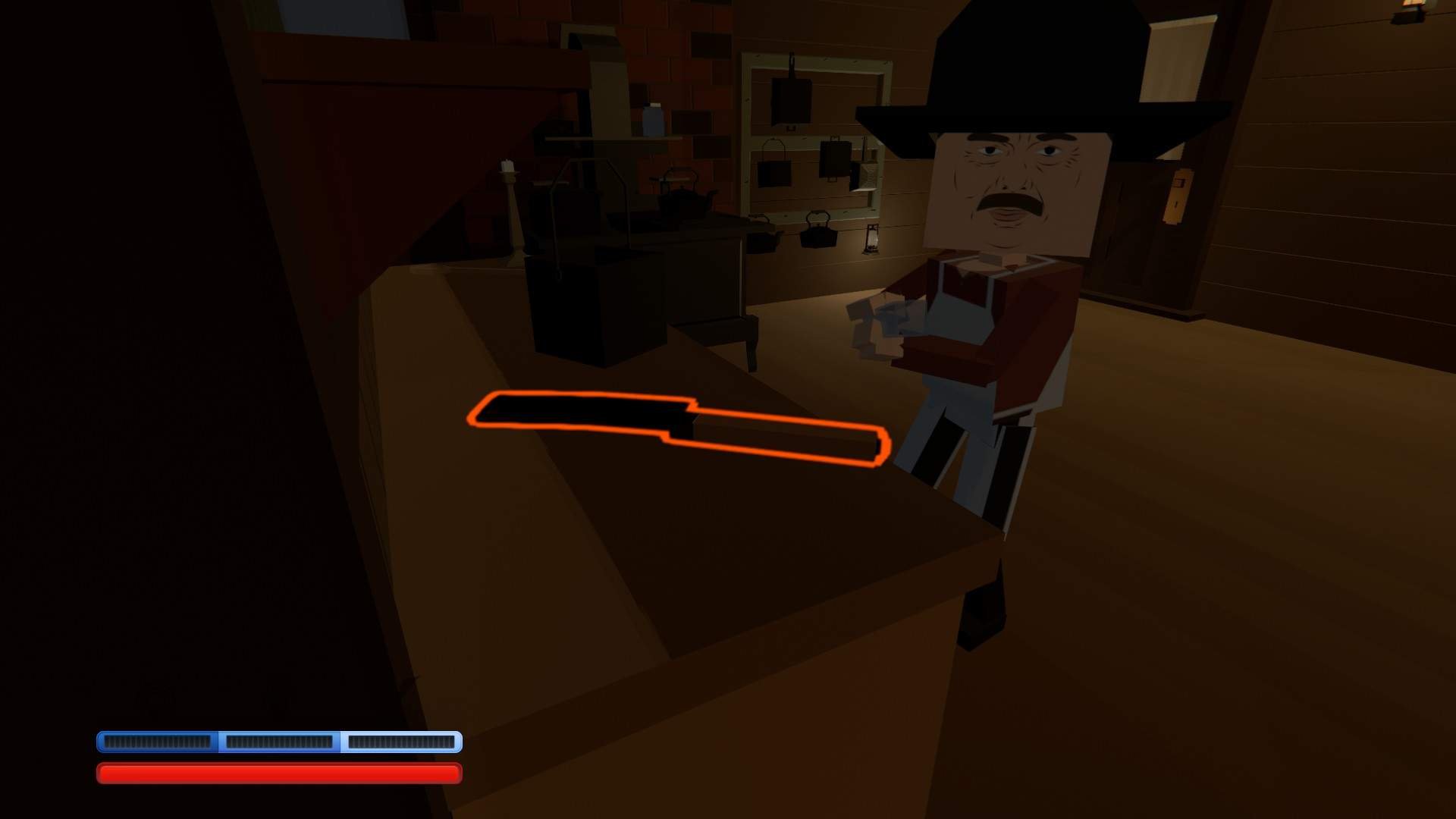
A cleaver on the chef in the kitchen (along with one next to him).
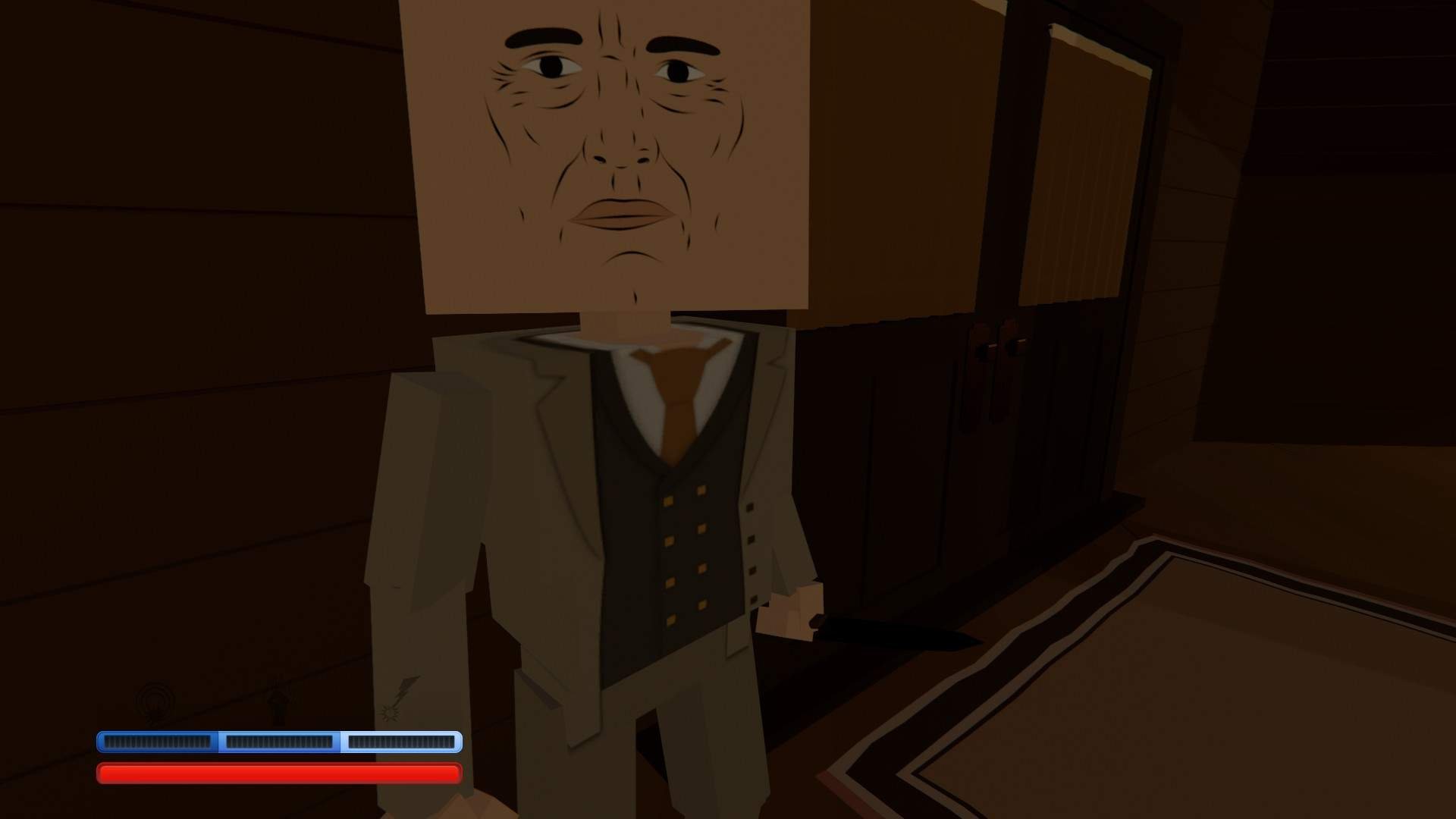
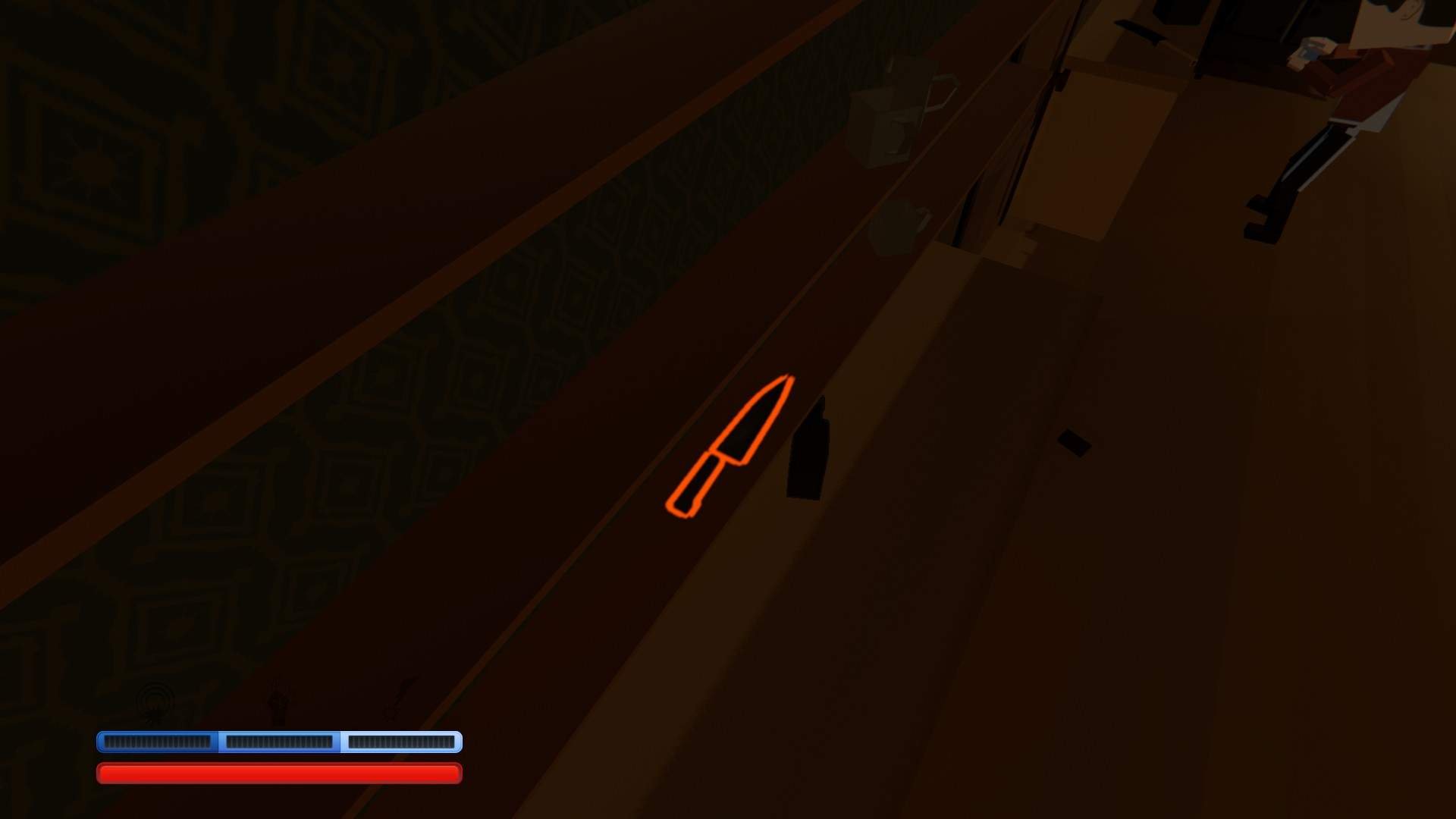
A knife on the guard at the door.
I’m not entirely sure if this one is tougher than an avg enemy as the saloon assets have yet to be added to the level editor.
As for the weapons found around the map:
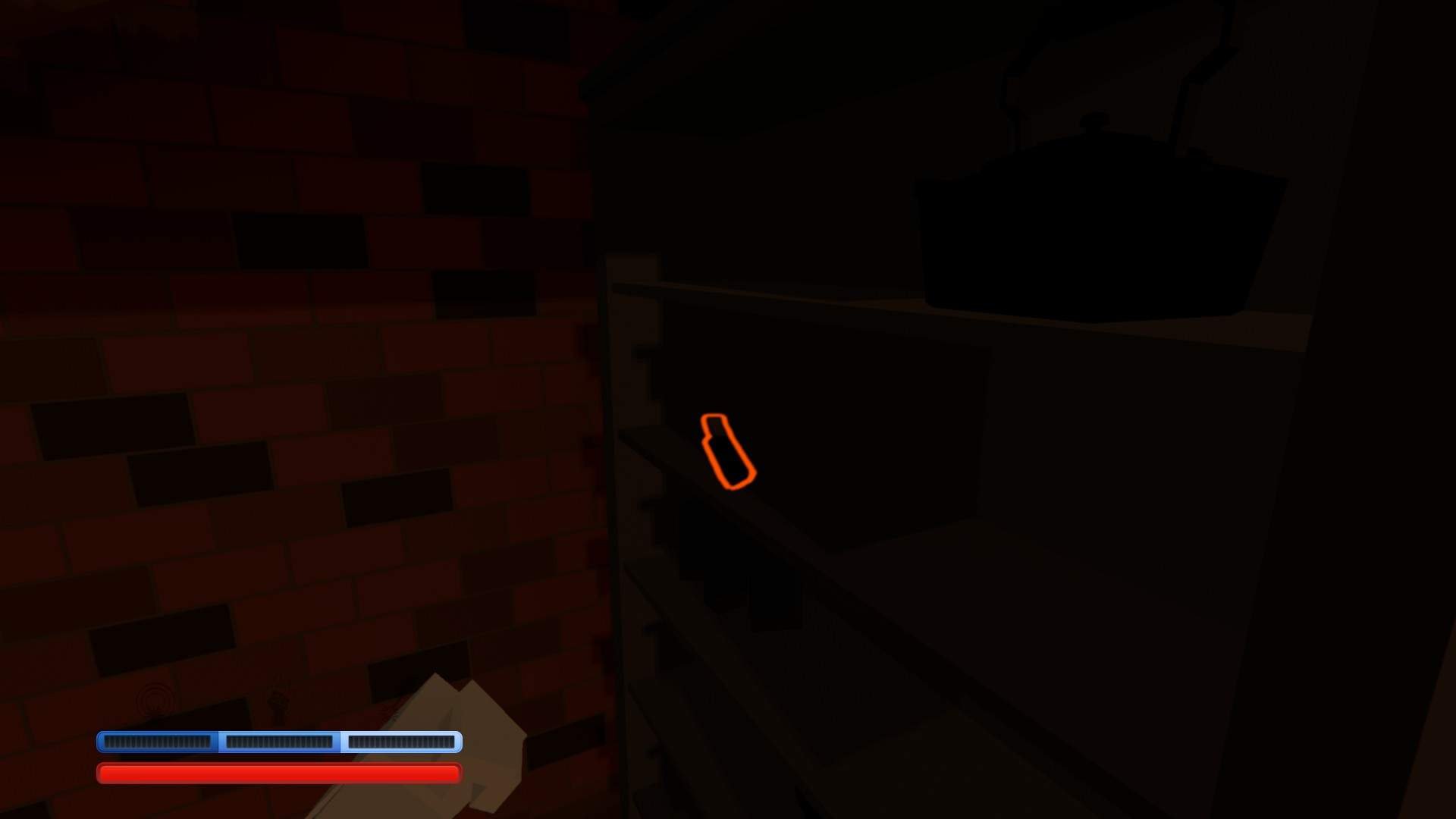
An assortment of blades next to the gun safe.
A cleaver at the bar.
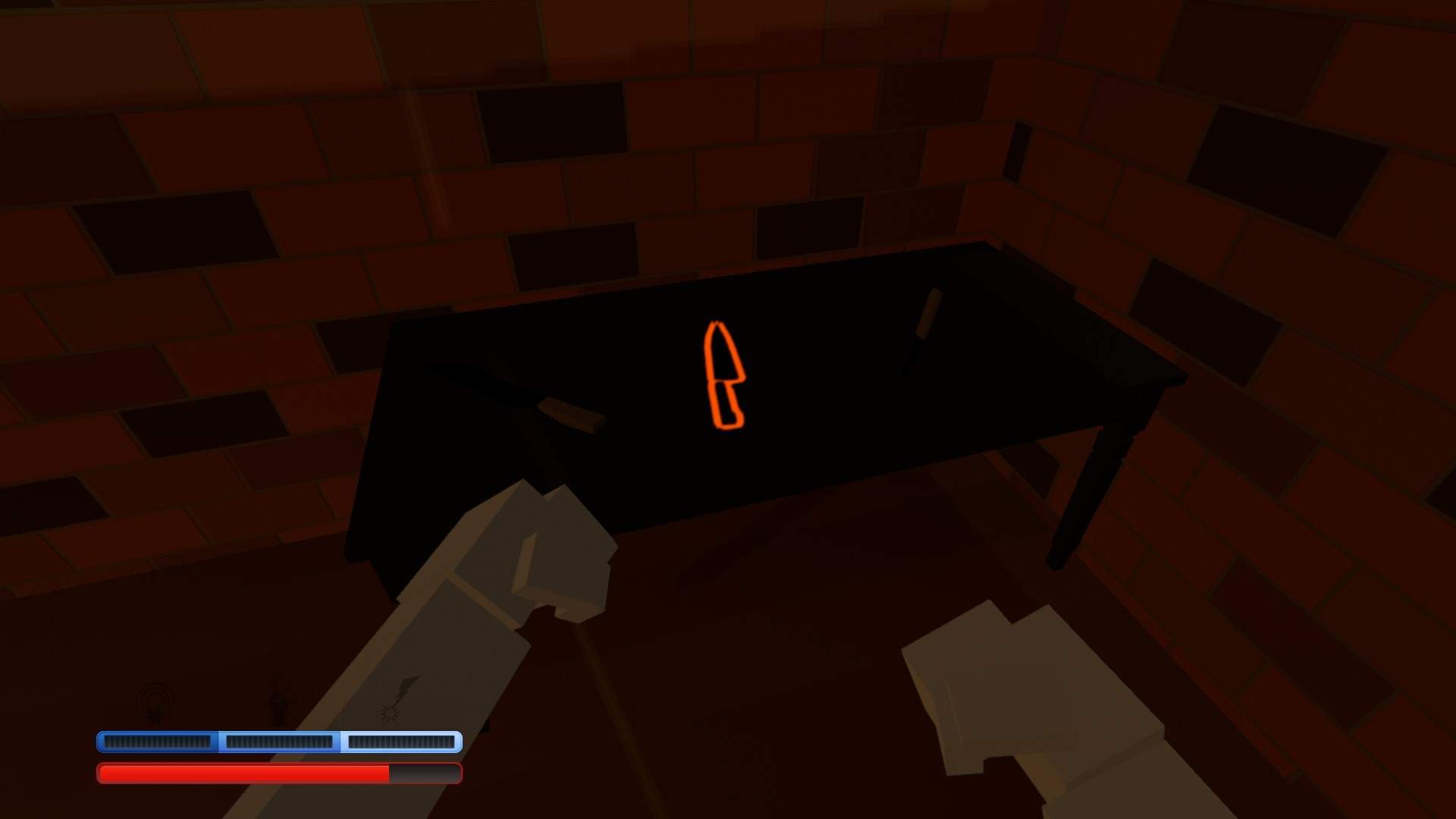
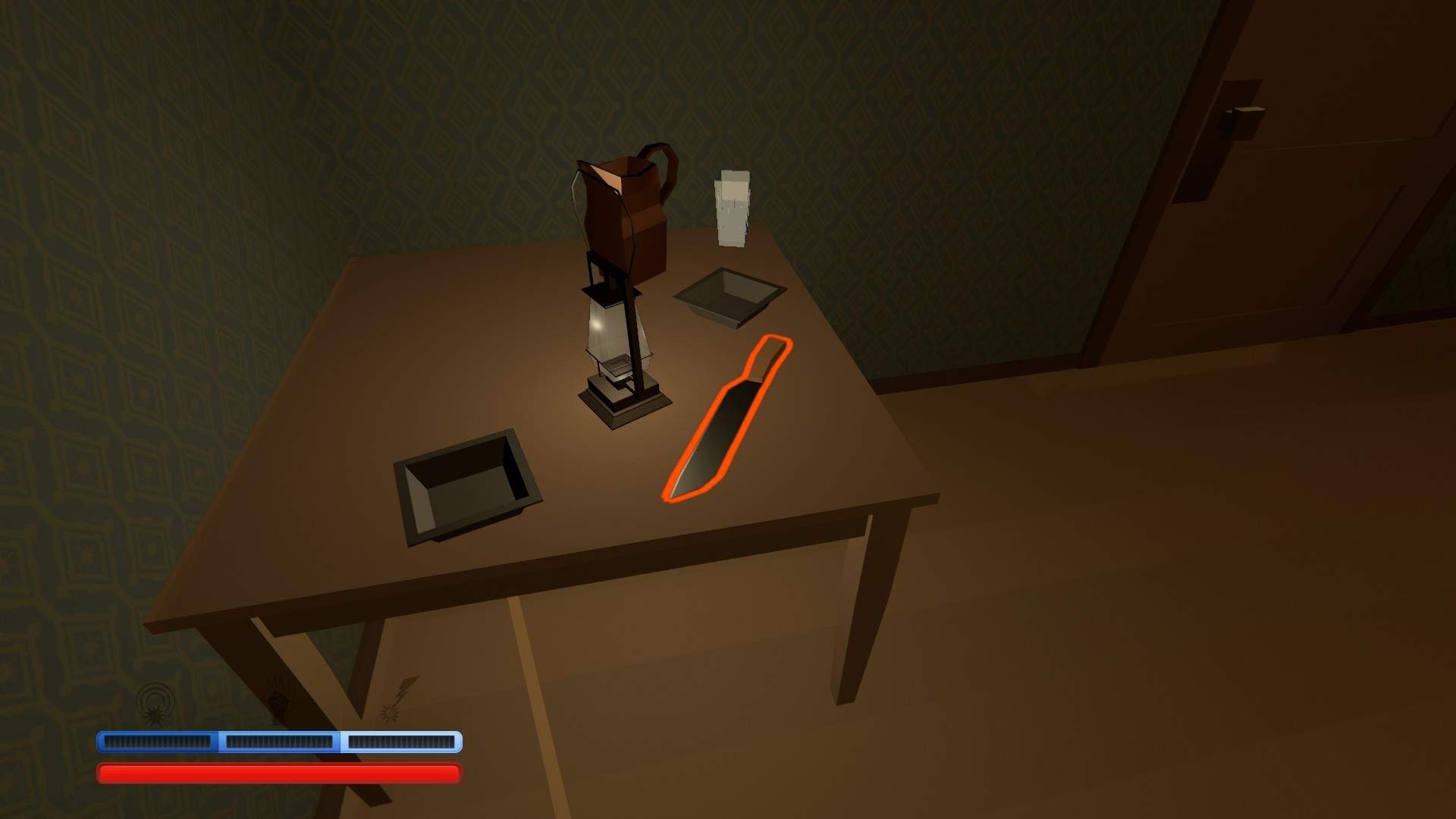
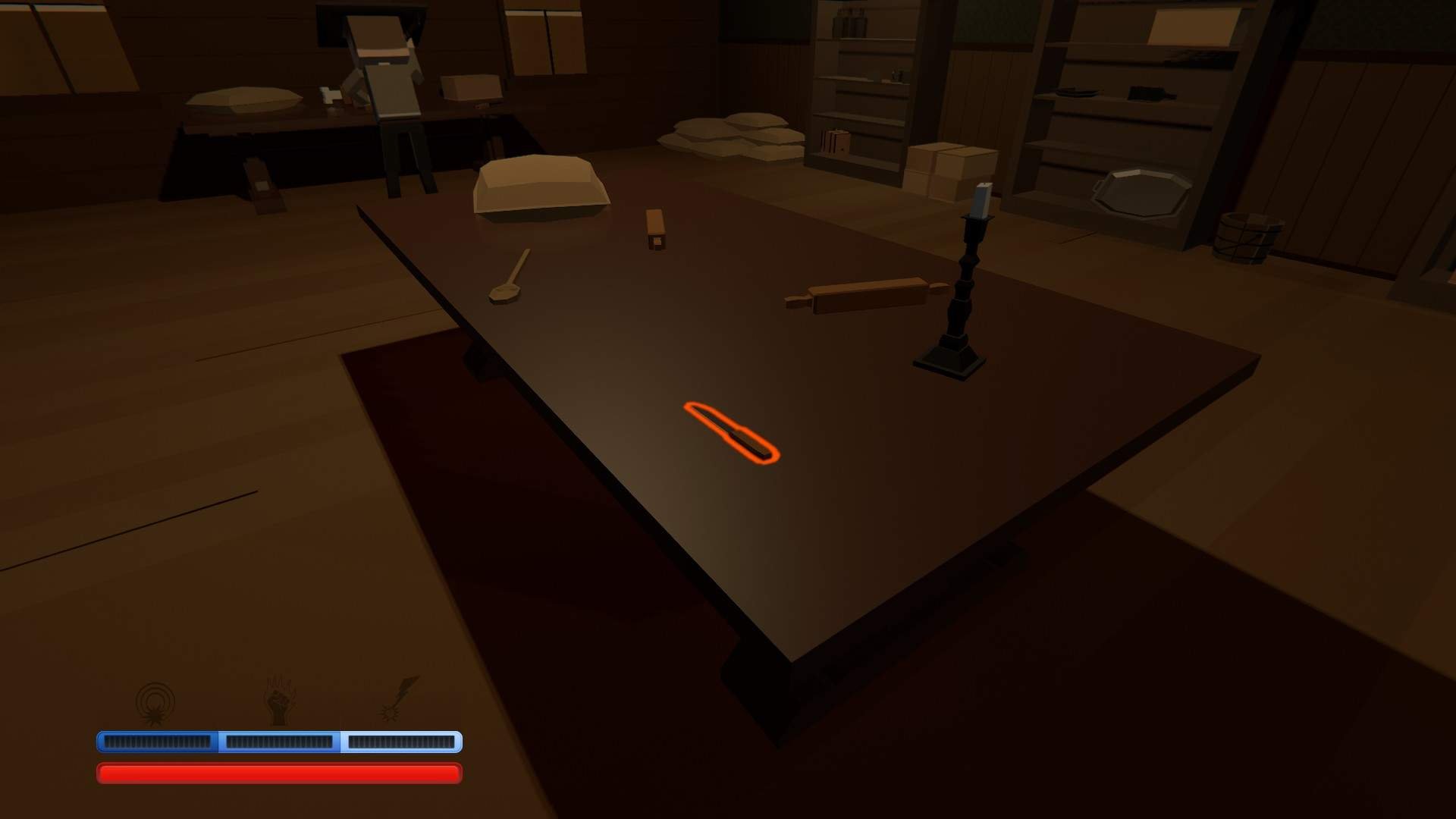
A knife at the cutlery/dish table.
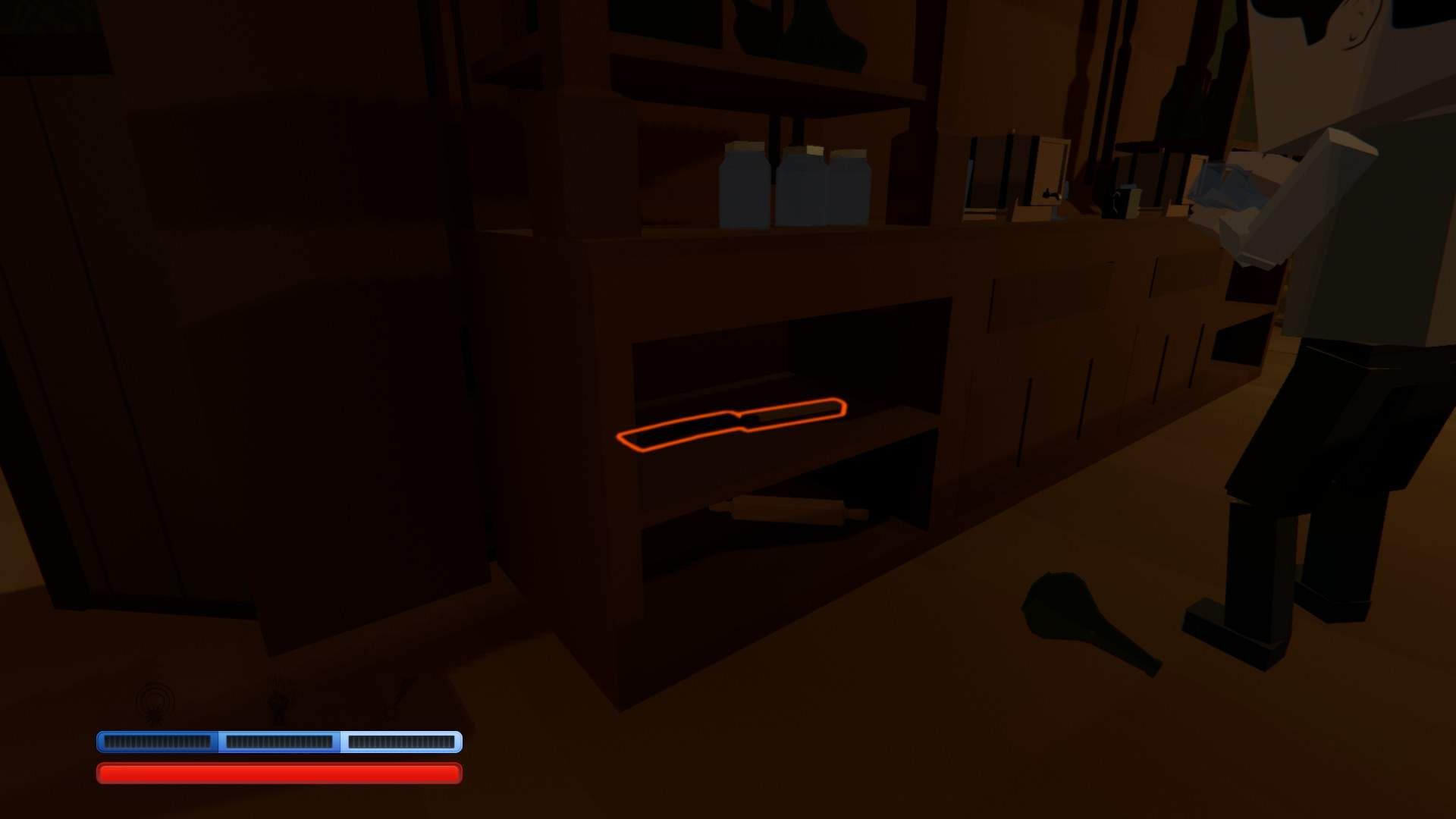
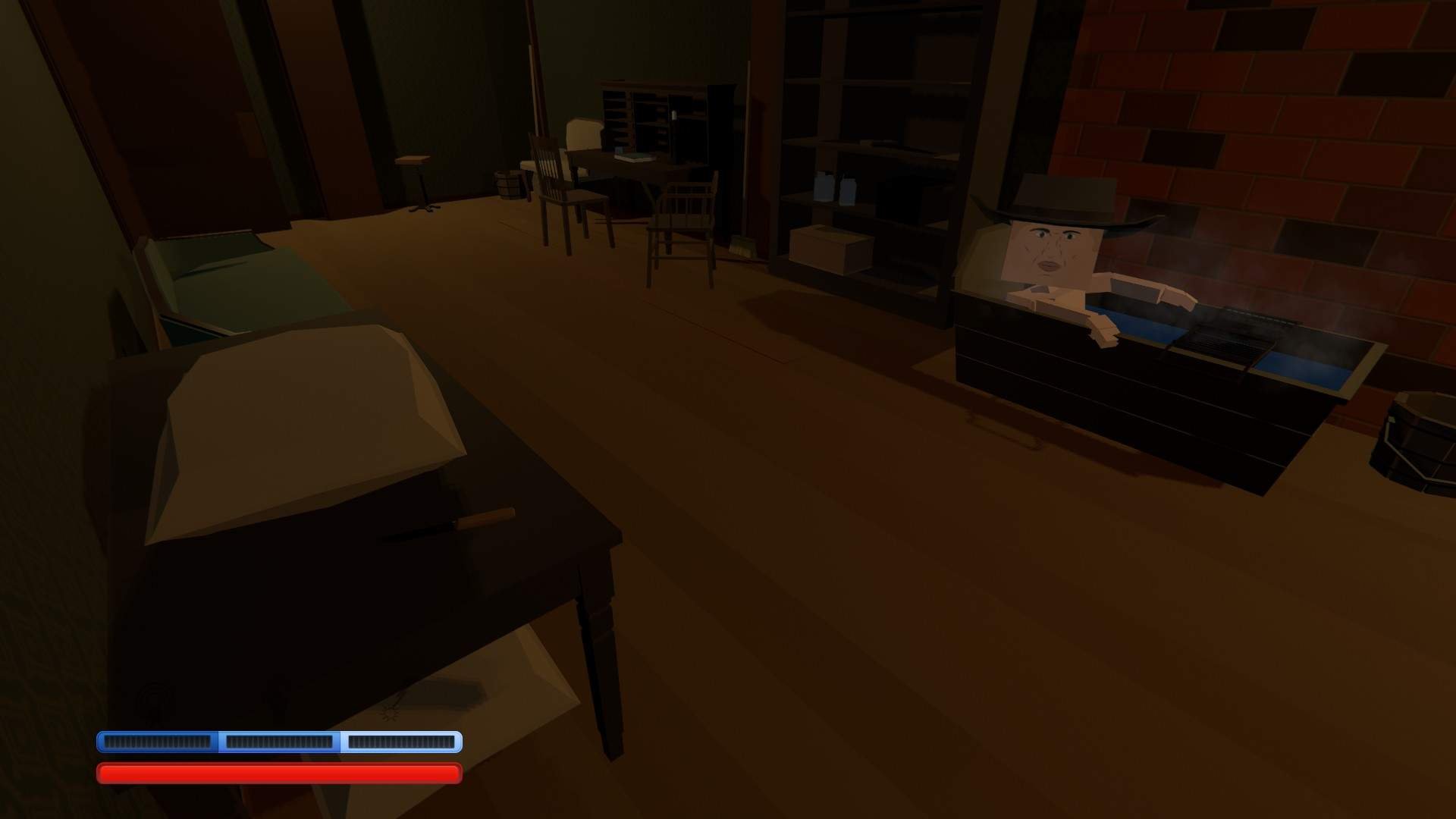
A knife in the room behind the cashier booth.
Along with another next to it.
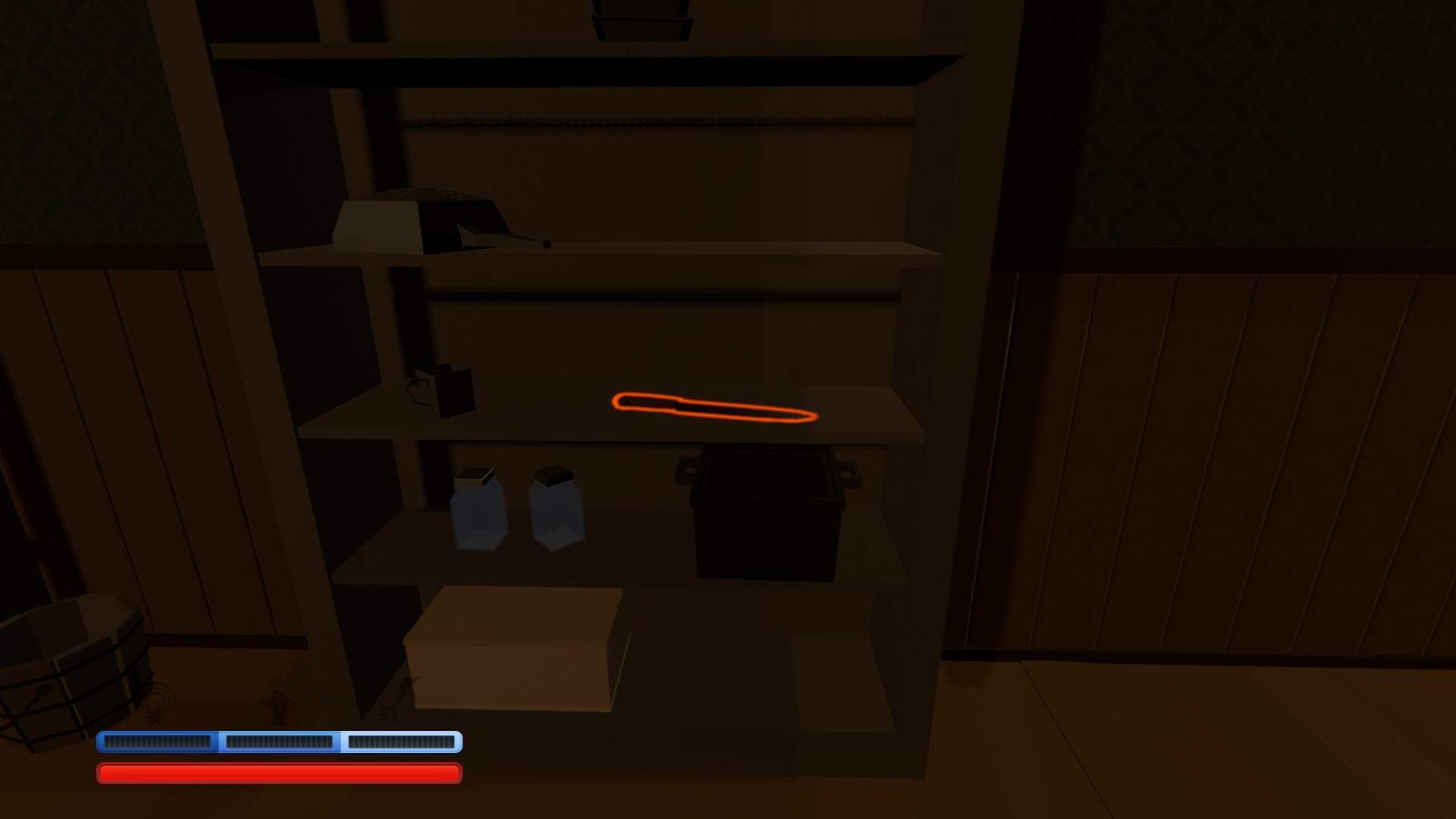
A knife on the shelf under the stairs next to the booth.
Poe style Balde Vortex Build for fast early map clearing speeds!
Guide to Bleeding Edge Build
Great Clearspeed and Survivability for Low Level Maps
I wanted to present you a short guide for a Bleeding Edge build, which is great for leveling and the early map clearing until level 50.
The build is build around the attack “Bleeding Edge” which is very op in the release version of the game (So prob get nerfed in the next patches). You only have to cast the skill every few second to get a spinning blade around you and then you just run through mobs and bosses like nothing.
The key is that I found out that you don`t really need to invest points in damage in the passive tree (I think the +damage points are not multiplicate after a bit of testing) instead you go full movement speed + life leech + the key ability “frenzied blows” in the child of fury specialization. Which makes the Bleeding Edge ticks double damage aslong as you cast the spell above 750 fury points.
This gives me 20-30k crits per tick of bleeding edge with a standard legendary two hander at level 50! And a crazy basic movement speed of 9,5m/s!
The required 750 fury points are easily aquired through the points invested in Warmonger Spec tree “appetide for bloodshed” which gives you 35 rage per kill + the child of fury point “furios appetide”.
For the Attributes I followed the rule all in Ferocity and only points in agility to get near 0% attack speed because we use a two handed weapon during leveling.
Have a look at my video where i hover over the key points of the build and a full clear of an expedtition with all 3 maps at max magic find I could get (the run took about 8min for all three maps with no deaths):
Okay, so here’s a few moments you might wanna hear before starting the game. Or after diying a few times, that could happen.
Starters Tips for Newbies
The Tips
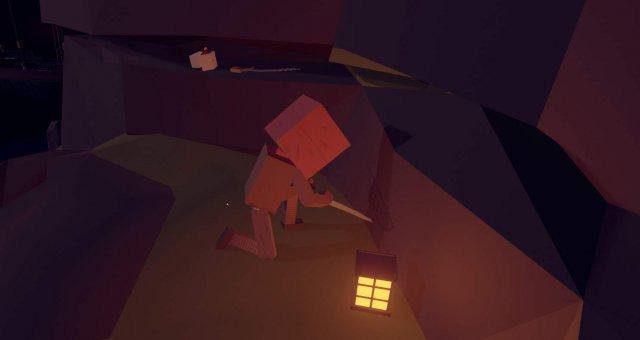
There’s no mouse support, so aiming done automatic by the game itself. You can help it with WSAD. Basically turn your character the way the enemy you want to shoot is and wait for the yellow angle you pop under that enemy’s feet.
You may notice that you rarely hit the target that are far away or if you spam some of the weapons like rifles. That is because all weapons have “accuracy”. And if you press the fire button and hold it for a second or two you will see the little arrow right in front of your character. When two parts of that arrow connects is the moment of maximum accuracy for the shot. Some weapons (like musket) deals significantly more damage at max accuracy.
You can kick any enemy (except boss?) to bash them a little and deal a few damage points. This might come in handy when you’re out of ammo and the enemy is pretty close in range.
Fireing one gun prevent reloading the second gun. So you must take a breathe between shooting for reloading.
You can slide to any cover from some distance with “Space” button.
You can skip any dialogue/monologue of any character in the game by pressing “Esc” button. And pressing it again to return to the game, yes.
Of course the smoke bomb affects you too!
Of course the enemy can see you in the dark, but sometimes you can enter the room without everyone noticing you, what gives you some advantage when things would start to look angry.
Of course the progress didn’t save in between runs, so you have to open that “smallheal” every time.




:no_upscale()/cdn.vox-cdn.com/uploads/chorus_asset/file/19718055/Enoch_before.jpeg)
:no_upscale()/cdn.vox-cdn.com/uploads/chorus_asset/file/19718071/Armour_.jpg)
/cdn.vox-cdn.com/uploads/chorus_asset/file/19718042/SkillsDevastator.jpeg)
:no_upscale()/cdn.vox-cdn.com/uploads/chorus_asset/file/19718075/pyro.jpg)
:no_upscale()/cdn.vox-cdn.com/uploads/chorus_asset/file/19718079/Enoch_After.jpeg)






 🥇 News Game Now


